
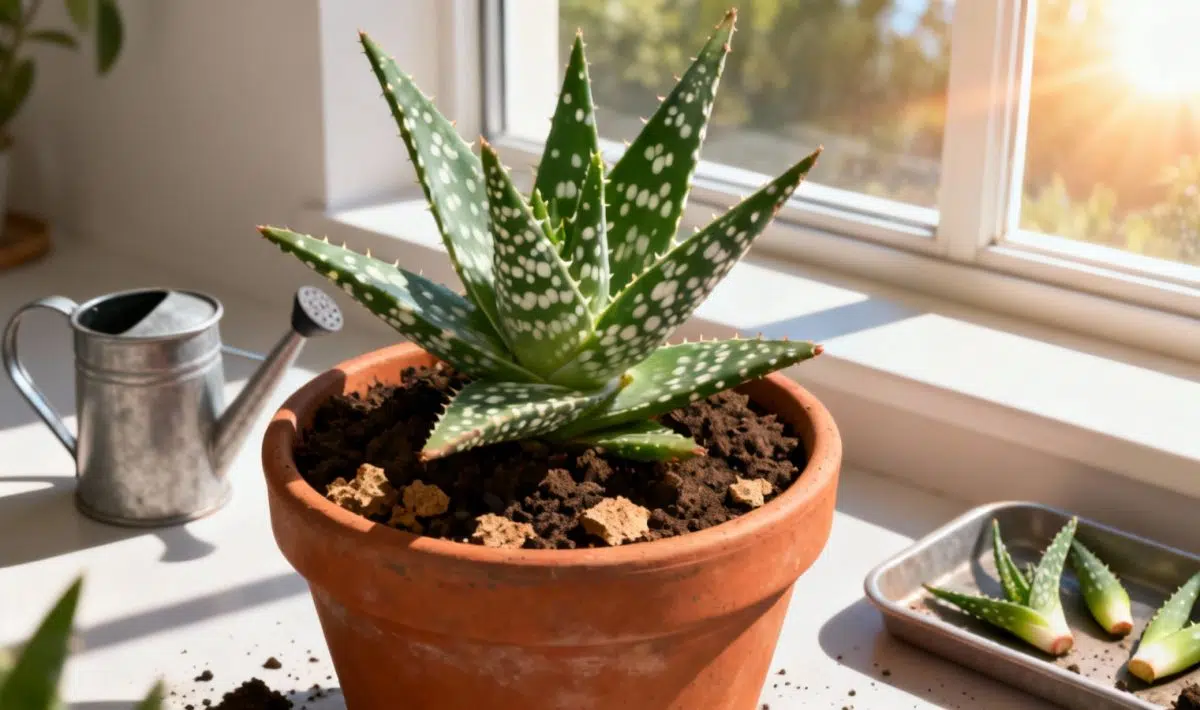
The Guinea-fowl aloe, scientifically known as Aristaloe aristata, is honestly one of my favorite succulents to recommend to anyone starting their plant journey. This charming little aloe brings so much character to any space with its distinctive white-spotted leaves that look like delicate lace work. Originally from South Africa, this compact plant has won hearts worldwide thanks to its forgiving nature and stunning appearance.
Understanding your Guinea-fowl aloe – Aristaloe aristata
What makes this plant so special is its compact size and unique appearance. The aristata typically reaches about 6-12 inches in height, forming tight rosettes of fleshy, gray-green leaves adorned with white tubercles that create a lace-like pattern. These distinctive markings give the plant its common name, as they resemble the spotted plumage of guinea fowl.
The plant naturally produces offsets around its base, making it incredibly easy to propagate and share with friends. During winter months, mature plants may surprise you with stunning orange flower spikes that add an extra touch of beauty to your collection. Unlike some of its larger aloe cousins, this variety stays pleasantly small, making it perfect for windowsills and small spaces.
Temperature plays a crucial role in the health of your aristata. The plant thrives in moderate temperatures between 65-75°F (18-24°C) during growing season. It can tolerate cooler conditions down to about 50°F (10°C), but anything below 32°F (0°C) will damage or kill the plant. This makes it an excellent choice for indoor cultivation in colder climates.
Essential care requirements for healthy growth
Light conditions that make the difference
Your Guinea-fowl aloe absolutely loves bright, indirect light. Place it near a south-facing window with some protection from harsh midday sun, or an east-facing window works wonderfully too. The plant will tell you if it’s getting too much direct sunlight – the leaves may start turning reddish or brown. On the flip side, insufficient light will cause the plant to stretch and lose its compact, attractive form.
Indoor cultivation works brilliantly for this species. Much like caring for painted-leaf begonias, the key is finding that sweet spot where your plant gets plenty of brightness without being scorched by direct rays. If you notice your aristata becoming pale or elongated, it’s asking for more light.
Soil requirements and drainage essentials
The foundation of successful aloe care starts with proper soil drainage. Your aristata needs a well-draining cactus mix or you can create your own by combining regular potting soil with coarse sand and perlite in equal parts. The goal is to create a medium that allows water to flow through quickly while still providing some moisture retention.
Never use heavy, clay-based soils or regular garden soil in a pot. These retain too much moisture and will quickly lead to root rot. I always add a layer of gravel or broken pottery at the bottom of the pot to ensure excess water can escape easily. The pot itself should have drainage holes – this is absolutely non-negotiable for healthy aloe cultivation.
Watering wisdom for your aristata
Here’s where many people go wrong with their aloe care – overwatering. Your Guinea-fowl aloe stores water in its thick, fleshy leaves, so it doesn’t need frequent watering like traditional houseplants. During the growing season (spring and summer), water deeply but infrequently, allowing the soil to dry out completely between waterings.
I use the “soak and dry” method – give the plant a thorough watering until water runs out the drainage holes, then wait until the soil is completely dry before watering again. This usually means watering every 2-3 weeks in summer and even less frequently in winter. Always check the soil moisture by sticking your finger about 2 inches down into the soil.
Signs of overwatering include soft, mushy leaves, yellowing, or a foul smell from the soil. If you notice these symptoms, stop watering immediately and consider repotting in fresh, dry soil if the roots show signs of rot.
Propagation methods that actually work
Using offsets for easy propagation
The easiest way to multiply your Guinea-fowl aloe is through the offsets or “pups” that develop around the mother plant. These small plants are essentially clones of the parent and come with their own root systems already developing. Similar to guidelines for pontic rhododendron care, timing is important for successful propagation.
Wait until the offsets are at least one-third the size of the mother plant before attempting to separate them. Gently remove the entire plant from its pot and carefully tease apart the offsets with their roots intact. Allow the cut surfaces to dry for 24-48 hours before planting in fresh, dry soil.
Plant each offset in its own small pot with well-draining cactus mix. Don’t water for the first week to allow any damaged roots to heal and prevent rot. After this initial period, begin your regular watering schedule.
Growing from seed
While more challenging than offset propagation, growing aristata from seed can be incredibly rewarding. Fresh seeds have the best germination rates, and you’ll need to maintain consistent temperature and humidity levels. Sow seeds in a mixture of fine sand and peat at a temperature around 70-75°F (21-24°C).
Keep the growing medium slightly moist but never waterlogged. Germination typically occurs within 2-4 weeks. Once seedlings develop their first true leaves, gradually reduce watering frequency and increase light exposure. This process requires patience, as seedlings grow quite slowly initially.
Troubleshooting common issues
Recognizing and treating problems
Even with excellent care, you might encounter some issues with your Guinea-fowl aloe. Brown or black spots on leaves usually indicate fungal problems, often caused by overwatering or poor air circulation. Remove affected leaves immediately and improve growing conditions.
Pest problems are relatively rare but can occur. Watch for mealybugs, which appear as white, cotton-like masses on leaves and stems. Treat these with rubbing alcohol applied directly to the pests, or use insecticidal soap for larger infestations. Just as when learning how to grow apricot trees, prevention through good cultural practices beats treatment every time.
If your plant becomes leggy or loses its compact form, it’s likely not getting enough light. Gradually move it to a brighter location, but avoid sudden changes that could shock the plant. Leggy growth can also be pruned back to encourage new, more compact growth.
Seasonal care adjustments
Your aristata’s needs change with the seasons, and adjusting your care accordingly will keep it thriving year-round. During spring and summer, the plant enters its active growing phase. This is when you’ll water more frequently, provide bright light, and can apply a diluted cactus fertilizer monthly.
Winter brings a natural dormancy period. Reduce watering significantly – sometimes once a month is plenty. The plant can tolerate cooler temperatures during this time, and reduced light levels are acceptable. Avoid fertilizing during winter months as the plant isn’t actively growing.
This seasonal rhythm is similar to what you’d observe when caring for oxeye daisies – understanding natural cycles leads to better plant health. Watch your plant’s behavior and adjust accordingly rather than following a rigid schedule.
Indoor vs. outdoor cultivation
While Guinea-fowl aloe makes an excellent houseplant, it can also thrive outdoors in suitable climates. If you live in USDA zones 7b-11, you can grow your aristata outside year-round. Choose a location with morning sun and afternoon shade, and ensure excellent drainage.
For those in colder climates, consider using your aloe as a seasonal outdoor plant. Move it outside during warm months for the benefits of fresh air and natural rainfall, then bring it indoors before temperatures drop below 50°F (10°C). This transition period requires gradual acclimatization to prevent shock.
When growing indoors, rotation is important to ensure even growth. Turn your pot a quarter turn every few weeks so all sides receive equal light exposure. This technique, much like cultivating oriental arborvitae plants, helps maintain the plant’s natural symmetrical form.
Maximizing decorative potential
Beyond its easy care requirements, the Guinea-fowl aloe offers fantastic decorative possibilities. Its compact size makes it perfect for dish gardens, terrariums, or as part of a succulent arrangement. The distinctive white markings provide excellent contrast when paired with solid-colored succulents.
Consider grouping your aristata with other small succulents of varying textures and colors. The plant’s rosette form works beautifully as a focal point in arrangements, while its neutral gray-green color complements both warm and cool color schemes.
For a truly striking display, use shallow, wide pots that showcase the plant’s natural form. Terra cotta pots work especially well as they allow for better air circulation around the roots and complement the plant’s earthy tones. Following tips for honey locust care, remember that the container choice significantly impacts plant health and appearance.
The Guinea-fowl aloe proves that you don’t need complicated care routines to enjoy beautiful, thriving plants. With proper light, well-draining soil, and careful attention to watering, this charming succulent will reward you with years of low-maintenance beauty. Whether you’re a beginner gardener or an experienced plant enthusiast, the aristata offers both simplicity and elegance that’s hard to beat in the world of houseplants.

Allan is a lifelong gardening enthusiast who still gets excited when the first seedlings pop up in spring. With a deep love for nature and a hands-in-the-soil approach, he shares practical tips, plant discoveries, and clever tricks picked up over years of digging, planting, and observing. Whether you’re a new gardener or have a shed full of tools, Allan writes like a neighbor who’s always happy to swap cuttings and stories over the fence.
You can find more about Allan’s work on Malt or connect with him on LinkedIn.


