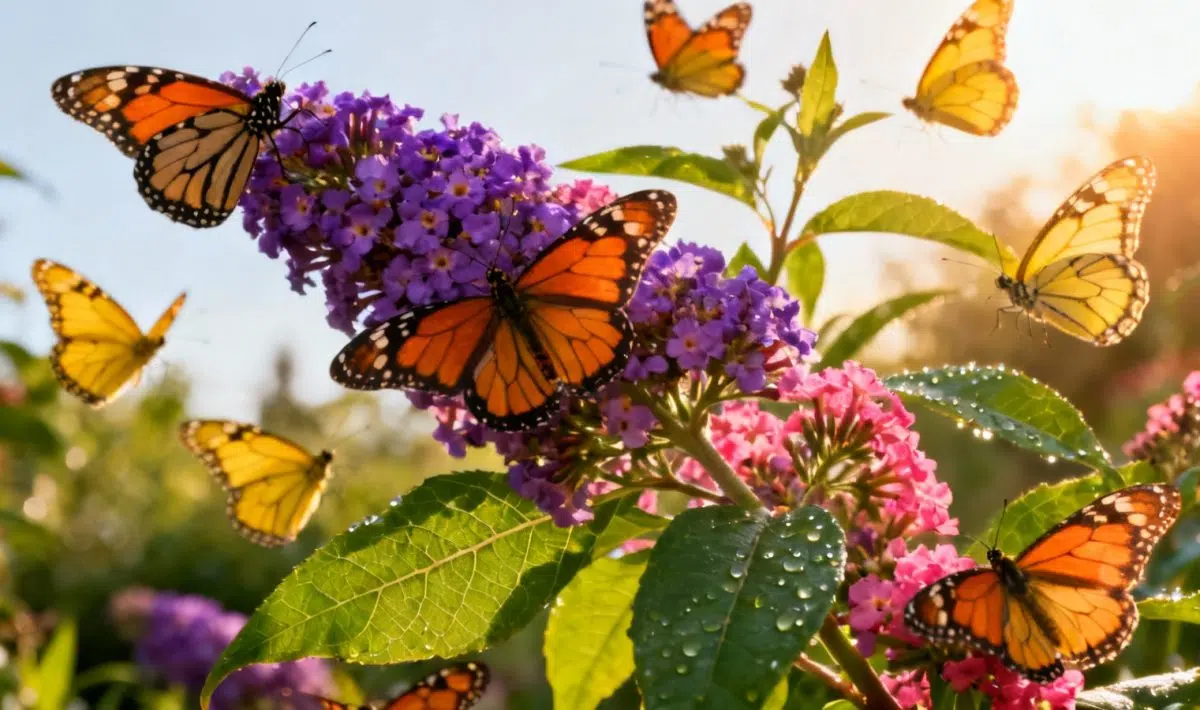
Understanding the butterfly bush and its sunlight needs
The butterfly bush, scientifically known as Buddleja davidii, is one of the most beloved shrubs for attracting butterflies and pollinisators to gardens worldwide. How much sunlight does butterfly bush need? The answer is straightforward: these vibrant flowering shrubs require full sun exposure, meaning at least 6 hours of direct sunlight daily for optimal growth and abundant floraison.
This remarkable arbuste originates from China and has become a garden favorite due to its easy cultivation and impressive ability to draw papillons. When planted in proper conditions, buddleia can reach heights of 2 to 5 meters, producing stunning flower clusters from June through October. The key to achieving this spectacular performance lies in understanding their light requirements.
Much like other sun-loving plants such as those requiring sunlight requirements for yellow butterfly palm, butterfly bushes thrive when positioned in the brightest areas of your jardin. This preference for intense light directly impacts their overall health, flowering capacity, and ability to attract beneficial insects.
Optimal sunlight conditions for butterfly bush growth
Professional nurseries and gardening experts consistently recommend full sun positioning for buddleia davidii. This means selecting locations that receive 6 to 8 hours of direct sunlight throughout the day. The bush naturally colonizes open areas like hillsides, urban zones, and sunny borders, demonstrating its strong preference for bright, exposed conditions.
In full sun conditions, butterfly bushes develop robust growth patterns and produce their characteristic long-lasting flowers. The intense light exposure encourages compact, sturdy branching rather than the leggy growth often seen in partially shaded plantings. This structural strength proves essential as the shrub matures and supports heavy flower clusters.
The relationship between sunlight and flowering intensity cannot be overstated. Insufficient light results in reduced bloom production, affecting the plant’s primary appeal as a pollinator magnet. Gardens with proper sun exposure typically showcase butterfly bushes with vibrant purple, white, or mixed-colored blooms that persist from summer through fall.
Comparing sunlight needs with other garden plants
Understanding comparative sunlight requirements helps gardeners plan effective layouts. While butterfly bushes demand full sun, other crops have varying needs. For instance, vegetables like those discussed in sunlight needs for growing rutabaga may tolerate partial shade, but buddleia cannot compromise on light exposure without significant performance decline.
Similarly, herbs and tropical plants each have specific requirements. When planning garden spaces, consider that plants requiring cultivating oregano with proper sunlight or those needing optimal sunlight for pineapple growth might complement butterfly bushes in sunny garden sections. This strategic placement maximizes growing success across different plant types.
Planting and care essentials for maximum success
Successful butterfly bush plantation begins with selecting the right location and preparing appropriate sol conditions. Choose south-facing or west-facing areas that receive unobstructed morning and afternoon sun. Avoid spots near tall buildings, large trees, or other structures that create significant shade during peak daylight hours.
When purchasing graines or young plants, prices typically range from reasonable to moderate, with many suppliers offering competitive USD rates for quality seeds. Reputable sources like organicindiaseeds provide non-GMO options that ensure healthy germination and robust croissance. Investing in quality starting materials pays dividends in long-term garden performance.
Proper entretien involves regular watering during establishment, though mature bushes become remarkably drought-tolerant. This characteristic makes them excellent choices for sustainable gardens, much like other sun-loving crops such as those requiring ideal sunlight conditions for watermelon that thrive in similar bright conditions.
Soil preparation and ongoing maintenance
While butterfly bushes adapt to various soil types, they perform best in well-draining conditions combined with full sun exposure. Prepare planting areas by incorporating organic matter and ensuring proper drainage. Heavy, waterlogged soils combined with insufficient light create particularly challenging growing conditions.
Regular pruning encourages bushier growth and prevents excessive height that might shade lower garden areas. Many gardeners find that annual spring pruning maintains manageable size while promoting abundant new growth and flowering. This practice proves especially important in smaller jardins where space management matters.
Creating pollinator-friendly garden spaces
The primary appeal of butterfly bushes lies in their exceptional ability to attract butterflies and other beneficial insects. When positioned in full sun locations, these shrubs become focal points for pollinator activity, creating dynamic, living garden features that provide both beauty and ecological benefits.
Planning garden layouts around butterfly bushes involves considering companion plantings that share similar light requirements. Create borders and massifs that combine buddleia with other sun-loving flowers to extend blooming seasons and provide diverse nectar sources. This approach maximizes the investment in both seeds and established plants.
Garden centers and online retailers offer various buddleia varieties, with reviews often highlighting their effectiveness in attracting papillons when grown in optimal conditions. Choosing appropriate varieties for your climate zone and ensuring proper sun exposure guarantees the best return on your gardening investment.
Long-term garden planning considerations
Mature butterfly bushes can dominate garden spaces, making initial placement decisions crucial for long-term success. Consider the eventual size when planning layouts, ensuring adequate space for full development without overcrowding neighboring plants. Proper spacing also ensures each bush receives maximum sunlight exposure throughout the growing season.
The vente market for butterfly bush varieties continues expanding, with new cultivars offering different colors, sizes, and growing characteristics. However, fundamental sunlight requirements remain consistent across varieties – full sun exposure remains essential for achieving the vibrant displays these plants are known for throughout gardens worldwide.
Allan is a lifelong gardening enthusiast who still gets excited when the first seedlings pop up in spring. With a deep love for nature and a hands-in-the-soil approach, he shares practical tips, plant discoveries, and clever tricks picked up over years of digging, planting, and observing. Whether you’re a new gardener or have a shed full of tools, Allan writes like a neighbor who’s always happy to swap cuttings and stories over the fence.
You can find more about Allan’s work on Malt or connect with him on LinkedIn.