How much sunlight does poinsettia need for optimal growth and blooming
Let’s be honest – poinsettias can be a bit finicky when it comes to their light requirements. These gorgeous holiday plants have very specific sunlight needs that many people don’t fully understand. Getting the lighting right is absolutely crucial for keeping your poinsettia healthy and achieving those stunning colorful bracts we all love during the Christmas period.
Understanding your poinsettia’s natural light preferences
Poinsettias are fascinating plants that originally come from Mexico, where they thrive in warm climates with specific day-night cycles. In their native environment, these plants have adapted to particular light patterns that we need to replicate for optimal growth. The key thing to remember is that poinsettias are what we call “photoperiodic” plants – meaning their flowering is triggered by the length of daylight they receive.
During their active growing season, poinsettias need bright, indirect sunlight for about 6-8 hours daily. However, the magic happens when daylight hours naturally decrease to less than 12 hours per day. This reduction in light exposure triggers the plant’s blooming process, typically starting around late September or early October.
The critical photoperiod requirement
Here’s where things get interesting and a bit demanding. For poinsettias to develop their signature colored bracts, they need what’s called a “short day” treatment. This means they require 14-16 hours of complete darkness every single day for about 8-10 weeks before you want them to bloom. We’re talking absolute darkness here – even a tiny bit of light from a street lamp or phone can disrupt this process.
Just like other plants have specific light needs – for instance, understanding sunlight requirements for lemon trees can help with indoor citrus gardening – poinsettias have their own unique demands that require attention to detail.
Optimal sunlight conditions for healthy growth
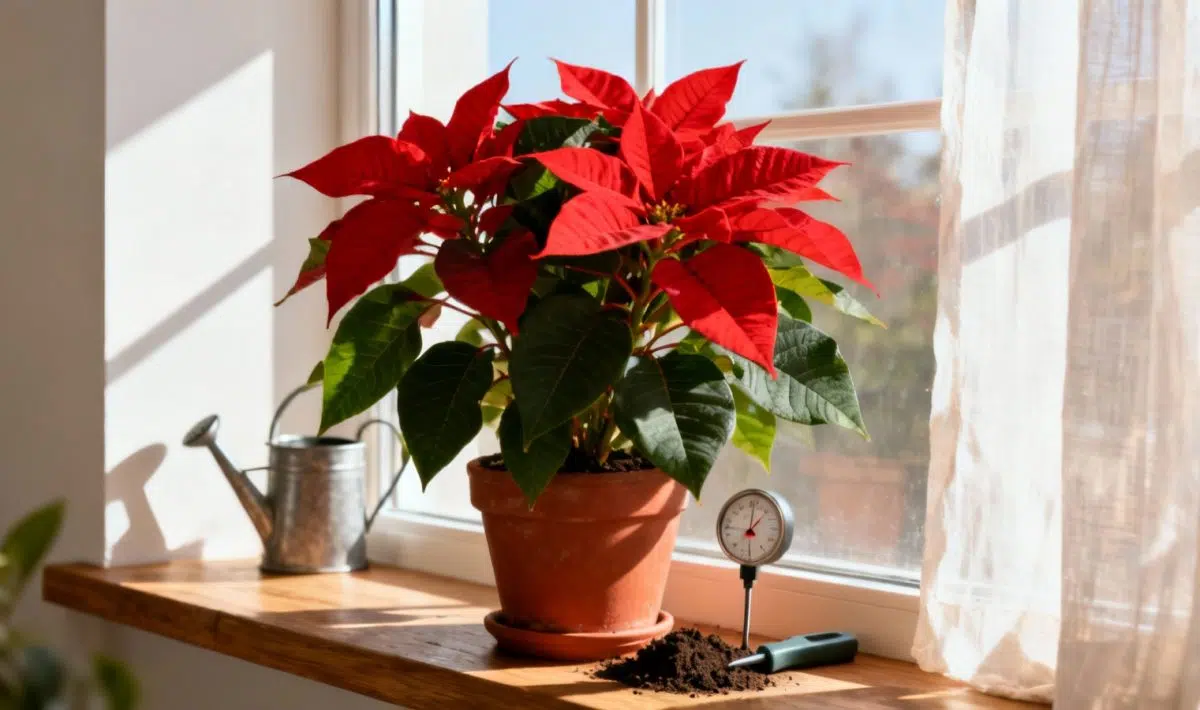
During the day, your poinsettia should receive bright, filtered light. A south-facing window with sheer curtains works perfectly, providing the intense but gentle illumination these plants crave. If you notice the leaves starting to yellow or drop, it might be getting too much direct sunlight, while leggy growth usually indicates insufficient light.
Temperature control goes hand in hand with proper lighting. Keep your plant in an environment between 65-75°F during the day and slightly cooler at night. This temperature range, combined with proper sunlight exposure, creates ideal conditions for robust growth and vibrant foliage.
Indoor vs outdoor light considerations
If you’re growing poinsettias indoors year-round, you’ll need to be creative about meeting their light requirements. Regular household lamps simply don’t provide enough intensity – you’ll need specialized grow lights if natural window light is limited. LED grow lights work wonderfully and can supplement natural daylight during shorter winter months.
For outdoor cultivation in suitable climates, poinsettias can handle morning sun beautifully but prefer afternoon shade. Much like ideal sunlight for creeping thistle varies by location, poinsettia light needs may require adjustments based on your specific climate and seasonal conditions.
Troubleshooting common light-related issues
One of the most frequent problems people encounter is leaf drop, which often stems from inconsistent lighting or sudden changes in light exposure. If you’ve recently moved your poinsettia to a new location, give it time to adjust – these plants can be quite sensitive to environmental changes.
Pale or faded bracts usually indicate either too much direct sunlight or insufficient overall light exposure. Finding that sweet spot takes some observation and patience. Remember, the goal is consistent, bright indirect light rather than intense direct rays that can scorch the delicate foliage.
Seasonal adjustments for optimal health
As seasons change, so should your approach to lighting your poinsettia. During spring and summer months, when you’re encouraging vegetative growth, provide plenty of bright light for about 12-14 hours daily. Come fall, you’ll need to implement that strict dark period if you want holiday blooms.
Many gardeners find success by creating a schedule – something like covering their plants with a box or moving them to a completely dark room from 5 PM to 8 AM every day starting in early October. Similar to how sunlight needs of common lilac vary throughout growing seasons, poinsettias require different approaches at different times of year.
Professional tips for maintaining perfect lighting
Here’s a little secret from experienced growers: consistency is everything. Poinsettias respond much better to steady, predictable light patterns than to sporadic bright days followed by dim conditions. If you’re serious about getting the best results, consider investing in a light meter to monitor exactly what your plant is receiving.
During the critical pre-bloom period, even brief exposure to artificial light can reset the flowering clock. This means no checking on your plant with a flashlight, no leaving it near streetlights, and definitely no midnight snacks near the plant if it’s in your kitchen!
Creating the ideal environment
Beyond just sunlight, consider the overall environment around your poinsettia. Good air circulation helps prevent fungal issues that can arise in consistently moist conditions, while avoiding cold drafts protects the plant from temperature stress that can compound lighting problems.
Different varieties of plants have varying tolerance levels – just as optimal sunlight for garden nasturtium differs from other flowering annuals, some poinsettia cultivars may be slightly more forgiving than others when it comes to lighting inconsistencies.
Year-round care strategies
After the holiday season ends, many people wonder what to do with their poinsettia’s lighting needs. If you want to keep your plant for multiple years, you can continue providing bright, indirect light throughout winter and spring. Come summer, you might even move it outdoors to a partially shaded location where it can benefit from natural light cycles.
The key is planning ahead if you want holiday blooms next year. Mark your calendar for early October and start implementing that dark period treatment. It takes dedication, but the reward of home-grown holiday color is absolutely worth the effort.
Remember that successful poinsettia care involves understanding various plant needs – much like knowing sunlight preferences for white clover helps with ground cover success, mastering poinsettia light requirements opens the door to year-round enjoyment of these spectacular plants.
With proper attention to their unique sunlight needs, your poinsettia can thrive and potentially provide you with beautiful blooms for many holiday seasons to come. The investment in understanding and meeting these specific requirements truly pays off in plant health and flowering success.
Allan is a lifelong gardening enthusiast who still gets excited when the first seedlings pop up in spring. With a deep love for nature and a hands-in-the-soil approach, he shares practical tips, plant discoveries, and clever tricks picked up over years of digging, planting, and observing. Whether you’re a new gardener or have a shed full of tools, Allan writes like a neighbor who’s always happy to swap cuttings and stories over the fence.
You can find more about Allan’s work on Malt or connect with him on LinkedIn.