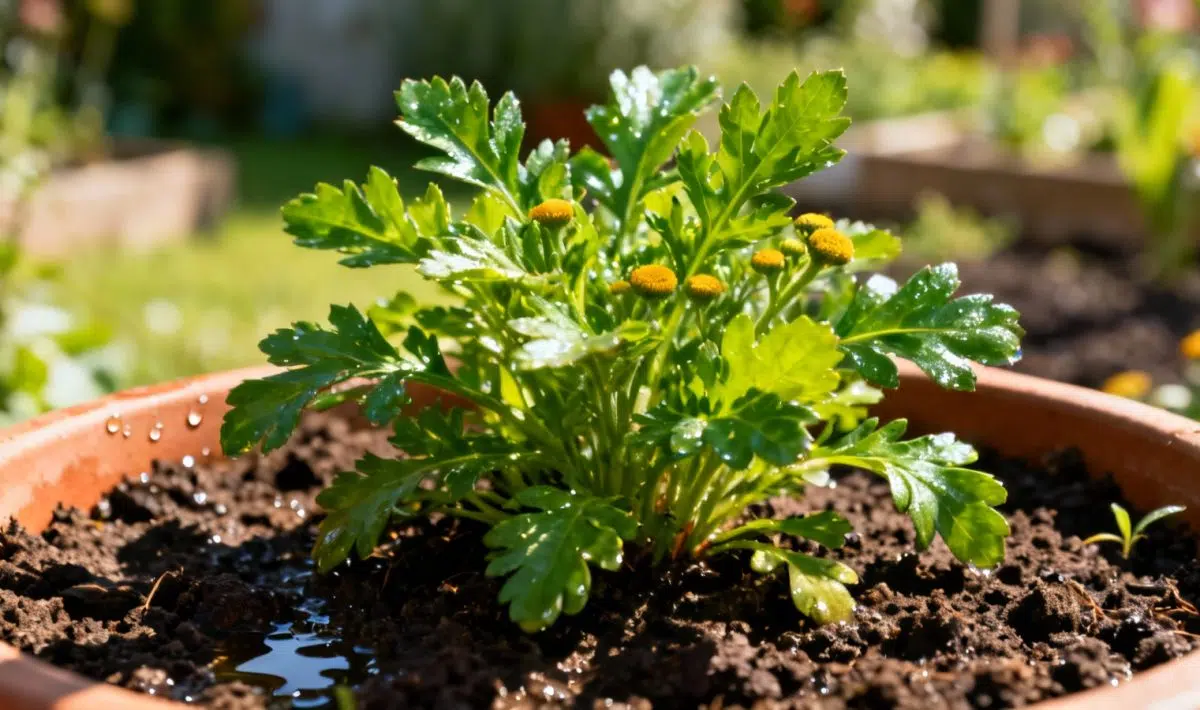
Common tansy is remarkably drought-resistant once established, making it one of the most low-maintenance herbs you can grow. This hardy perennial from the Asteraceae family has evolved to thrive with minimal water, which means your watering approach should be quite different from other garden plants. The key is understanding that less is definitely more when it comes to tansy care.
When you first plant common tansy, you will need to provide some initial support with watering. However, once the root system develops, this resilient herb can survive on natural rainfall alone in most climates. The plant’s natural habitat includes dry meadows and roadside areas, which tells us everything we need to know about its water preferences.
How Often Should You Water Your Common Tansy Throughout the Growing Season
For newly planted tansy, water carefully for the first few weeks to help establish the root system. After this initial period, you should only water during prolonged drought conditions. Most gardeners find that watering once a month during hot summer periods is more than enough for established plants.
The watering frequency depends on several factors that you must consider. Your soil type, local climate, and rainfall patterns all play important roles in determining when your tansy needs additional water. Sandy, well-draining soils will require more frequent watering than heavy clay soils that retain moisture longer.
Similar care principles apply to other drought-tolerant plants, and you can find excellent watering tips for common mullein growth that complement tansy care strategies perfectly.
Signs Your Common Tansy Needs Water
There are clear indicators that will tell you when your tansy requires watering. The leaves may appear slightly wilted or lose their vibrant green color during extreme heat. However, don’t panic at the first sign of drooping – tansy naturally conserves water by allowing leaves to droop during the hottest part of the day.
Check the soil moisture by inserting your finger about two inches deep. If the soil feels completely dry and dusty, it’s time for a deep watering session. Always water early in the morning or late evening to minimize evaporation and give your plants the best chance to absorb the moisture.
Seasonal Watering Adjustments and Natural Care Methods
Spring watering should focus on supporting new growth after winter dormancy. Give your tansy plants a good drink when you first see new shoots emerging, then reduce frequency as the weather warms up. This seasonal approach helps the plant develop strong, deep roots that will support it through summer heat.
Summer watering requires the most restraint with tansy. Even during hot spells, resist the urge to water frequently. Instead, provide deep, infrequent watering sessions that encourage roots to grow deeper in search of moisture. This natural approach creates more resilient plants that can better handle drought stress.
For those growing other perennials nearby, consider exploring healthy growth of common hornbeam techniques that complement your overall garden watering strategy.
Using Natural Products to Enhance Water Retention
Organic mulch around your tansy plants can help retain soil moisture naturally. Use materials like straw, dried leaves, or wood chips to create a protective barrier that reduces evaporation. This natural method means you won’t need to water as frequently while still providing optimal growing conditions.
Essential oils from well-established herbs can actually indicate healthy plant development. When your tansy produces those characteristic aromatic compounds, it’s a good sign that the plant is thriving with its current watering regime. The strong scent comes from the plant’s natural defense mechanisms, which are most effective when the plant isn’t stressed by overwatering.
Soil Preparation and Drainage for Optimal Tansy Growth
The type of soil you provide will determine how often you need to water your tansy plants. Well-draining, sandy soil is ideal because it prevents water from sitting around the roots. Clay soils, while they retain more moisture, can lead to root rot if not managed carefully.
Before planting, amend heavy soils with organic matter like compost or sand to improve drainage. This preparation work will save you time and effort later, as properly draining soil means less frequent watering and healthier plants overall. The same drainage principles apply to many garden plants, and you can learn about watering advice for common boxwood for comparison.
Container Growing and Water Management
If you’re growing common tansy in containers, your watering schedule will be different from ground-planted specimens. Potted plants dry out more quickly and may need watering once or twice per week during hot weather. Always check the soil moisture level before watering, and ensure your containers have adequate drainage holes.
Use a well-draining potting mix specifically designed for herbs or Mediterranean plants. These soil blends typically contain perlite or sand that helps excess water drain away quickly. Container-grown tansy still maintains its drought-tolerant nature, but the confined root space means more frequent monitoring is necessary.
Common Watering Mistakes to Avoid
Overwatering is the most common mistake gardeners make with drought-tolerant herbs like tansy. Too much water can lead to weak, leggy growth and increased susceptibility to fungal diseases. The roots may also become shallow and dependent on frequent watering, which defeats the purpose of growing such a self-sufficient plant.
Another mistake is watering too frequently with small amounts. This approach encourages shallow root development and creates plants that are less resilient during dry periods. Instead, water deeply but infrequently to encourage strong root systems that can access moisture from deeper soil layers.
For gardeners managing diverse plant collections, understanding different watering needs is crucial. You might find helpful information about guidelines for watering African-lily to create a comprehensive watering schedule for various species.
Monitoring Plant Health and Adjusting Care
Pay attention to your tansy’s overall appearance throughout the growing season. Healthy plants will have sturdy stems, aromatic leaves, and vibrant yellow flowers when in bloom. If you notice excessive leaf drop, yellowing foliage, or stunted growth, evaluate your watering practices before assuming the plant needs more water.
Keep records of when you water and how your plants respond. This information will help you develop a personalized watering schedule that works best for your specific growing conditions. Remember that every garden is unique, and what works for one gardener may need adjustment for your particular situation.
Long-term Care and Seasonal Considerations
As your common tansy matures, it will become increasingly drought-tolerant and require even less supplemental watering. Established plants that are several years old may survive entirely on natural rainfall in most temperate climates. This low-maintenance characteristic makes tansy an excellent choice for water-wise gardening and xeriscaping projects.
During winter months, reduce watering to almost nothing unless you’re experiencing an unusually dry winter. The plant enters dormancy and has minimal water requirements during this rest period. Resume normal watering practices when you see new growth emerging in early spring.
By following these natural, water-conscious care methods, you’ll have healthy, aromatic common tansy plants that thrive with minimal intervention. The key is patience and restraint – let the plant’s natural drought tolerance work in your favor, and you’ll be rewarded with robust, self-sufficient herbs that require very little ongoing care.
Allan is a lifelong gardening enthusiast who still gets excited when the first seedlings pop up in spring. With a deep love for nature and a hands-in-the-soil approach, he shares practical tips, plant discoveries, and clever tricks picked up over years of digging, planting, and observing. Whether you’re a new gardener or have a shed full of tools, Allan writes like a neighbor who’s always happy to swap cuttings and stories over the fence.
You can find more about Allan’s work on Malt or connect with him on LinkedIn.