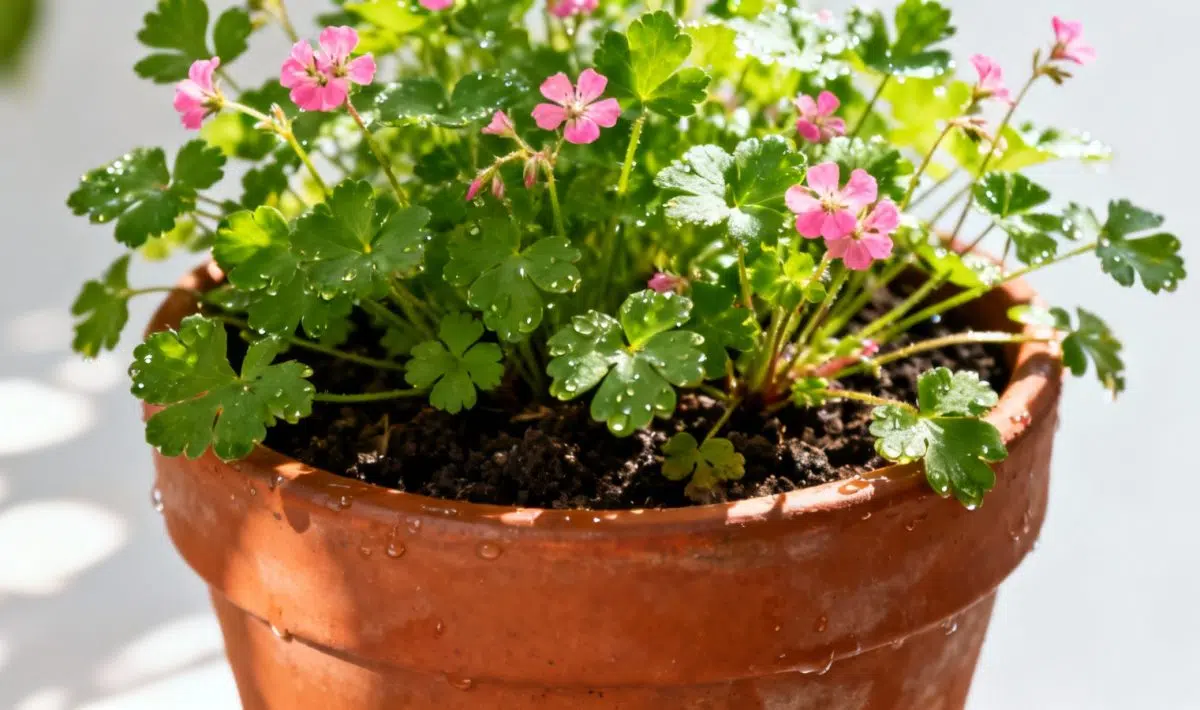
Herb Robert, scientifically known as Geranium robertianum, is a remarkably resilient wild plant that has adapted to thrive in various conditions. This hardy annual develops a distinctive red pigmentation on its leaves when stressed, which actually helps protect it from drought. Understanding how often to water your Herb Robert starts with appreciating its natural drought tolerance and robust constitution.
The key factor influencing watering frequency is whether your plant grows in containers or directly in garden soil. Potted specimens require more frequent attention than those planted in the ground. Additionally, seasonal changes and local climate conditions play crucial roles in determining the optimal watering schedule for your plant.
Watering frequency for different growing conditions
Container-grown herb robert
When growing Herb Robert in pots or containers, you’ll need to water several times per week during the growing season. The restricted root space means the soil dries out more quickly than in garden beds. Check the top 2-3 inches of soil regularly – if it feels dry to the touch, it’s time to water.
For container gardening, apply approximately 0.5 liters of water per plant, following the general rule of using about 10% of the container’s soil volume. A standard 80cm planter typically requires around 2.5 liters of water per watering session. This approach ensures adequate moisture penetration without waterlogging the roots.
Garden-planted herb robert
Herb Robert planted directly in garden soil demonstrates exceptional drought resistance and rarely needs supplemental watering. The plant’s natural habitat includes rocky slopes and woodland areas where water availability varies significantly. Once established, garden specimens can survive extended dry periods without intervention.
However, during prolonged heatwaves or extremely dry summers, even these hardy plants benefit from occasional deep watering. Monitor the plant’s appearance – wilting leaves or excessive red coloration may indicate water stress, though some reddening is normal and protective.
Best watering techniques and timing
Optimal watering methods
Water your Herb Robert early morning or evening to minimize evaporation and reduce stress on the plant. Apply water directly to the soil around the base rather than overhead watering, which can promote fungal diseases. Use lukewarm rainwater when possible, as it’s gentler than cold tap water and free from chemicals.
Deep, infrequent watering encourages stronger root development compared to frequent shallow watering. Allow water to soak thoroughly into the soil rather than just moistening the surface. This technique promotes healthier, more resilient plants that can better withstand dry periods.
Just as watering tips for tomatoes in heatwaves emphasize timing and technique, proper watering of Herb Robert requires attention to environmental conditions and plant signals.
Seasonal adjustments
Spring and early summer represent peak growing periods when Herb Robert requires consistent moisture for optimal development. During these months, maintain regular watering schedules for container plants while monitoring garden specimens for signs of stress.
As autumn approaches and temperatures cool, reduce watering frequency gradually. The plant naturally slows its growth and water requirements decrease accordingly. Winter watering should be minimal, particularly for outdoor plants experiencing natural rainfall.
Recognizing proper water levels
Signs of adequate moisture
A well-watered Herb Robert displays vibrant green foliage with perhaps slight reddish tinges on leaf edges – this coloration is normal and indicates healthy stress responses. The leaves should feel firm and stand upright without wilting during the day.
The soil around your plant should feel slightly moist but not soggy when you insert your finger about two inches deep. Similar to watering your common bugle effectively, maintaining consistent soil moisture without waterlogging is essential for plant health.
Warning signs of watering issues
Underwatered Herb Robert exhibits pronounced leaf reddening, wilting during midday hours, and premature flower drop. The soil becomes hard and pulls away from container edges, indicating severe dehydration. However, this plant’s natural drought tolerance means it can recover quickly with proper watering.
Overwatering presents different challenges, including yellowing lower leaves, soft stems, and potentially root rot in severe cases. Waterlogged soil feels constantly wet and may develop a sour smell. Prevention involves ensuring adequate drainage and adjusting watering frequency based on soil conditions rather than rigid schedules.
Special considerations for optimal care
Environmental factors affecting water needs
Temperature, humidity, and wind exposure significantly impact how quickly soil dries around your Herb Robert. Hot, windy conditions increase water loss through evaporation and plant transpiration, requiring more frequent watering attention.
Soil type also influences watering needs – sandy soils drain quickly and need more frequent watering, while clay soils retain moisture longer but may become waterlogged if overwatered. Understanding your specific growing conditions helps optimize watering schedules for best results.
When growing multiple plants with different water requirements, consider techniques used for best practices for wax begonia care to create efficient watering routines that meet each plant’s specific needs.
Companion planting considerations
When growing Herb Robert alongside other plants, consider their varying water requirements to create compatible groupings. Pairing it with similarly drought-tolerant species reduces maintenance while ensuring all plants receive appropriate care.
Mediterranean herbs like sage and thyme make excellent companions, sharing similar water preferences and growing conditions. This approach simplifies garden management while creating diverse, resilient plant communities that support each other naturally.
For houseplant enthusiasts managing multiple species, applying principles from caring for your ghost plant can help establish efficient watering routines that accommodate different moisture requirements.
Monitoring and maintaining healthy growth
Regular observation practices
Successful Herb Robert care relies on consistent observation rather than rigid watering schedules. Check your plants daily, noting changes in leaf color, soil moisture, and overall appearance. This attention helps you respond quickly to changing conditions and adjust care accordingly.
Keep simple records of watering dates and weather conditions to identify patterns and optimize your routine over time. This information becomes particularly valuable during unusual weather periods or when troubleshooting plant health issues.
Learning to read your plant’s signals, similar to techniques described for watering advice for turtle vines, develops your gardening intuition and leads to better plant care decisions.
Long-term care strategies
Establishing proper watering habits from the beginning creates stronger, more resilient plants that require less intensive management over time. Focus on developing deep root systems through appropriate watering techniques rather than encouraging surface root dependence.
Remember that Herb Robert’s natural adaptability makes it forgiving of occasional watering mistakes. Use any errors as learning opportunities to refine your understanding of the plant’s needs and improve your overall gardening skills.
With consistent observation and appropriate watering practices, your Herb Robert will thrive and potentially self-seed, creating a sustainable population that adds beauty and ecological value to your garden space for years to come.
Allan is a lifelong gardening enthusiast who still gets excited when the first seedlings pop up in spring. With a deep love for nature and a hands-in-the-soil approach, he shares practical tips, plant discoveries, and clever tricks picked up over years of digging, planting, and observing. Whether you’re a new gardener or have a shed full of tools, Allan writes like a neighbor who’s always happy to swap cuttings and stories over the fence.
You can find more about Allan’s work on Malt or connect with him on LinkedIn.