
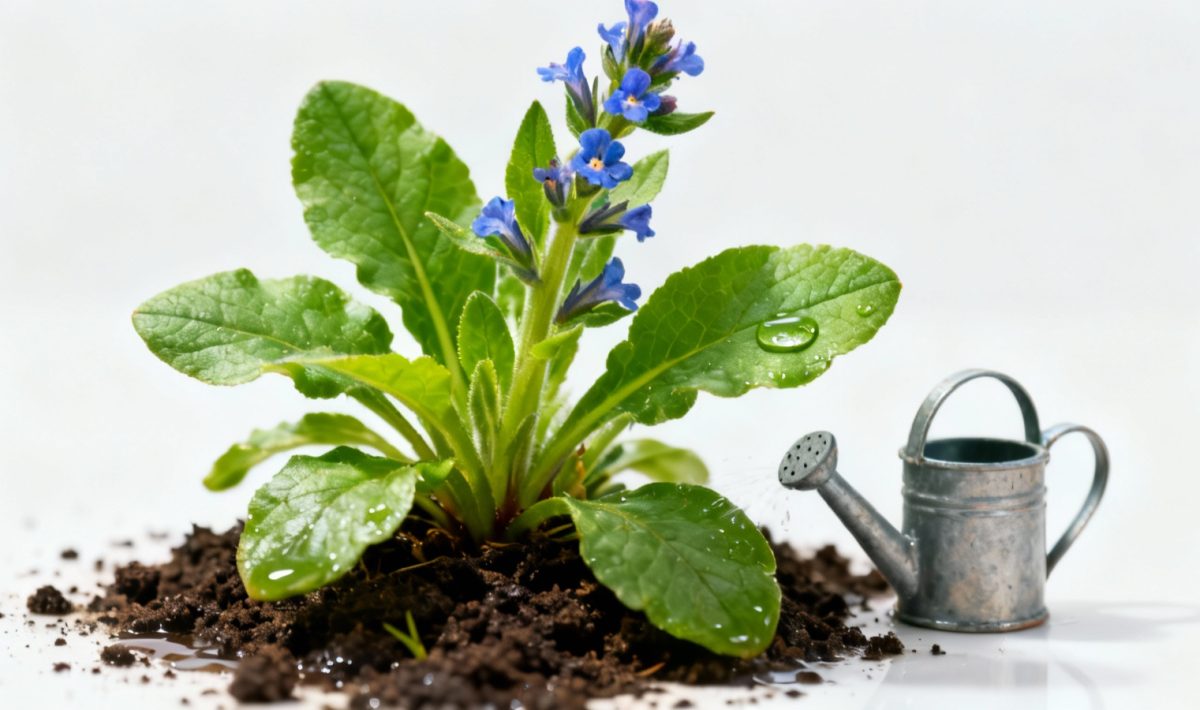
The Common Bugle, scientifically known as Ajuga reptans, is a remarkable groundcover plant that brings vibrant color to gardens with its deep purple-blue flower spikes. However, many gardeners find themselves wondering about the right approach to keep this hardy perennial thriving. Getting the watering schedule right is crucial for maintaining healthy growth and preventing common issues that can affect your plants.
Understanding your common bugle’s water needs
Common Bugle naturally thrives in moist conditions, which means it appreciates consistent moisture without being waterlogged. During the growing season, you should water your Common Bugle approximately once or twice per week, depending on rainfall and soil conditions. The key is maintaining that sweet spot where the soil stays consistently moist but never soggy.
This plant’s roots are relatively shallow, making them more sensitive to both drought and overwatering. When you water, aim to moisten the top 4-6 inches of soil thoroughly. You can test this by inserting your finger into the soil near the base of the plant – if it feels dry at about 2 inches down, it’s time to water.
Seasonal watering adjustments for optimal care
Spring marks the most critical time for establishing proper watering habits. As new growth emerges, your Common Bugle will need regular moisture to support its expanding foliage and developing flower buds. During this period, weekly watering is typically sufficient unless you’re experiencing particularly dry conditions.
Summer presents unique challenges, especially during heatwaves. Just like with watering tomatoes during a heatwave, you’ll need to increase frequency during extreme heat. In temperatures above 85°F, you may need to water every 2-3 days to prevent stress.
November and the approaching winter months require a different approach entirely. As temperatures drop and growth slows, reduce watering to once every 10-14 days. The plant’s reduced activity means it needs less moisture, and overwatering during this dormant period can lead to root rot.
Signs your plant needs attention
Learning to read your Common Bugle’s signals will help you adjust your watering schedule effectively. Wilting leaves, especially during cooler parts of the day, indicate your plant is thirsty. Similarly, if the soil pulls away from the edges of containers or feels hard and crusty, it’s definitely time to water.
Conversely, yellowing leaves, particularly those at the base of the plant, often signal overwatering. If you notice this, reduce watering frequency and ensure your soil has adequate drainage. Much like watering your wax begonia properly, balance is everything.
Effective watering techniques and methods
The way you water can be just as important as how often you water. Always aim to water at soil level rather than overhead watering, which can promote fungal diseases on the foliage. Use a watering can with a long spout or a soaker hose to deliver water directly to the root zone.
Morning watering is generally best, as it allows the plant to absorb moisture before the day’s heat and gives any wet foliage time to dry. This timing helps prevent common fungal issues while ensuring your plant has adequate moisture for the day ahead.
Consider using rainwater when possible, as it’s naturally soft and free from chemicals found in tap water. Set up a simple rain barrel system to collect water during natural precipitation – your Common Bugle will appreciate this natural source.
Container vs. ground planting considerations
Common Bugle grown in containers requires more frequent watering than those planted directly in the ground. Container plants can dry out quickly, especially during warm weather, so check them every other day during summer months.
For ground plantings, established Common Bugle develops a more extensive root system that can access deeper soil moisture. This natural adaptation means mature plants are more drought-tolerant than newly planted specimens. Similar principles apply to watering your Ghost plant effectively and other containerized plants.
Common watering mistakes to avoid
One frequent error is watering little and often, which encourages shallow root development. Instead, water deeply but less frequently to promote strong, deep roots that can better withstand dry periods.
Another mistake is assuming all plants have identical water needs. While Common Bugle shares some similarities with other groundcovers, it has specific requirements that differ from plants like those discussed in proper care for your turtle vine.
Avoid watering during the hottest part of the day, as much of the water will evaporate before reaching the roots. This wastes water and can stress your plant unnecessarily.
Troubleshooting common issues
If your Common Bugle isn’t thriving despite regular watering, check your soil drainage. Poor drainage can cause root problems even with proper watering frequency. Amend heavy clay soils with organic matter to improve drainage while retaining necessary moisture.
Sometimes, what appears to be a watering issue might actually be related to other factors. Just as watering your English ivy correctly requires understanding the plant’s complete environment, consider factors like soil pH, light conditions, and air circulation.
Creating the ideal growing environment
Beyond watering, creating the right environment helps your Common Bugle make the most of the moisture you provide. Plant in partial shade to reduce water stress, and mulch around plants to retain soil moisture and regulate temperature.
Choose a location with good air circulation but protection from harsh winds that can quickly dry out soil and foliage. The goal is creating a microclimate that supports consistent moisture levels with proper drainage.
Consider companion plantings that have similar water requirements. This approach simplifies garden maintenance and ensures all your plants receive appropriate care. For instance, understanding optimal watering for Indian shot plants can help you group plants with compatible needs.
Long-term maintenance strategies
Establishing a regular monitoring routine helps maintain optimal soil moisture without overthinking every watering session. Check your Common Bugle twice weekly during growing season, adjusting based on weather conditions and plant appearance.
Keep a simple garden journal noting watering dates, weather conditions, and plant response. This record helps you identify patterns and refine your approach over time.
Remember that every garden is unique, and what works in one location may need adjustment in another. Factors like soil type, local climate, and microenvironment all influence how often your Common Bugle needs water. With consistent observation and thoughtful adjustments, you’ll develop the perfect watering routine that keeps your groundcover healthy and beautiful throughout the growing season.

Allan is a lifelong gardening enthusiast who still gets excited when the first seedlings pop up in spring. With a deep love for nature and a hands-in-the-soil approach, he shares practical tips, plant discoveries, and clever tricks picked up over years of digging, planting, and observing. Whether you’re a new gardener or have a shed full of tools, Allan writes like a neighbor who’s always happy to swap cuttings and stories over the fence.
You can find more about Allan’s work on Malt or connect with him on LinkedIn.


