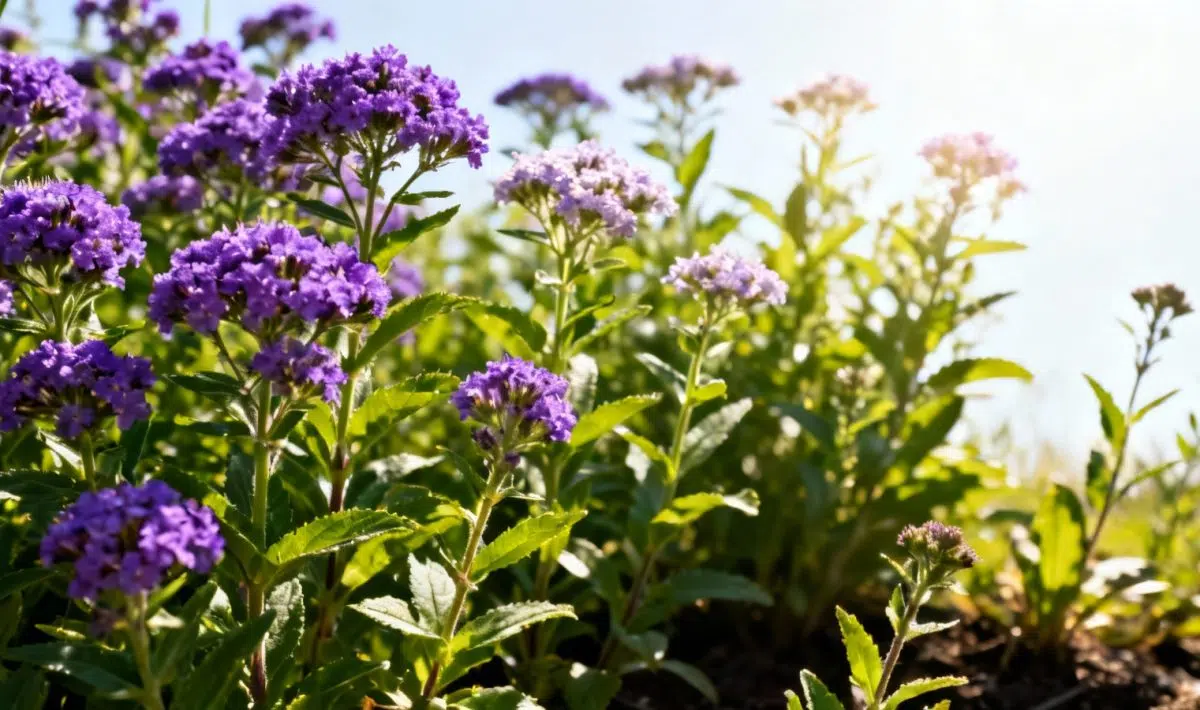
When you’re planning to grow purpletop vervain (Verbena bonariensis) in your garden, understanding its light requirements is absolutely essential for success. This stunning perennial thrives best with full sun exposure, requiring at least 6 to 8 hours of direct sunlight daily for optimal flowering and healthy growth. Without adequate light, you’ll notice your plant becomes leggy, produces fewer flowers, and may struggle to reach its full potential.
Purpletop vervain has become increasingly popular among gardeners, and for good reason. This tall, graceful plant creates an airy, cottage-garden feel with its purple flower clusters dancing on slender stems. However, achieving this beautiful display depends heavily on providing the right growing conditions, with sunlight being the most critical factor.
Why full sun matters for purpletop vervain
Light fuels photosynthesis, which is essential for producing the energy your purpletop vervain needs to develop those characteristic long flowering stems. Studies in horticulture classify Verbena bonariensis as a facultative long-day plant, meaning it flowers more profusely when day length and light intensity increase. Just like understanding sunlight requirements for eggplant growth, getting the light conditions right for vervain makes all the difference in your garden’s success.
Nursery trials consistently show that plants grown under high-intensity light conditions develop better structure and produce significantly more flowers. In contrast, partial shade leads to elongated stems and reduced blooming, creating a less attractive and less stable plant overall.
Optimal growing conditions for purpletop vervain
The best locations for your purpletop vervain are south or west-facing areas of your garden that receive unobstructed sunlight throughout most of the day. These positions ensure your plant gets the intense light it craves while avoiding the shadows cast by buildings, trees, or other structures.
While purpletop vervain can tolerate partial shade, you’ll quickly notice the difference in performance. Plants grown in less-than-ideal light conditions often become taller and more fragile, requiring staking to prevent them from toppling over. They also produce fewer of those delightful purple flower clusters that make this plant so desirable.
Seasonal light considerations
Throughout the growing season, your purpletop vervain’s light needs remain consistently high. Spring planting in a sunny location sets the foundation for strong summer growth and abundant autumn flowering. Much like considering angel’s-wings sunlight needs when planning your garden layout, positioning your vervain correctly from the start saves you trouble later.
During summer’s peak growing period, that 6-8 hour daily sun requirement becomes even more critical. The intense light supports vigorous growth and prepares the plant for its spectacular late-season flowering display that often continues until the first frost.
Choosing quality seeds for successful cultivation
When you’re ready to start your purpletop vervain journey, selecting high-quality seeds from reputable sellers makes a significant difference in your success rate. Look for seeds that come well-packaged with clear growing instructions and positive buyer evaluations. Many successful gardeners emphasize the importance of checking reviews from previous customers who have actually grown the plant.
Quality seeds typically arrive in good condition with detailed descriptions of what to expect. The best sellers provide comprehensive information about germination rates, growing requirements, and expected plant characteristics. This attention to detail indicates a seller who understands their product and cares about customer success.
What to look for when buying seeds
Smart buyers always verify the seller’s reputation by reading evaluations left by other gardeners. Look for comments about germination success, plant vigor, and whether the final product matched the description. Similar to researching optimal sunlight for growing radishes, taking time to research your seed source pays dividends in garden success.
Pay attention to packaging quality as well. Professional sellers understand that seeds need protection from moisture and temperature fluctuations during shipping. Well-described products with clear photos and detailed growing information usually indicate a reliable source.
Maximizing light exposure in your garden
Creating the perfect sunny spot for your purpletop vervain might require some strategic planning. Consider the mature height of nearby plants and structures that might cast shadows as the growing season progresses. Remember that your vervain can reach 3-6 feet tall, so it needs consistent light from ground level up.
If your garden has limited full-sun areas, prioritize these premium spots for light-loving plants like purpletop vervain. You can grow more shade-tolerant plants in areas that receive less direct sunlight, but vervain truly needs those prime sunny locations to perform at its best.
Common placement mistakes to avoid
Many gardeners underestimate how much space tall plants like purpletop vervain need for optimal light exposure. Planting too close to buildings, fences, or large perennials can create unexpected shade problems as everything grows throughout the season. Understanding light requirements is just as crucial as knowing healthy growth of selloum plants when planning your overall garden design.
Another frequent error is assuming that bright, indirect light will suffice. While your vervain might survive in these conditions, it won’t thrive or produce the abundant flowers that make it such a garden standout. Direct sunlight makes the crucial difference between a struggling plant and a spectacular display.
Growing tips for success
Once you’ve secured quality seeds and identified the perfect sunny location, proper timing becomes essential. Start seeds indoors 6-8 weeks before your last frost date, or direct sow in spring after soil temperatures consistently reach 65°F. The young plants need that full sun exposure from the moment they’re transplanted outdoors.
Water management works hand-in-hand with light requirements. Plants in full sun naturally need more water than those in shadier locations, but purpletop vervain is relatively drought-tolerant once established. The key is consistent moisture during the establishment period, then allowing the soil to dry slightly between waterings.
Supporting your sun-loving vervain
Even in ideal sunny conditions, tall purpletop vervain may benefit from subtle support, especially in windy locations. Rather than obvious staking, consider planting it among shorter, sturdy companions that can provide natural wind protection while allowing full light penetration. This approach maintains the plant’s natural, airy appearance while providing practical support.
Regular deadheading encourages continued flowering throughout the season, but many gardeners prefer to let some flowers go to seed for next year’s volunteer plants. Like understanding sunlight needs for Jimsonweed growth, learning these maintenance details helps you get the most from your garden investment.
Getting the most from your investment
Investing in quality purpletop vervain seeds and providing optimal growing conditions creates years of garden enjoyment. This perennial often self-seeds in favorable conditions, giving you new plants each year without additional seed purchases. The key is starting with good genetic material from reputable sellers and giving your initial plants the best possible growing environment.
Remember that the time you spend researching sellers, reading evaluations, and selecting the sunniest garden locations pays off in superior plant performance. Quality seeds from reliable sources, combined with proper light conditions, create the foundation for a truly spectacular garden display that will return year after year.
Allan is a lifelong gardening enthusiast who still gets excited when the first seedlings pop up in spring. With a deep love for nature and a hands-in-the-soil approach, he shares practical tips, plant discoveries, and clever tricks picked up over years of digging, planting, and observing. Whether you’re a new gardener or have a shed full of tools, Allan writes like a neighbor who’s always happy to swap cuttings and stories over the fence.
You can find more about Allan’s work on Malt or connect with him on LinkedIn.