Pour Vinegar on Weeds? Here’s What Really Happens in Your Garden
Pour Vinegar on Weeds? Here’s What Really Happens in Your Garden
Vinegar has gained popularity as a natural weed killer, but its effectiveness and risks vary widely depending on application methods, weed types, and environmental conditions. While it offers an eco-friendly alternative to synthetic herbicides, gardeners must understand its limitations to avoid unintended consequences. This article explores how vinegar works, its strengths and weaknesses, and practical guidance for safe use.
Vinegar-based herbicides rely on acetic acid to dehydrate plant tissues, disrupting photosynthesis and nutrient absorption. The acid pulls moisture from leaves and stems, causing rapid desiccation. This process typically begins within minutes of application, with visible wilting occurring in hours.
Key mechanisms:
Desiccation: Acetic acid acts as a desiccant, drying out foliage and preventing water/nutrient uptake.
Non-selective action: Affects all plants it contacts, including desirable crops.
Surface-level impact: Only kills above-ground growth, leaving roots intact for perennial weeds.
Household vinegar (5% acetic acid): Works on young, tender weeds but requires repeated applications.
Horticultural vinegar (20-30% acetic acid): Achieves 85-100% kill rates on mature weeds, including broadleaf species like ground ivy and lambsquarters.
Timing and application methods
Optimal conditions: Apply on sunny, dry days (avoid rain). Acetic acid evaporates faster in heat, enhancing desiccation.
Targeting: Spray all leaves and upper growth points to maximize contact. Broadleaf weeds are more susceptible due to larger surface areas.
Best practices for safe application
To minimize risks and maximize results, follow these guidelines:
Choosing the right vinegar
For small, annual weeds: 5% household vinegar diluted with water may suffice.
For established weeds: Use 20-30% horticultural vinegar for faster, more thorough results.
Application techniques
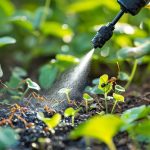
Spray precision: Use a nozzle to target weeds directly, avoiding drift onto desirable plants.
Surfactant addition: A few drops of dish soap improve adhesion, increasing contact time with foliage.
Repeat as needed: Perennial weeds may require multiple treatments to exhaust root reserves.
Safety considerations
Protect plants: Avoid spraying near flowers, vegetables, or grass. Even brief contact can cause burns.
Soil pH monitoring: Overuse may lower soil pH, harming beneficial microbes. Test soil periodically.
Risks and limitations of vinegar weed control
While vinegar offers a chemical-free option, its drawbacks require careful management.
Non-selective action
Vinegar damages all plants it contacts, making it unsuitable for:
Garden beds: Risk of harming seedlings or crops.
Lawns: May kill grass, though some species recover.
Incomplete root control
Perennial weeds with deep taproots (e.g., dandelions) regrow unless roots are physically removed. Vinegar alone cannot eliminate these species.
Environmental factors
Rainfall: Washes away acetic acid, reducing efficacy. Wait 24-48 hours after rain to apply.
For persistent weeds or sensitive areas, consider these approaches:
Physical removal
Hand-weeding: Effective for small infestations. Remove entire root systems for perennials.
Mulching: Suppresses weed growth by blocking light and retaining moisture.
Chemical alternatives
Selective herbicides: Target specific weed types without harming crops.
Boiling water: Scalds weeds but requires caution to avoid burns.
Integrated pest management
Combine vinegar with other methods:
Pre-treatment: Apply vinegar to weaken weeds before physical removal.
Barriers: Install landscape fabric or metal edging to prevent regrowth.
Vinegar can be a valuable tool for weed control when used judiciously. Its rapid action on annual weeds makes it ideal for hardscaped areas, while higher concentrations tackle tougher growth. However, gardeners must weigh its non-selective nature and limited root penetration against their needs. For optimal results, pair vinegar with physical removal, soil amendments, or targeted herbicides to address persistent infestations. Always prioritize plant safety and soil health when implementing this method.
Allan is a lifelong gardening enthusiast who still gets excited when the first seedlings pop up in spring. With a deep love for nature and a hands-in-the-soil approach, he shares practical tips, plant discoveries, and clever tricks picked up over years of digging, planting, and observing. Whether you’re a new gardener or have a shed full of tools, Allan writes like a neighbor who’s always happy to swap cuttings and stories over the fence.
You can find more about Allan’s work on Malt or connect with him on LinkedIn.
13 Replies to “Pour Vinegar on Weeds? Here’s What Really Happens in Your Garden”
How often should you apply vinegar to weeds for it to be effective without harming the surrounding plants?
I tried vinegar on my weeds, and it really works wonders! it’s such an eco-friendly hack. my garden’s thriving without all those pesky intruders now! 🌿👏
Tried vinegar once on garden weeds. they turned brown quickly but came back in a week! guess i’ll stick with pulling them by hand or try something stronger next time. 🙈
I tried vinegar on my garden path weeds once. at first, it looked promising, but a few were pretty resilient and popped back up after a week! guessing i’ll stick to pulling them out.
Wow, using vinegar sounds so simple and effective on weeds! can’t wait to see my garden flourish without chemicals. 🌱✨
Love this garden hack! can’t wait to try vinegar on those pesky weeds! 🌿
Wow, this article opened my eyes! i never knew vinegar could be so effective in gardening. can’t wait to try it out and say goodbye to stubborn weeds! 🌿🪴
Using vinegar on weeds sounds easy, but i’ve read mixed reviews. some say it works short-term; others find it less effective in the long run. could be worth trying, just don’t expect miracles!
Tried vinegar on my pesky dandelions once. they wilted pretty fast, but somehow sprouted back a week later even angrier looking. think it works mostly for smaller weeds! 🌿🤷♂️
How often should you apply vinegar to really see results without harming other plants nearby?
Interesting tip, thanks!
Does vinegar harm the soil or surrounding plants, and can it affect future plant growth in that area?
Tried the vinegar thing once on my dandelion problem, it kind of worked but made the area really acidic, so i ended up needing to balance the soil later. definitely a quick fix though!





How often should you apply vinegar to weeds for it to be effective without harming the surrounding plants?
I tried vinegar on my weeds, and it really works wonders! it’s such an eco-friendly hack. my garden’s thriving without all those pesky intruders now! 🌿👏
Tried vinegar once on garden weeds. they turned brown quickly but came back in a week! guess i’ll stick with pulling them by hand or try something stronger next time. 🙈
I tried vinegar on my garden path weeds once. at first, it looked promising, but a few were pretty resilient and popped back up after a week! guessing i’ll stick to pulling them out.
Wow, using vinegar sounds so simple and effective on weeds! can’t wait to see my garden flourish without chemicals. 🌱✨
Love this garden hack! can’t wait to try vinegar on those pesky weeds! 🌿
Wow, this article opened my eyes! i never knew vinegar could be so effective in gardening. can’t wait to try it out and say goodbye to stubborn weeds! 🌿🪴
Using vinegar on weeds sounds easy, but i’ve read mixed reviews. some say it works short-term; others find it less effective in the long run. could be worth trying, just don’t expect miracles!
Tried vinegar on my pesky dandelions once. they wilted pretty fast, but somehow sprouted back a week later even angrier looking. think it works mostly for smaller weeds! 🌿🤷♂️
How often should you apply vinegar to really see results without harming other plants nearby?
Interesting tip, thanks!
Does vinegar harm the soil or surrounding plants, and can it affect future plant growth in that area?
Tried the vinegar thing once on my dandelion problem, it kind of worked but made the area really acidic, so i ended up needing to balance the soil later. definitely a quick fix though!