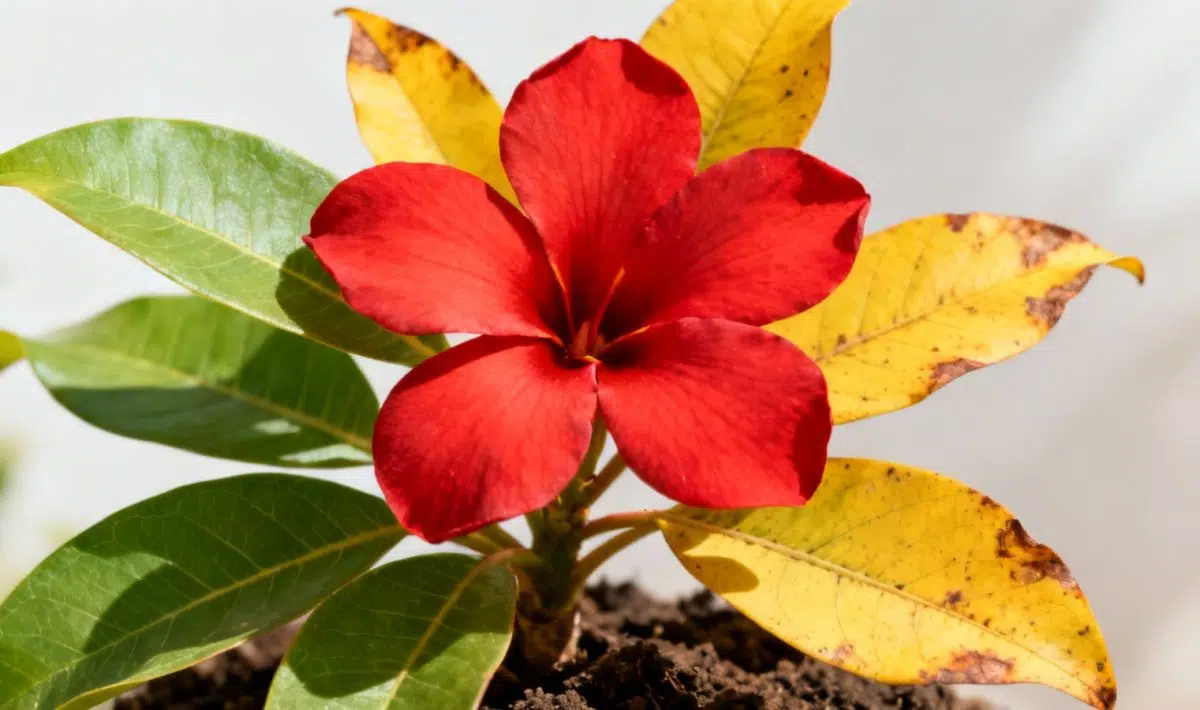
Why are my red frangipani leaves turning yellow: causes and solutions
Nothing quite breaks a gardener’s heart like watching their beloved red frangipani’s vibrant foliage slowly transform from lush green to concerning yellow. If you’re wondering why your plumeria rubra is showing these symptoms, you’re not alone in this gardening challenge.
Yellow leaves on your frangipani can signal various issues, from simple seasonal changes to more complex environmental stresses. Understanding these causes will help you take the right action to restore your plant’s health and vigor.
Understanding your red frangipani’s natural behavior
Red frangipani, scientifically known as Plumeria rubra, originates from tropical regions where they thrive in warm, humid conditions. These stunning plants are naturally deciduous in their native habitat, which means leaf yellowing can sometimes be completely normal.
During cooler months or dry seasons, your plumeria may naturally shed its leaves as part of its growth cycle. This process typically begins with yellowing from the bottom leaves upward, and it’s the plant’s way of conserving energy for the next growing season.
However, when yellowing occurs during the active growing season or affects the entire plant rapidly, there’s usually an underlying issue that needs your attention.
✅ Quick Checklist
Is the soil too wet or too dry?
Is the plant getting 6+ hours of sunlight daily?
Have you fertilized in the last 2 months?
Are there visible pests under the leaves?
Does the pot have adequate drainage?
🔥 FREE
📱
Diagnose your plant in one click!
AI instant diagnosis • Personalized solutions • 50,000+ species
Incorrect watering is the most common culprit behind yellowing frangipani leaves. These tropical beauties have specific moisture requirements that, when not met, quickly manifest through their foliage.
Overwatering creates soggy conditions that suffocate the roots, preventing them from absorbing nutrients properly. When this happens, your plumeria’s leaves will start yellowing from the base upward, often accompanied by a musty smell from the soil.
Conversely, underwatering causes the plant to go into survival mode, dropping leaves to conserve moisture. In this case, the yellowing typically starts with older leaves and progresses quickly if the dry conditions persist.
To determine the right watering schedule, check the soil moisture by inserting your finger about two inches deep. Your frangipani prefers the soil to dry out between waterings, which typically means watering every 7-10 days during the growing season.
Light and temperature considerations
Red frangipani thrives with at least six hours of direct sunlight daily. Insufficient light causes the plant to become leggy and weak, often resulting in yellowing leaves as it struggles to photosynthesize effectively.
Temperature fluctuations also play a significant role in leaf health. When temperatures drop below 50°F (10°C), your plumeria may respond with rapid yellowing and leaf drop, preparing for dormancy.
If you’re growing your frangipani indoors or in a location that doesn’t receive adequate sunlight, consider relocating it to a brighter spot or supplementing with grow lights during the darker months.
Nutritional deficiencies and their impact
Like many flowering plants, frangipani requires balanced nutrition to maintain healthy foliage. Nitrogen deficiency is particularly common and typically shows as yellowing that starts with older leaves at the bottom of the plant.
Iron deficiency presents differently, causing yellowing between the leaf veins while the veins themselves remain green. This condition, called chlorosis, often occurs in alkaline soils where iron becomes less available to the plant.
Magnesium deficiency also causes yellowing, but it typically affects older leaves first and creates a distinctive pattern where the leaf edges remain green while the center yellows. Similar issues can affect other plants, as seen with causes of yellowing clover leaves in garden settings.
To address nutritional issues, use a balanced fertilizer with a ratio of 10-10-10 or 15-15-15 during the growing season, applying it every 4-6 weeks from spring through early fall.
Pest and disease problems
Several pests and diseases can cause yellowing in frangipani leaves, each with distinctive symptoms that help identify the specific problem affecting your plant.
Spider mites are tiny pests that cause stippling and yellowing, often accompanied by fine webbing on the undersides of leaves. These microscopic creatures thrive in hot, dry conditions and can quickly spread throughout your plant.
Scale insects appear as small, waxy bumps on stems and leaves, sucking plant juices and causing yellowing and stunted growth. They’re particularly problematic because they’re often overlooked until the infestation becomes severe.
Fungal diseases like rust can also cause yellowing, typically starting as small yellow spots that gradually expand and may develop orange or brown spores on the leaf undersides.
Regular inspection of your plant, particularly the undersides of leaves, will help you catch these issues early when they’re easier to treat with appropriate insecticidal soaps or fungicides.
✅ Quick Checklist
Is the soil too wet or too dry?
Is the plant getting 6+ hours of sunlight daily?
Have you fertilized in the last 2 months?
Are there visible pests under the leaves?
Does the pot have adequate drainage?
🔥 FREE
📱
Diagnose your plant in one click!
AI instant diagnosis • Personalized solutions • 50,000+ species
Once you’ve identified the cause of your frangipani’s yellowing leaves, implementing the right solution becomes much more straightforward and effective.
For water-related issues, adjust your watering schedule immediately. If overwatering is the problem, allow the soil to dry out completely before the next watering and ensure your pot has adequate drainage holes.
When dealing with underwatering, gradually increase the frequency but avoid flooding the plant, as this shock can cause additional stress. The key is consistency rather than quantity.
Nutritional deficiencies require targeted fertilization. A balanced liquid fertilizer applied every two weeks during the growing season will address most nutrient needs. For severe deficiencies, consider supplemental iron or magnesium as needed.
Light issues often require relocating your plant or adjusting its environment. If moving isn’t possible, consider pruning nearby vegetation that might be blocking sunlight. Just like reasons for yellow honeysuckle leaves can often be traced to environmental factors, addressing these conditions usually resolves the problem.
Prevention and long-term care
Preventing yellow leaves on your red frangipani is always easier than treating existing problems. Establishing good care routines from the start will keep your plant healthy throughout the growing season.
Maintain consistent watering by checking soil moisture regularly, especially during hot summer days when evaporation rates increase significantly. Your plumeria will appreciate deep, infrequent watering rather than frequent shallow applications.
Regular fertilization during the growing season supports vigorous growth and helps prevent nutrient deficiencies before they manifest as yellowing leaves. Stop fertilizing in late fall to allow your plant to prepare for dormancy naturally.
Monitor your plant weekly for signs of pests or diseases, paying particular attention to new growth and the undersides of leaves where problems often start. Early detection makes treatment much more successful and less stressful for your plant.
With proper care and attention to these key factors, your red frangipani will reward you with healthy green foliage and those spectacular fragrant petals that make this tropical beauty such a cherished addition to any garden. Remember that patience is essential, as it may take several weeks to see improvement once you’ve addressed the underlying issues causing the yellowing.
Allan is a lifelong gardening enthusiast who still gets excited when the first seedlings pop up in spring. With a deep love for nature and a hands-in-the-soil approach, he shares practical tips, plant discoveries, and clever tricks picked up over years of digging, planting, and observing. Whether you’re a new gardener or have a shed full of tools, Allan writes like a neighbor who’s always happy to swap cuttings and stories over the fence.
You can find more about Allan’s work on Malt or connect with him on LinkedIn.