Understanding American Elder – Sambucus canadensis
The American elder (Sambucus canadensis) stands out as one of North America’s most versatile native shrubs. This elderberry species offers gardeners an excellent combination of ornamental beauty, ecological benefits, and practical uses. Unlike its European cousin, this elder thrives in various conditions while providing both flowers and dark purple fruits that have nourished wildlife and humans for centuries.
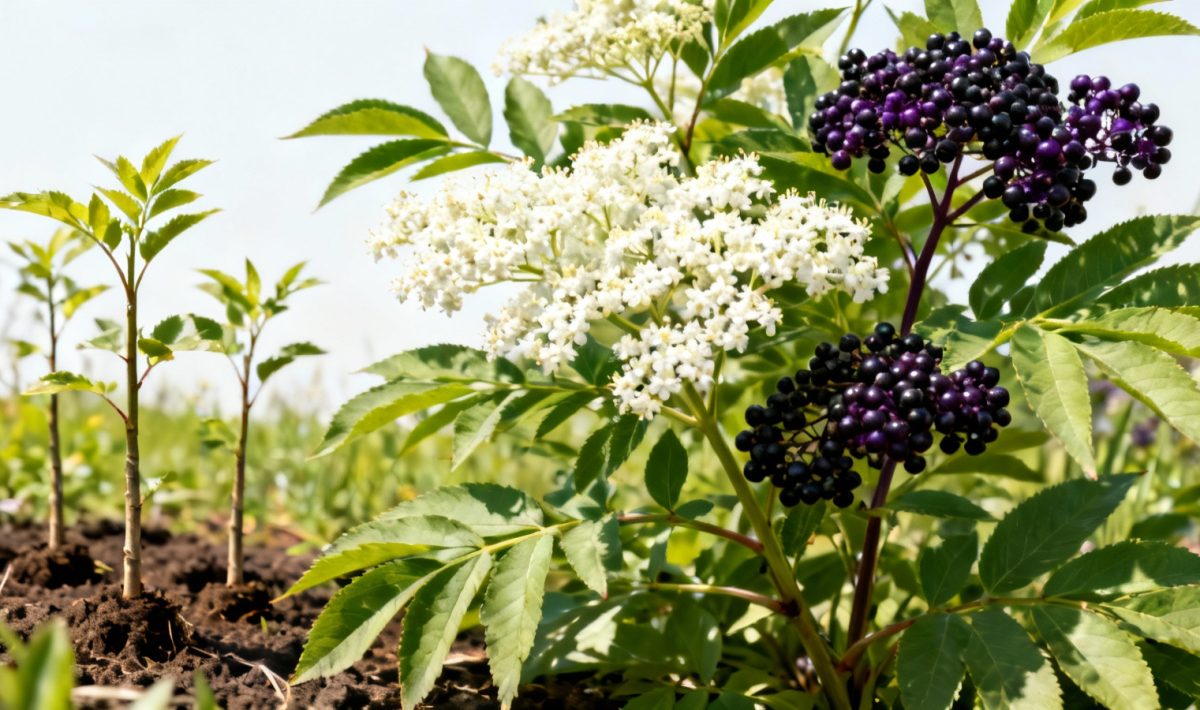
This hardy shrub typically reaches heights of 3 to 12 feet, creating dense thickets through its natural spreading habit. The plant’s vigorous growth and adaptability make it perfect for naturalistic gardens, wildlife areas, and even formal landscapes when properly managed. Its creamy white flower clusters appear in late spring, followed by clusters of small, dark berries in late summer.
Essential care requirements for healthy growth
American elder proves remarkably forgiving when it comes to growing conditions, though understanding its preferences ensures optimal performance. These plants naturally gravitate toward moist, well-draining soils with plenty of organic matter. While they tolerate various soil types, from clay to sandy loam, consistent moisture during the growing season promotes the best fruit production and overall plant health.
When considering placement in your garden, remember that elderberry plants benefit from morning sun with some afternoon protection in hotter climates. For those wondering about sunlight requirements for American elder, these shrubs perform well in partial shade to full sun conditions, adapting their growth patterns accordingly.
Proper watering establishes the foundation for thriving elderberry plants. These shrubs prefer consistently moist soil, especially during fruit development. However, understanding watering frequency for healthy growth helps prevent both drought stress and root rot issues that can compromise plant vitality.
Distinctive characteristics of Sambucus canadensis
The elderberry plant displays several notable features that make identification straightforward. Its compound leaves consist of 5-7 leaflets with serrated edges, emerging bright green in spring and maintaining their color through summer. The distinctive hollow stems contain a white pith, a characteristic that distinguishes elder species from potentially harmful look-alikes.
During flowering season, large, flat-topped clusters of tiny white flowers create stunning displays that attract numerous beneficial insects. These corymbs can span 6-10 inches across, providing both visual appeal and ecological value. The flowers possess a sweet, slightly musky fragrance that intensifies during warm, humid weather.
The fruit clusters develop throughout summer, gradually changing from green to deep purple-black when ripe. Each berry measures roughly 1/4 inch in diameter and contains 3-5 small seeds. Wildlife, particularly birds, eagerly consume these nutritious fruits, making elderberry an excellent choice for wildlife gardens and natural areas.
Growing elderberry in your garden
Successful elderberry cultivation begins with proper site selection and soil preparation. These shrubs thrive in areas with good air circulation and adequate space for their spreading growth habit. Plan for mature plants to occupy 6-8 feet of space, though regular pruning can maintain smaller dimensions if needed.
Soil preparation should focus on improving organic content and drainage. Work compost or well-aged manure into the planting area, creating a rich foundation that supports vigorous growth. While elderberry tolerates various pH levels, slightly acidic to neutral soil (pH 6.0-7.0) produces the best results.
Spring planting offers the best establishment opportunities, allowing plants to develop strong root systems before winter. Space multiple plants 6-10 feet apart if creating a hedge or wildlife thicket, or position single specimens with adequate room for natural spreading.
Fertilization and ongoing maintenance
Young elderberry plants benefit from annual applications of balanced fertilizer or compost during early spring. Established plants typically require minimal supplemental feeding if growing in reasonably fertile soil. Focus fertilization efforts on providing adequate nitrogen for vigorous growth and phosphorus for healthy root development.
Mulching around plants helps retain moisture, suppress weeds, and gradually improve soil as organic mulch decomposes. Apply 2-3 inches of organic mulch, keeping it several inches away from the plant stem to prevent moisture-related issues.
Propagation methods for expanding your elderberry collection
Elderberry propagates readily through several methods, making it simple to expand plantings or share with fellow gardeners. Softwood cuttings taken in early summer root easily when placed in moist potting medium. Cut 6-8 inch segments from healthy new growth, remove lower leaves, and maintain consistent moisture until roots develop.
Division of established clumps provides another reliable propagation method. During dormancy, carefully separate rooted suckers from the parent plant using a sharp spade. These divisions typically establish quickly when planted in prepared soil and kept consistently moist.
Seed propagation, while possible, requires more patience and may not produce plants identical to the parent. Fresh seeds benefit from cold stratification over winter before spring sowing. However, most gardeners prefer vegetative propagation methods for faster, more predictable results.
Pruning and plant management
Regular pruning maintains elderberry health and productivity while controlling size and shape. Remove dead, damaged, or crossing branches during dormancy, typically in late winter before new growth begins. Established plants benefit from renewal pruning every 3-4 years, removing older canes to encourage fresh, vigorous growth.
Summer pruning can control size and shape, though heavy pruning may reduce flower and fruit production for the following season. Focus on removing suckers if controlling spread, or allow natural thicket formation for wildlife habitat areas.
Harvesting and using elderberry flowers and fruits
Elderberry flowers and fruits offer numerous culinary and medicinal possibilities when properly harvested and prepared. Flower clusters reach peak quality just as individual flowers fully open, typically in early to mid-summer. Harvest during dry morning hours after dew evaporates for best flavor and storage quality.
Fruit harvesting requires patience, as clusters ripen unevenly over several weeks. Ripe berries appear deep purple-black and separate easily from stems when gently shaken. Individual berries should feel soft and full when properly ripened.
Both flowers and fruits require proper preparation before consumption, as raw elderberries can cause digestive upset. Cooking eliminates potential issues while preserving beneficial compounds. Popular preparations include jellies, syrups, wines, and herbal teas that showcase elderberry’s unique flavor profile.
Interestingly, research into sunlight for optimal vitamin D levels has explored various plant compounds, though elderberry’s primary benefits come from its rich antioxidant content rather than vitamin D synthesis.
Companion planting and garden integration
Elderberry integrates beautifully with other native plants and garden companions that share similar growing requirements. Consider pairing with woodland flowers, ferns, and other moisture-loving perennials for naturalistic plantings. The plant’s tolerance for various conditions makes it suitable for rain gardens and low-maintenance landscape areas.
When designing mixed plantings, remember that elderberry’s spreading habit works well as a background element or natural screen. Its seasonal interest spans from early spring emergence through late fall fruit display, providing extended garden value beyond many ornamental alternatives.
For gardeners interested in diverse native plant combinations, considering how different species complement each other enhances overall garden success. Learning about caring for common blue violet and similar native companions helps create cohesive, sustainable plantings that support local ecosystems while providing beauty and functionality.

Allan is a lifelong gardening enthusiast who still gets excited when the first seedlings pop up in spring. With a deep love for nature and a hands-in-the-soil approach, he shares practical tips, plant discoveries, and clever tricks picked up over years of digging, planting, and observing. Whether you’re a new gardener or have a shed full of tools, Allan writes like a neighbor who’s always happy to swap cuttings and stories over the fence.
You can find more about Allan’s work on Malt or connect with him on LinkedIn.