
Understanding your american elder’s water requirements
American elder (Sambucus canadensis) are remarkably resilient plants, but they thrive with proper hydration management. These native shrubs naturally grow near streams and wetlands, which gives us valuable insight into their water preferences. During the growing season, your american elder needs consistent moisture without becoming waterlogged.
The age of your plant significantly influences its water requirements. Young elderberry bushes require more frequent attention, while established specimens develop deeper root systems that access moisture more efficiently. This natural progression means your watering approach should evolve with your plant’s development.
Signs your elder needs water
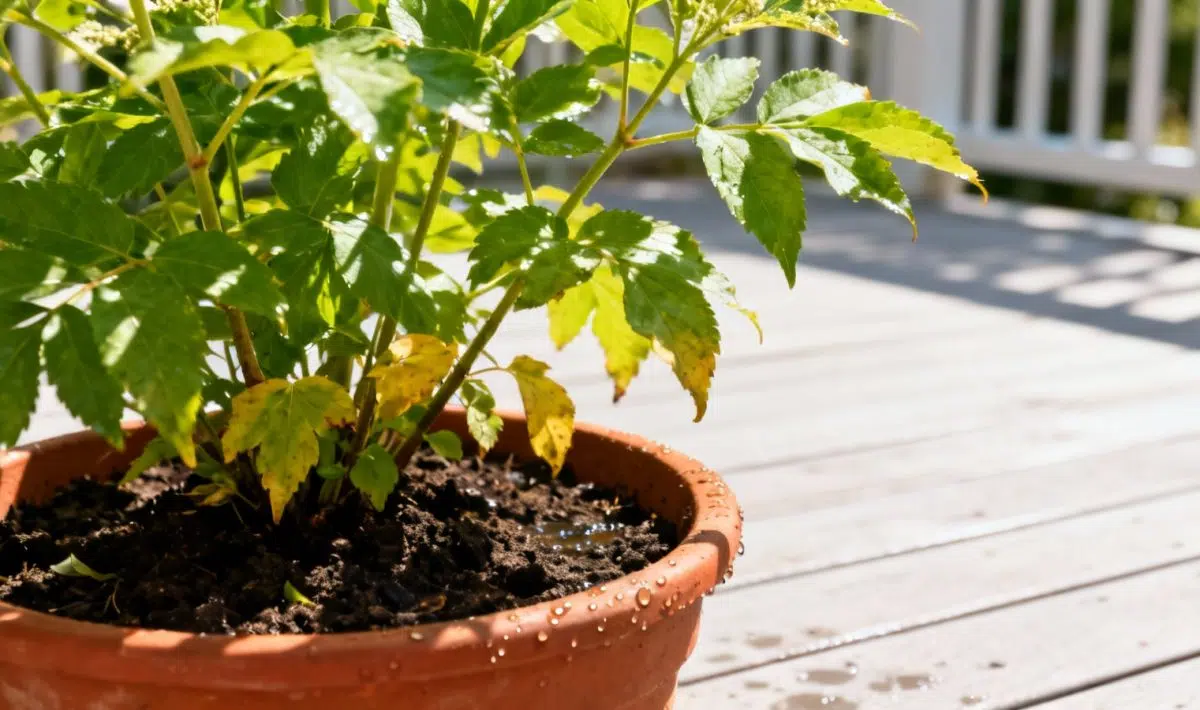
Recognizing dehydration symptoms helps prevent stress before it becomes problematic. Wilting leaves, especially during morning hours, indicate insufficient moisture. Drooping stems and yellowing foliage also signal water deficiency, though these symptoms can overlap with other issues.
The soil around your elder provides the most reliable indicator. Insert your finger 2-3 inches into the ground near the base. If the soil feels dry at this depth, it’s time to water. This simple test works more effectively than relying solely on visual cues from the plant itself.
Seasonal watering strategies for optimal health
Spring marks the beginning of active growth, requiring increased attention to moisture levels. After winter dormancy, your elder awakens with renewed vigor, demanding consistent hydration to support new leaf development and flower formation. During this period, aim for deep watering sessions once or twice weekly, depending on rainfall.
Summer brings the greatest challenges, with heat and extended daylight increasing water demands. Established american elders typically need 20-25 mm of water weekly during peak growing season. For perspective, this equals approximately 30 liters for a mature shrub with a one-meter root spread.
Autumn requires gradually reducing water frequency as growth slows and the plant prepares for dormancy. However, don’t stop watering entirely until the ground freezes. A well-hydrated elder enters winter better equipped to handle cold stress and emerges stronger in spring.
Adapting to weather conditions
Hot, windy days accelerate moisture loss through transpiration, necessitating more frequent watering. Conversely, cool, humid conditions reduce water needs significantly. Monitor weather forecasts and adjust your schedule accordingly, always checking soil moisture before adding water.
Rainy periods might eliminate the need for supplemental watering entirely. However, light drizzles often fail to penetrate deeply enough to reach root zones. After rainfall, test soil depth to determine if natural precipitation provided adequate moisture.
Best practices for watering american elder
Deep, infrequent watering encourages robust root development more effectively than frequent, shallow applications. When you water, apply enough to penetrate 12-18 inches into the soil. This approach mimics natural rainfall patterns and promotes drought tolerance over time.
Early morning represents the ideal watering time, allowing plants to absorb moisture before heat increases evaporation rates. Evening watering works as a second choice, though it may promote fungal issues in humid climates. Avoid midday watering, which wastes water through rapid evaporation.
Water quality affects plant health more than many gardeners realize. Chlorinated municipal water should sit overnight before use, allowing chemicals to dissipate. Rainwater provides the best option when available, offering natural minerals without additives. For those interested in similar watering principles, you can explore techniques for water your American burnweed effectively which shares comparable moisture requirements.
Watering techniques that work
Soaker hoses deliver water directly to root zones while minimizing evaporation loss. Position them in a circle around the plant, extending to the drip line where feeder roots concentrate. This method provides steady, gentle moisture without disturbing soil or foliage.
Drip irrigation offers precise control over water delivery, making it excellent for elderberry groves or multiple plantings. Individual emitters can be adjusted based on each plant’s specific needs, accounting for variations in age, size, and microclimate conditions.
Hand watering works well for small gardens or individual specimens. Use a gentle spray setting to avoid soil erosion, and water slowly to ensure deep penetration. This hands-on approach also provides opportunities to inspect plants closely for health issues.
Factors affecting watering frequency
Soil type dramatically influences how often you’ll need to water your american elder. Clay soils retain moisture longer but drain poorly, requiring less frequent but carefully monitored watering. Sandy soils drain quickly, necessitating more frequent applications to maintain consistent moisture levels.
Well-draining, organic-rich soil provides the ideal balance, holding adequate moisture while preventing waterlogged conditions. Amending heavy clay or sandy soil with compost improves water retention and drainage simultaneously, creating optimal growing conditions for elderberries.
Plant size and root establishment affect water requirements significantly. Newly planted elders need daily attention for the first week, then gradually transition to less frequent watering as roots expand. Similarly, techniques used for optimal watering for Norfolk Island pine demonstrate how plant maturity influences irrigation schedules across different species.
Environmental considerations
Mulching around your elder conserves soil moisture while suppressing weeds and regulating soil temperature. Apply 2-3 inches of organic mulch, keeping it away from the stem base to prevent pest issues. Good mulching can reduce watering needs by up to 50% during hot weather.
Wind exposure increases water loss through transpiration, particularly affecting plants in open locations. Consider installing temporary windbreaks for young plants or increasing watering frequency for elders in consistently windy spots.
Companion planting affects water needs, as neighboring plants compete for soil moisture. Space elderberries appropriately and consider the water requirements of nearby plants when planning irrigation schedules. The principles apply broadly, as seen in watering tips for porcelainflower growth where plant spacing influences moisture management.
Monitoring and adjusting your watering approach
Soil moisture meters provide objective data about water levels at various depths, removing guesswork from watering decisions. These inexpensive tools insert easily into soil and display readings instantly, helping you develop consistent watering patterns based on actual conditions rather than assumptions.
Keep a watering log noting dates, amounts, weather conditions, and plant responses. Over time, patterns emerge that help predict optimal watering schedules for your specific location and growing conditions. This data becomes invaluable during unusual weather periods or when troubleshooting plant health issues.
Regular observation reveals subtle changes in plant behavior that indicate water stress or oversaturation. Healthy american elders display vibrant green foliage and steady growth throughout the season. Any deviation from normal appearance warrants investigation and possible watering adjustments.
Long-term water management strategies
Establishing deep root systems reduces long-term watering requirements significantly. Encourage this through proper initial watering practices and gradual reduction in frequency as plants mature. Well-established elders can survive moderate droughts once their roots extend deep into soil layers.
Consider installing rain gauges to track natural precipitation accurately. Many gardeners overestimate rainfall amounts, leading to unnecessary supplemental watering. Precise measurement helps coordinate irrigation with natural weather patterns more effectively.
Water conservation becomes increasingly important as climate patterns shift and water resources face pressure. Efficient irrigation methods, proper timing, and soil improvements all contribute to sustainable gardening practices. These principles extend beyond elderberries, as demonstrated in caring for other moisture-loving plants like those requiring healthy blooms for your gladiolus which benefit from similar water management approaches.
Remember that consistency matters more than perfection when watering american elder. These adaptable plants forgive occasional lapses but respond best to regular, thoughtful care. As you gain experience with your specific growing conditions, you’ll develop intuition about when and how much to water, creating thriving elderberry plants that reward your attention with abundant foliage, flowers, and fruit.
The journey of learning proper watering techniques applies across many garden plants, and understanding these principles helps with diverse species care. Whether you’re managing elderberries or exploring effective watering for Tutsan plants, the fundamentals of deep watering, seasonal adjustment, and soil monitoring remain consistent foundations for successful gardening.

Allan is a lifelong gardening enthusiast who still gets excited when the first seedlings pop up in spring. With a deep love for nature and a hands-in-the-soil approach, he shares practical tips, plant discoveries, and clever tricks picked up over years of digging, planting, and observing. Whether you’re a new gardener or have a shed full of tools, Allan writes like a neighbor who’s always happy to swap cuttings and stories over the fence.
You can find more about Allan’s work on Malt or connect with him on LinkedIn.


