
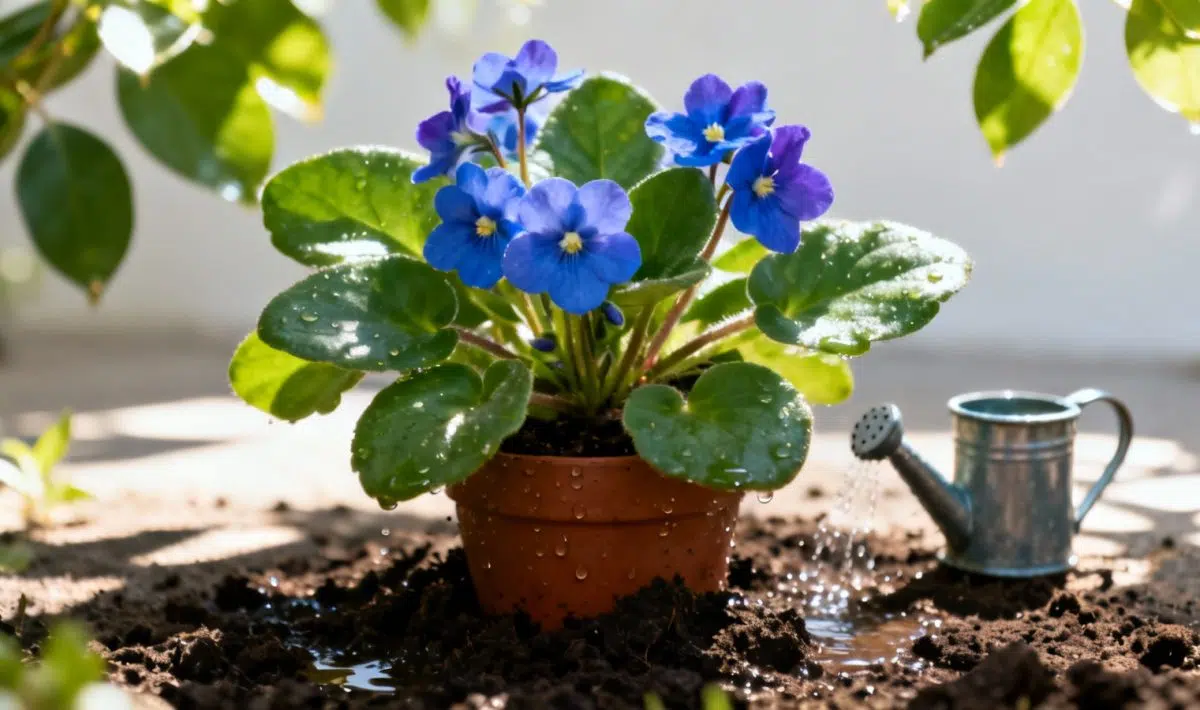
The common blue violet, scientifically known as Viola sororia, has become a beloved perennial that graces many gardens with its charming purple flowers. However, many plant enthusiasts struggle with the fundamental question: how often should you water your common blue violet? Understanding the watering needs of this native North American plant will help ensure its vibrant growth and continuous blooming throughout the growing season.
Understanding your common blue violet’s basic needs
Common blue violets are naturally adapted to woodland environments where they receive dappled sunlight and consistent moisture. These hardy plants thrive in conditions that mimic their native habitat, which means they prefer slightly moist but well-draining soil. Unlike some houseplants that can tolerate drought, violets are more sensitive to both overwatering and underwatering, making proper moisture management essential for their health.
The key to successful violet cultivation lies in understanding that these plants come from forest floors where organic matter naturally retains moisture while providing excellent drainage. This environment creates the perfect balance that our garden violets crave. When you replicate these conditions, your plants will reward you with abundant flowers and lush foliage.
Key factors that influence watering frequency
Soil type and drainage considerations
The type of soil you use dramatically affects how often you should water your violet plants. Well-draining soil mixed with organic matter like compost or aged leaf mold provides the ideal growing medium. This combination retains enough moisture to keep roots happy while preventing the waterlogged conditions that can lead to root rot. Clay soils, on the other hand, hold too much water and require less frequent watering sessions.
Sandy soils drain quickly and may require more frequent watering, sometimes every two to three days during hot weather. For gardeners dealing with heavy clay, adding organic amendments will improve drainage and reduce the risk of overwatering. The goal is to create a growing medium that feels like a wrung-out sponge – moist but not soggy.
Light exposure and temperature effects
Light conditions significantly impact your violet’s water requirements. Plants growing in bright, indirect light use more water than those in shadier spots. Similarly, temperature fluctuations affect how quickly moisture evaporates from both soil and leaves. During hot summer days, you may need to water more frequently, while cooler periods require less intervention.
Morning sun followed by afternoon shade provides ideal conditions for most violet varieties. This lighting pattern allows plants to photosynthesize efficiently without experiencing excessive water loss through transpiration. Plants in full shade may need watering only once or twice a week, while those in brighter locations might require daily attention during peak growing season.
Recommended watering schedules
Active growing season care
During spring and early summer, when your violets are actively growing and producing flowers, they typically need watering every three to four days. However, this frequency should always be adjusted based on soil moisture levels rather than following a rigid schedule. The best practice involves checking the top inch of soil with your finger – if it feels dry, it’s time to water.
For those seeking specific guidance on watering frequency for similar plants, the principles that apply to watering tips for hackberry bonsai can also inform violet care, particularly regarding drainage and moisture monitoring techniques.
When watering during active growth, provide enough water so that it runs out of the drainage holes if you’re growing in containers. This thorough soaking ensures that water reaches all root levels and encourages deep root development. After watering, empty any excess water from saucers within thirty minutes to prevent root problems.
Dormancy and winter watering
As temperatures drop and daylight hours decrease, common blue violets enter a natural dormancy period. During this time, their water needs decrease significantly. You may only need to water once a week or even less frequently, depending on your climate and growing conditions. The key is maintaining slight moisture without allowing the soil to become completely dry or waterlogged.
Indoor violet growers should be particularly careful during winter months when heating systems can quickly dry out the air and soil. Regular monitoring becomes even more important during this season, as the difference between adequate moisture and drought stress can develop quickly in heated environments.
Practical watering techniques
Proper watering methods
The method you use to water your violets matters just as much as frequency. Water slowly at soil level, avoiding the leaves and crown of the plant. Wet foliage can promote fungal diseases, especially in humid conditions or poor air circulation areas. A watering can with a narrow spout or a drip irrigation system works well for precise application.
Many successful growers have found that bottom watering works exceptionally well for potted violets. Place containers in a tray of water and allow the soil to absorb moisture from below. This method ensures even distribution while keeping foliage dry. Similar techniques are effective for various plant types, as demonstrated in approaches to mugwort watering requirements for growth.
Recognizing water stress signals
Learning to read your plant’s signals will make you a more successful violet grower. Underwatered violets typically show wilted leaves that feel dry and crispy around the edges. The soil pulls away from container sides, and flowers may drop prematurely. These plants often recover quickly once proper moisture is restored.
Overwatered violets present different symptoms that are often more serious. Leaves may turn yellow or develop soft, mushy spots. The soil feels constantly wet and may develop a sour smell indicating root rot. Prevention through proper drainage and careful watering practices is always better than trying to rescue an overwatered plant.
Seasonal adjustments and special considerations
Throughout the year, your watering routine should adapt to changing environmental conditions. Spring brings increased growth and flower production, requiring more consistent moisture. Summer heat may necessitate daily watering checks, especially for container plants. Fall signals the beginning of dormancy, when watering frequency should gradually decrease.
Container-grown violets face unique challenges compared to garden plants. They dry out faster and are more susceptible to both drought and overwatering. These plants benefit from the moisture management principles used for other container plants, such as those outlined in Norfolk Island pine watering guide.
Humidity also plays a crucial role in violet care. These woodland natives prefer moderate to high humidity levels, which can affect watering frequency. In dry climates or heated indoor spaces, you may need to water more often or use humidity trays to maintain optimal growing conditions.
Advanced care tips for optimal growth
Successful violet cultivation extends beyond basic watering practices. Mulching around garden plants helps retain soil moisture and reduces watering frequency while suppressing weeds that compete for water. Organic mulches like shredded leaves or fine bark chips work best, as they gradually decompose and improve soil structure.
For indoor growers or those with container gardens, group plants together to create a more humid microclimate. This natural humidity boost can reduce watering frequency while promoting healthier growth. The same principle applies to many houseplants, including the techniques used for optimal watering for porcelainflower.
Water quality matters too. Violets prefer slightly acidic to neutral water, so if your tap water is very hard or heavily chlorinated, consider using filtered or rainwater. Room temperature water is always better than cold water, which can shock the roots and slow growth.
Regular monitoring remains the cornerstone of successful violet care. Develop a routine of checking soil moisture, observing plant health, and adjusting your watering schedule based on seasonal changes and plant responses. With consistent attention and proper technique, your common blue violets will thrive and provide years of beautiful flowers and foliage.

Allan is a lifelong gardening enthusiast who still gets excited when the first seedlings pop up in spring. With a deep love for nature and a hands-in-the-soil approach, he shares practical tips, plant discoveries, and clever tricks picked up over years of digging, planting, and observing. Whether you’re a new gardener or have a shed full of tools, Allan writes like a neighbor who’s always happy to swap cuttings and stories over the fence.
You can find more about Allan’s work on Malt or connect with him on LinkedIn.


