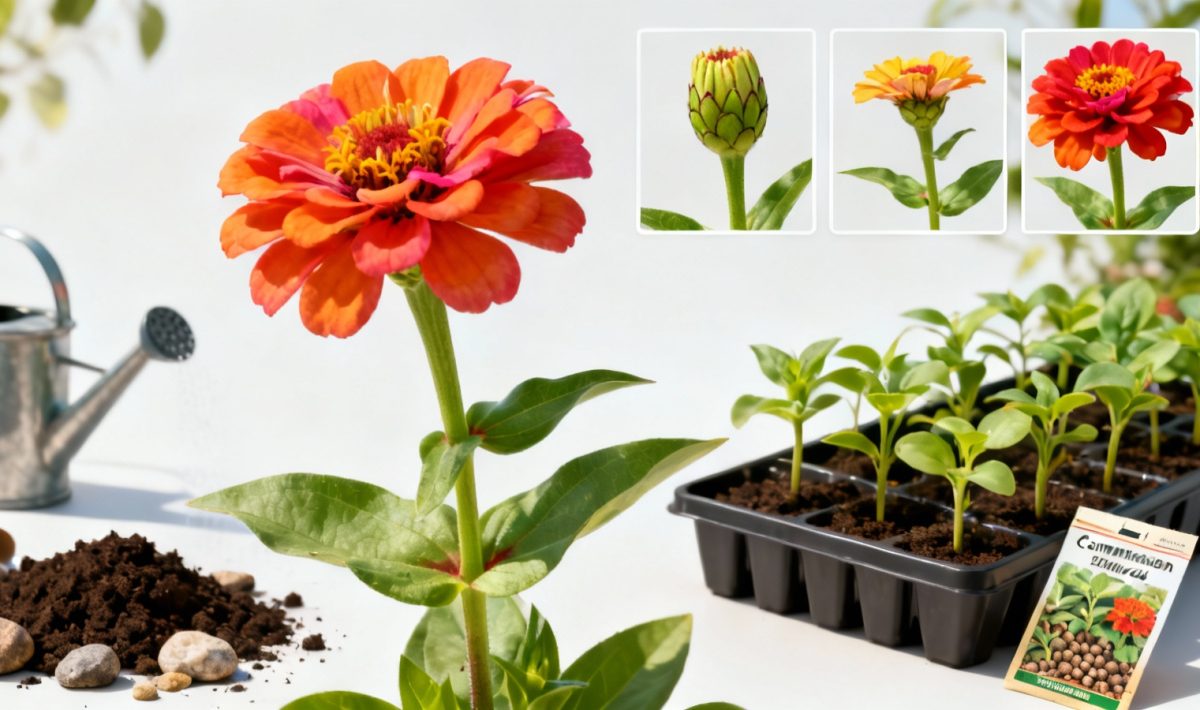
Introduction to the common zinnia – Zinnia elegans
The common zinnia, scientifically known as Zinnia elegans, stands as one of the most beloved annual flowers in gardens worldwide. This vibrant member of the Asteraceae family has captured the hearts of gardeners for generations with its spectacular display of colors and remarkably easy-going nature. Whether you’re a seasoned horticulturist or just starting your gardening journey, zinnias offer an incredibly rewarding experience that delivers stunning results with minimal fuss.
These cheerful flowers originated in Mexico but have since become garden staples across temperate regions. What makes Zinnia elegans particularly special is its ability to bloom continuously from summer until the first frost, providing months of non-stop color. The flowers come in an impressive array of hues, from pure whites and sunny yellows to deep magentas and rich oranges, ensuring there’s a perfect variety for every garden design.
Key characteristics of Zinnia elegans
Understanding the fundamental characteristics of zinnias helps you appreciate why these plants perform so well in diverse garden settings. The flower heads typically measure between 2 to 6 inches across, depending on the cultivar you choose. The blooms feature a distinctive daisy-like structure with prominent central discs surrounded by colorful petals that can be single, semi-double, or fully double.
The plant itself grows in an upright, bushy habit that ranges from compact 12-inch varieties perfect for containers to towering giants reaching 3 feet in height. The foliage consists of oval-shaped leaves with slightly serrated edges, creating a lush green backdrop that beautifully showcases the vibrant blooms. This robust growth pattern makes zinnias excellent choices for both formal flower beds and cottage-style gardens.
When considering plant care routines, it’s worth noting that different species have varying needs. For instance, if you’re interested in expanding your knowledge about native plant care, exploring care tips for American elder plants can provide valuable insights into supporting local ecosystems alongside your zinnia displays.
Popular varieties and their unique features
The world of Zinnia elegans offers an exciting selection of cultivars, each with distinct characteristics. The ‘State Fair Mix’ variety produces large, dahlia-like flowers in a rainbow of colors, perfect for creating dramatic focal points in garden beds. These plants typically reach heights of 24 to 30 inches and produce flowers that can span up to 5 inches across.
For gardeners working with limited space, the ‘Lilliput’ series offers charming miniature flowers on compact 12-inch plants. These petite beauties work wonderfully in containers, edging, or as front-of-border plants. Meanwhile, the ‘Giant Flowered’ varieties live up to their name with massive blooms that can exceed 6 inches in diameter on plants reaching 36 inches tall.
Optimal growing conditions and culture requirements
Successfully cultivating zinnias begins with understanding their basic environmental needs. These sun-loving plants absolutely thrive in locations receiving at least 6 to 8 hours of direct sunlight daily. Full sun exposure not only promotes vigorous growth but also helps prevent common fungal issues that can plague zinnias grown in shadier conditions.
Soil preparation plays a crucial role in zinnia cultivation success. These adaptable plants grow well in average garden soil but perform best in well-draining conditions with a pH between 5.5 and 7.5. Heavy clay soils should be amended with compost or other organic matter to improve drainage, as waterlogged conditions can quickly lead to root rot and other problems.
Understanding proper watering techniques is essential for healthy plant development. Much like learning the watering frequency for blue violets, zinnias benefit from consistent but not excessive moisture. Water at the base of plants rather than overhead to minimize leaf wetness and reduce disease risk.
Fertilization and feeding strategies
Zinnias are relatively light feeders, but providing appropriate nutrition ensures optimal flower production throughout the growing season. A balanced, slow-release fertilizer applied at planting time typically provides sufficient nutrients for the entire season. For container-grown plants, monthly liquid fertilizer applications help maintain vigor and flowering.
Avoid over-fertilizing with nitrogen-rich products, as this can promote excessive foliage growth at the expense of flower production. Instead, look for fertilizers with equal ratios of nitrogen, phosphorus, and potassium, or slightly higher phosphorus content to encourage blooming.
Propagation methods and germination techniques
Growing zinnias from seeds offers both economic benefits and the satisfaction of nurturing plants from their earliest stages. The seeds are relatively large and easy to handle, making them perfect for beginning gardeners. Germination typically occurs within 5 to 7 days under optimal conditions, providing quick results that maintain enthusiasm throughout the growing process.
For indoor seed starting, sow seeds 4 to 6 weeks before your area’s last expected frost date. Plant seeds approximately 1/4 inch deep in quality seed-starting mix, maintaining soil temperatures between 70 to 75°F for best germination rates. Keep the growing medium consistently moist but not waterlogged, and provide bright light once seedlings emerge.
Direct seeding outdoors works exceptionally well for zinnias, especially in areas with long growing seasons. Wait until soil temperatures reach at least 60°F and all danger of frost has passed. This timing usually coincides with when you would plant warm-season vegetables like tomatoes and peppers.
Transplantation and establishment care
When transplanting indoor-started seedlings, gradually acclimate them to outdoor conditions over a week-long hardening-off period. This process helps prevent transplant shock and ensures smooth establishment in the garden. Space plants according to their mature size, typically 6 to 12 inches apart for most varieties.
Just as you might research essential care for common ninebark when establishing shrubs, newly transplanted zinnias require attentive care during their first few weeks. Water regularly but avoid overwatering, and consider using a diluted liquid fertilizer to encourage strong root development.
Maintenance and ongoing care throughout the season
Once established, zinnias require minimal maintenance to produce spectacular results. Regular deadheading of spent flowers encourages continued blooming and prevents unwanted self-seeding. This simple practice can extend the flowering period significantly and keep plants looking tidy throughout the growing season.
Pinching growing tips when plants reach 6 inches tall promotes bushier growth and more flower production. This technique works particularly well with taller varieties that might otherwise become leggy or require staking for support.
Disease prevention remains important throughout the growing season. Powdery mildew can occasionally affect zinnias, especially during humid conditions or when plants are grown too closely together. Ensuring adequate air circulation and avoiding overhead watering helps minimize these issues.
Pest management and common problems
While zinnias are generally pest-resistant, occasional issues may arise that require attention. Aphids sometimes congregate on new growth, but these soft-bodied insects are easily controlled with insecticidal soap or beneficial insects like ladybugs. Spider mites may appear during hot, dry weather, making consistent watering even more important.
Similar to understanding care and benefits of common plantain, recognizing early signs of stress in zinnias allows for prompt intervention. Yellowing lower leaves often indicate overwatering or poor drainage, while stunted growth may suggest nutrient deficiencies or inadequate sunlight.
Utilizing zinnias in garden design and floral arrangements
The versatility of Zinnia elegans makes them valuable additions to numerous garden styles and applications. In formal flower beds, tall varieties create impressive backgrounds for shorter plants, while compact cultivars work beautifully as edging or in mass plantings. Their long flowering period ensures consistent color impact throughout the growing season.
For cut flower gardens, zinnias rank among the top performers due to their excellent vase life and continuous production. Harvest flowers early in the morning when stems are fully hydrated, and place them immediately in cool water. Regular cutting actually encourages more flower production, creating a beneficial cycle for both garden display and indoor enjoyment.
Container gardening enthusiasts will find zinnias equally rewarding in pots, window boxes, and hanging baskets. Choose compact varieties for smaller containers, and ensure adequate drainage to prevent root problems. Container-grown plants may require more frequent watering and feeding than those grown in garden beds.
Companion planting opportunities
Zinnias pair beautifully with numerous other annual and perennial plants, creating dynamic garden combinations. Their vibrant colors complement the silvery foliage of dusty miller, while their upright habit contrasts nicely with trailing plants like sweet alyssum or portulaca. Consider combining different zinnia varieties for extended bloom times and varied heights within the same planting area.
These reliable performers also attract beneficial insects, including butterflies and bees, contributing to overall garden ecosystem health. This pollinator-friendly characteristic makes zinnias valuable additions to wildlife gardens and vegetable plots where natural pest control is desired.
Allan is a lifelong gardening enthusiast who still gets excited when the first seedlings pop up in spring. With a deep love for nature and a hands-in-the-soil approach, he shares practical tips, plant discoveries, and clever tricks picked up over years of digging, planting, and observing. Whether you’re a new gardener or have a shed full of tools, Allan writes like a neighbor who’s always happy to swap cuttings and stories over the fence.
You can find more about Allan’s work on Malt or connect with him on LinkedIn.