
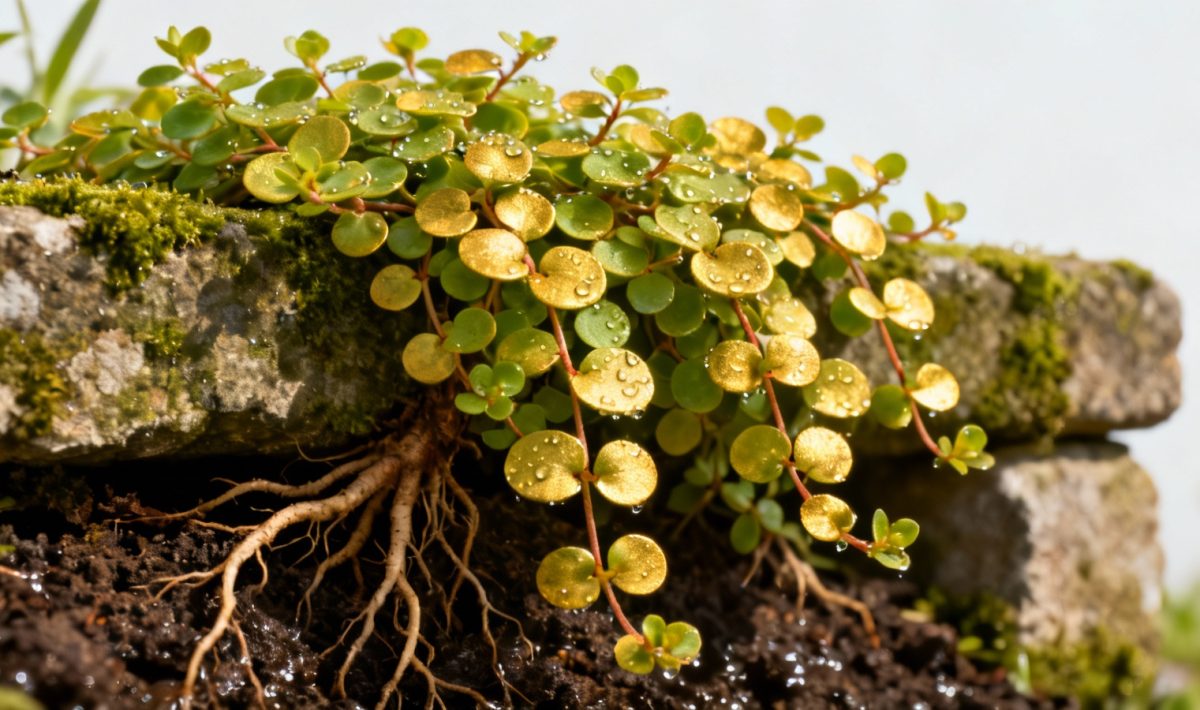
Creeping jenny is one of those delightful ground cover plants that brings instant charm to any garden space. This lovely perennial, scientifically known as Lysimachia nummularia, creates stunning golden carpets that brighten up shaded corners and challenging spots where other plants struggle to thrive.
What makes creeping jenny so special
Originally from Europe and Asia, creeping jenny has become a beloved addition to American gardens for good reason. This hardy plant belongs to the Primulaceae family and offers gardeners a reliable solution for ground coverage. The plant’s common names include moneywort, thanks to its coin-shaped leaves that catch the light beautifully throughout the growing season.
The most striking aspect of this plant lies in its brilliant golden foliage, particularly in the popular ‘Aurea’ variety. These small, round leaves create a vibrant carpet that spreads gracefully across the ground, reaching only 2 to 4 inches in height. The trailing stems root at their nodes, allowing the plant to establish itself quickly and form dense coverage.
During the growing season, tiny yellow cup-shaped flowers appear sporadically along the stems. These charming blooms, measuring about an inch across, feature five delicate petals with distinctive reddish glandular spots. While not the main attraction, these flowers add an extra touch of beauty to the already stunning foliage display.
Growing conditions for optimal creeping jenny care
Getting the growing conditions right makes all the difference when cultivating this wonderful plant. Creeping jenny adapts remarkably well to various soil types, though it truly excels in consistently moist conditions. The plant thrives in partial shade to full sun, though the golden varieties maintain their vibrant color best with some protection from intense afternoon heat.
Soil drainage plays a crucial role in successful cultivation. While creeping jenny tolerates wet conditions better than most plants, it also performs well in average garden soil with good moisture retention. The plant shows impressive tolerance for different pH levels, making it adaptable to most garden situations.
Water requirements remain moderate throughout the growing season. Regular watering during dry spells keeps the foliage looking fresh and promotes healthy growth. However, established plants show good drought tolerance once their root systems develop fully. This adaptability makes creeping jenny an excellent choice for low-maintenance landscaping projects.
Seasonal care considerations
Spring brings new growth energy to creeping jenny, making it the perfect time for any necessary maintenance. Remove any winter-damaged stems and assess the plant’s spread to ensure it hasn’t outgrown its designated space. This early-season attention sets the stage for vigorous growth throughout the year.
Summer care focuses mainly on monitoring moisture levels and enjoying the plant’s beautiful display. The golden foliage reaches its peak intensity during these warm months, creating stunning visual impact in garden borders and containers. Regular observation helps catch any potential issues before they become serious problems.
Winter preparation in colder zones involves cutting back the herbaceous growth after the first frost. The plant’s hardy root system survives freezing temperatures in USDA zones 3-9, emerging fresh and vigorous when spring returns. This reliable winter hardiness makes creeping jenny a dependable perennial choice for many climates.
Propagation methods that actually work
Propagating creeping jenny ranks among the easiest gardening tasks you’ll ever undertake. The plant’s natural tendency to root at stem nodes makes division incredibly straightforward. Simply lift sections of established plants during spring or fall, ensuring each division includes both roots and growing points.
Stem cutting propagation offers another reliable method for increasing your plant collection. Cut healthy stems about 4 inches long, remove the lower leaves, and place them in water or moist potting soil. Roots typically develop within two weeks under favorable conditions. This technique works particularly well for sharing plants with fellow gardening enthusiasts.
Direct sowing from seed presents a more challenging but rewarding approach. Collect seeds from mature flowers in late summer, though keep in mind that golden varieties may not come true to type from seed. Stratify seeds in the refrigerator for several weeks before sowing in spring for best germination results.
Just like other garden plants that require specific propagation techniques, such as care and propagation of oleander, timing plays a crucial role in successful multiplication. Choose active growing periods when plants have sufficient energy to establish new root systems quickly.
Maintenance and problem solving
Regular maintenance keeps creeping jenny looking its best throughout the growing season. Trim back any stems that extend beyond desired boundaries, as this vigorous grower can quickly overwhelm neighboring plants if left unchecked. This occasional pruning also encourages denser growth and better foliage color.
Common issues rarely affect healthy creeping jenny plants, though excessive moisture can occasionally lead to fungal problems. Ensure adequate air circulation around plantings and avoid overhead watering when possible. Most disease issues resolve themselves once environmental conditions improve.
Pest problems remain minimal with this hardy species. The plant’s natural resistance to most common garden pests makes it an excellent low-maintenance choice. Monitor for any unusual symptoms and address problems promptly using appropriate organic methods whenever possible.
Design ideas and companion planting
Creative garden design possibilities abound when incorporating creeping jenny into your landscape plans. Use it as living mulch around taller plants, where its golden foliage provides stunning contrast against dark green neighbors. The plant works beautifully trailing from containers or cascading over retaining walls.
Companion planting opens up exciting design opportunities throughout the garden. Pair creeping jenny with shade-loving perennials that appreciate similar growing conditions. The golden foliage complements purple and blue flowers particularly well, creating eye-catching color combinations that enhance any garden space.
Consider incorporating other easy-care plants that share similar maintenance requirements, such as growing and caring for apricot trees in orchard settings, though creeping jenny works better in understory applications. This approach creates cohesive garden designs that require minimal ongoing intervention.
Container growing success
Container cultivation offers excellent opportunities for enjoying creeping jenny in small spaces or areas where ground planting isn’t practical. Choose containers with adequate drainage holes and use quality potting mix that retains moisture without becoming waterlogged. The trailing habit creates beautiful displays in hanging baskets or tall planters.
Indoor growing presents unique challenges but remains entirely achievable with proper care. Provide bright indirect light and maintain consistent moisture levels for best results. While indoor plants may not achieve the same vigorous growth as outdoor specimens, they still offer attractive foliage displays throughout the year.
Winter container care requires attention to prevent root freezing in harsh climates. Move containers to protected locations or provide insulation around the root zone. Alternatively, treat container plants as annuals and propagate new plants each spring for continuous displays.
Ecological benefits and wildlife value
Beyond its ornamental appeal, creeping jenny contributes valuable ecological benefits to garden ecosystems. The dense ground coverage helps prevent soil erosion on slopes and suppresses weed growth naturally. This environmental function makes it an excellent choice for sustainable landscaping practices.
Wildlife appreciation extends to various beneficial insects that visit the small flowers for nectar. While not a major pollinator plant, creeping jenny still supports local ecosystem health by providing habitat and food sources for small creatures. The dense foliage offers shelter for ground-dwelling insects and small animals.
Integration with vegetable gardens creates interesting possibilities for living mulch applications, similar to techniques used with tips for cucumber care and cultivation. However, careful management prevents the vigorous spreader from competing with food crops for nutrients and space.
Long-term garden planning
Planning for creeping jenny’s eventual spread helps avoid future maintenance headaches while maximizing its ornamental impact. Install root barriers where necessary to contain growth within desired boundaries. This proactive approach prevents the need for constant edge maintenance as the plant matures.
Consider the plant’s changing appearance throughout seasons when designing permanent landscape features. While golden varieties provide stunning color during growing months, they become dormant in winter climates. Plan complementary plantings that offer interest during these quieter periods.
Future garden evolution often benefits from adaptable plants like creeping jenny that respond well to changing conditions. Whether your garden becomes shadier over time or drainage patterns shift, this resilient species adjusts gracefully to new circumstances, maintaining its ornamental value throughout various garden transformations.
Advanced growing techniques
Experienced gardeners often develop specialized techniques for maximizing creeping jenny’s ornamental impact while managing its vigorous growth habit. Strategic placement near water features enhances both the plant’s health and visual appeal, creating naturalistic landscapes that feel effortlessly beautiful.
Soil amendment strategies help optimize growing conditions for exceptional foliage color and density. Adding organic matter improves moisture retention while ensuring adequate drainage, creating the balanced conditions this versatile plant prefers. Regular feeding with balanced fertilizer during active growth periods promotes healthy development.
For gardeners interested in incorporating more exotic houseplants alongside traditional outdoor species, understanding different care requirements becomes essential. Plants like Philodendron ‘Birkin’ growing tips require completely different approaches than hardy outdoor perennials like creeping jenny.
Managing aggressive spread requires thoughtful intervention strategies that maintain the plant’s ornamental value while preventing unwanted colonization. Regular division every few years keeps established plantings healthy and vigorous while providing material for expanding your garden or sharing with friends who appreciate beautiful, low-maintenance plants.

Allan is a lifelong gardening enthusiast who still gets excited when the first seedlings pop up in spring. With a deep love for nature and a hands-in-the-soil approach, he shares practical tips, plant discoveries, and clever tricks picked up over years of digging, planting, and observing. Whether you’re a new gardener or have a shed full of tools, Allan writes like a neighbor who’s always happy to swap cuttings and stories over the fence.
You can find more about Allan’s work on Malt or connect with him on LinkedIn.


