How often should you water your english walnut for optimal growth
Growing English walnut trees can be incredibly rewarding, but getting the watering frequency right is essential for their success. Many gardeners struggle with finding that perfect balance between too much and too little water. You’ll be happy to know that with the right approach, your walnut tree will thrive and produce quality nuts for years to come.
The water requirements of your English walnut tree depend on several key factors that you need to consider carefully. Young trees have very different needs compared to mature ones, and the surrounding environment plays a huge role in determining how often you should reach for that watering can.
Soil type is one of the most important aspects to evaluate. Well-draining soil allows water to penetrate deeply without causing root rot, while heavy clay soils retain moisture much longer than sandy soils. You can test your soil drainage by digging a small hole and filling it with water to see how fast it drains.
Climate conditions also greatly influence watering frequency. Hot, dry summers will require more frequent watering, while cooler, humid periods may need little to no supplemental irrigation. Wind exposure can dry out soil faster than you might expect, so trees in windy locations often need extra attention.
Watering frequency for different growth stages
Young English walnut trees need consistent moisture to establish their root systems properly. For the first three to five years, you should water once per week during the growing season, preferably in the evening when evaporation rates are lower. This deep, weekly watering encourages roots to grow downward rather than staying shallow near the surface.
Mature trees are much more drought-tolerant once established. They typically only need supplemental watering during prolonged dry periods lasting more than two weeks without rain. However, if you want optimal nut production, maintaining consistent soil moisture throughout the growing season will give you better results.
During the dormant winter months, both young and mature trees need very little water. Natural rainfall usually provides enough moisture, and overwatering during this time can actually harm the tree by promoting root diseases.
Signs your tree needs water
Learning to read your tree’s signals will help you water at just the right time. Wilted or drooping leaves during the hottest part of the day are often the first sign of water stress. However, don’t panic if you see this occasionally, as it’s normal for trees to conserve water this way.
Check the soil moisture by inserting your finger or a small stick about 3-4 inches into the ground near the tree’s drip line. If the soil feels dry at this depth, it’s time to water. The soil should feel slightly moist but not soggy or waterlogged.
Yellowing leaves, especially if they’re dropping prematurely, can indicate either too much or too little water. You’ll need to examine the soil conditions and recent weather patterns to determine which problem you’re facing.
Effective watering techniques
Deep, infrequent watering is much better than light, frequent sprinklings. When you do water, apply enough to penetrate 12-18 inches into the soil, which encourages deep root growth and drought tolerance. A slow, steady application over 30-45 minutes works better than a quick flood.
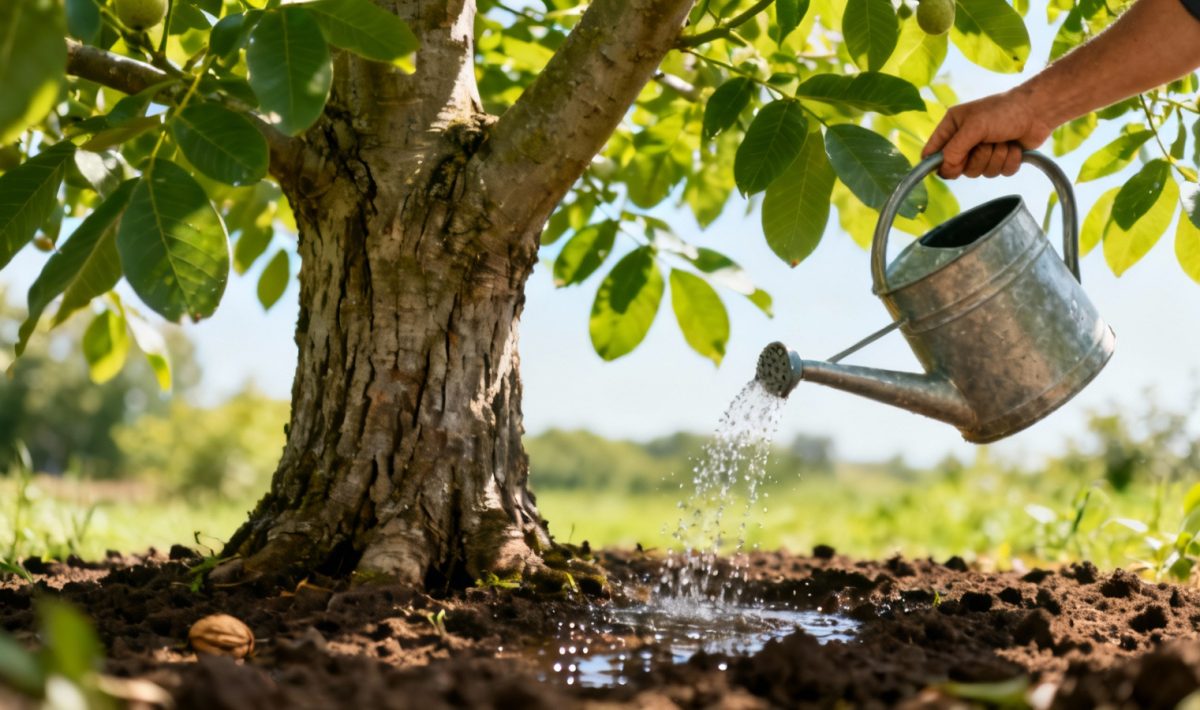
Water at the tree’s drip line rather than directly against the trunk. This is where the feeder roots are located, and watering here ensures the tree can actually access the moisture you’re providing. Create a gentle basin around this area to help water soak in rather than running off.
Drip irrigation systems are excellent for walnut trees because they deliver water slowly and consistently. If you’re growing multiple trees or have a large garden, this investment can save you time while providing optimal care. For those interested in watering other large trees, you might find our watering tips for sycamore trees helpful as well.
Water quality considerations
The quality of water you use can significantly impact your tree’s health and growth. Rainwater is generally the best choice because it’s naturally soft and free from chemicals that can build up in the soil over time. If possible, collect rainwater in barrels during wet periods for use during drier spells.
Tap water often contains chlorine and fluoride, which aren’t harmful in small amounts but can accumulate in the soil with frequent use. If you must use tap water, let it sit in containers for 24 hours before applying to allow chlorine to evaporate naturally.
Hard water with high mineral content can create salt buildup around roots over time. If you live in an area with very hard water, consider using a water softener or collecting rainwater as your primary watering source.
Seasonal watering adjustments
Spring is when your English walnut tree begins its most active growth phase. Increase watering frequency as temperatures rise and new leaves emerge, but be careful not to overwater if spring rains are abundant. This is also when you should start your regular weekly watering schedule for young trees.
Summer typically requires the most attention to watering, especially during heat waves. You may need to water twice per week during extremely hot, dry periods. Early morning or late evening watering reduces evaporation and gives trees time to absorb moisture before the heat of the day.
Fall watering should gradually decrease as temperatures cool and growth slows. Continue monitoring soil moisture, but expect to water less frequently. This gradual reduction helps the tree prepare for winter dormancy naturally.
Common watering mistakes to avoid
Overwatering is actually more dangerous than underwatering for established English walnut trees. Too much water creates anaerobic soil conditions that promote root rot and other fungal diseases. Always check soil moisture before watering, even if it’s been several days since the last application.
Many gardeners make the mistake of watering too frequently with small amounts. This creates shallow root systems that are vulnerable to drought and wind damage. Instead, water deeply but less often to encourage strong, deep root development.
Ignoring seasonal changes in watering needs is another common error. Trees that are perfectly watered in summer may be drowning in winter if you don’t adjust your schedule. Pay attention to natural rainfall and temperature patterns throughout the year.
Not mulching around your tree is a missed opportunity to conserve moisture and reduce watering frequency. A 3-4 inch layer of organic mulch around the drip line helps retain soil moisture and regulates soil temperature. Just keep mulch a few inches away from the trunk to prevent pest issues.
Troubleshooting water-related problems
If your English walnut tree shows signs of stress despite regular watering, the problem might be related to drainage rather than frequency. Poor drainage can cause root problems even when you’re providing the right amount of water. Consider improving soil drainage with organic matter or creating raised planting areas.
Nutrient deficiencies can sometimes mimic water stress symptoms. Trees that are properly watered but still show yellowing leaves or poor growth may need fertilization. A soil test can help identify any nutrient imbalances that need attention.
Competition from grass and other plants near your tree can impact water availability. Consider creating a mulched area around young trees to reduce competition and make watering more efficient. For comparison with other nut trees, our article on optimal watering for black walnuts offers additional insights.
Remember that establishing good watering habits takes time and observation. Each tree and location has unique characteristics that will influence your watering schedule. With patience and attention to your tree’s needs, you’ll develop an intuitive understanding of when and how much to water.
Allan is a lifelong gardening enthusiast who still gets excited when the first seedlings pop up in spring. With a deep love for nature and a hands-in-the-soil approach, he shares practical tips, plant discoveries, and clever tricks picked up over years of digging, planting, and observing. Whether you’re a new gardener or have a shed full of tools, Allan writes like a neighbor who’s always happy to swap cuttings and stories over the fence.
You can find more about Allan’s work on Malt or connect with him on LinkedIn.