
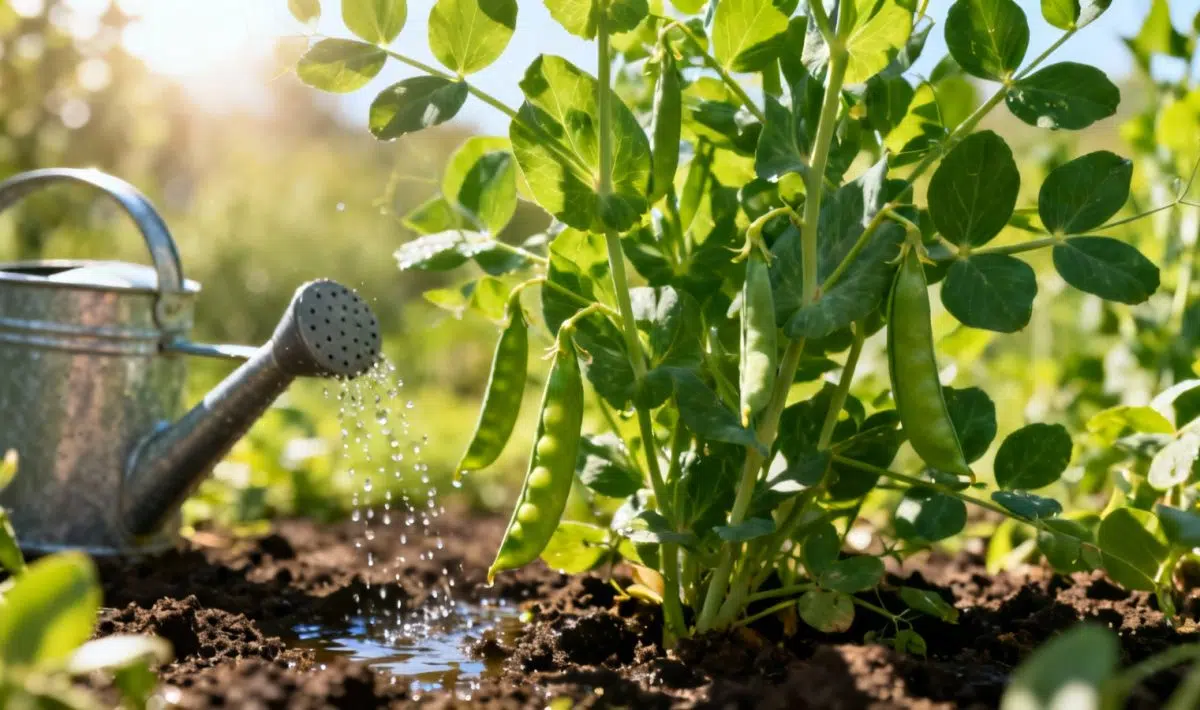
Growing garden peas successfully requires understanding their specific water needs, which change throughout their growth cycle. These wonderful legumes are particularly sensitive to both drought stress and overwatering, making proper irrigation timing crucial for a bountiful harvest. Getting the watering frequency right will determine whether you enjoy sweet, tender pods or struggle with poor germination and stunted growth.
Understanding how often should you water your garden pea
Garden peas require consistent moisture but not waterlogged conditions. During the initial planting phase, you should water daily to keep the soil evenly moist until germination occurs, typically within 7-14 days. Once seedlings emerge, reduce watering frequency to 2-3 times per week, providing approximately 1 inch of water each time.
The key lies in monitoring soil moisture rather than following a rigid schedule. Stick your finger 2 inches deep into the soil near your pea plants. If it feels dry at this depth, it’s time to water. This simple test prevents both drought stress and root rot that can devastate your crop.
Different growth stages demand varying attention to watering practices. Young seedlings need frequent, light watering to establish their root systems, while mature plants benefit from deeper, less frequent irrigation that encourages strong root development.
Factors affecting pea watering frequency
Soil type and drainage considerations
Your soil composition dramatically influences how often you need to water your peas. Sandy soils drain quickly and may require daily watering during hot weather, while clay soils retain moisture longer and need watering only twice weekly. Well-draining soil enriched with organic matter provides the ideal balance for pea cultivation.
Test your soil drainage by digging a hole 12 inches deep and filling it with water. If water remains after 24 hours, you have drainage issues that need addressing before planting. Poor drainage leads to root diseases and reduces oxygen availability to plant roots.
Adding compost or aged manure improves soil structure and water retention capacity. These organic amendments help sandy soils hold moisture while improving drainage in heavy clay soils, creating optimal growing conditions for your pea plants.
Weather and seasonal variations
Hot, dry weather increases water evaporation and plant transpiration, requiring more frequent watering sessions. During cool, cloudy periods, reduce watering frequency to prevent fungal problems that thrive in overly moist conditions. Wind also accelerates moisture loss from both soil and plant surfaces.
Spring plantings typically need less supplemental watering due to natural rainfall and cooler temperatures. However, summer sowings for fall harvest require vigilant attention to watering, especially during heat waves when plants can quickly become stressed.
Monitor weather forecasts to adjust your watering schedule accordingly. A good soaking rain can eliminate the need for supplemental watering for several days, while prolonged dry spells demand increased attention to soil moisture levels.
Watering techniques for healthy pea growth
Best watering methods
Drip irrigation systems provide the most efficient water delivery, applying moisture directly to the root zone while keeping foliage dry. This method reduces water waste and minimizes disease problems associated with wet leaves. Set up soaker hoses along pea rows for consistent, slow water application.
When hand-watering with a hose or watering can, aim for the soil surface rather than the plants themselves. Water early morning to allow excess moisture on leaves to evaporate before evening, reducing fungal disease risks. Apply water slowly to ensure deep penetration rather than surface runoff.
Avoid overhead sprinklers during flowering and pod development stages, as excessive moisture on flowers can reduce pollination success and encourage pod diseases. Focus water application at the base of plants where roots can efficiently absorb nutrients and moisture.
Timing considerations
Early morning watering between 6-8 AM provides optimal conditions for plant uptake while allowing excess moisture to evaporate before cooler evening temperatures. This timing reduces disease pressure and ensures plants have adequate moisture during the heat of the day.
Avoid watering during the hottest part of the day when much of the applied water will evaporate before reaching plant roots. Evening watering, while sometimes necessary, can leave plants vulnerable to fungal infections that develop in cool, moist nighttime conditions.
Consistent watering schedules help plants develop efficient root systems and maintain steady growth rates. Irregular watering patterns stress plants and can lead to problems like blossom drop and poor pod development.
Growth stage specific watering requirements
Seedling establishment
Seeds require constant soil moisture for successful germination, but waterlogged conditions cause rot and poor emergence. Water gently to avoid displacing seeds, using a fine spray or misting attachment. Maintain soil moisture similar to a wrung-out sponge during the critical first two weeks.
Young seedlings have shallow root systems that dry out quickly, requiring daily attention during dry weather. As roots develop deeper into the soil, gradually reduce watering frequency while increasing the amount applied each session. This encourages roots to grow deeper in search of moisture.
Watch for signs of damping-off disease in crowded seedlings, which appears as stem rot at soil level. This fungal problem often results from overwatering combined with poor air circulation around young plants.
Flowering and pod development
Pea plants need consistent moisture during flowering to ensure proper pollination and pod set. Water stress during this critical period reduces flower production and causes existing flowers to drop before forming pods. Maintain steady soil moisture without waterlogging during bloom periods.
Pod development requires adequate water for proper filling and size development. Inconsistent watering during pod growth results in tough, poorly filled pods with reduced sweetness. Monitor plants closely and increase watering frequency if pods appear small or wrinkled.
Deep, thorough watering encourages root growth and helps plants access nutrients needed for heavy pod production. Shallow, frequent watering creates weak root systems that cannot support maximum yields during harvest periods.
Common watering mistakes and solutions
Overwatering ranks among the most common problems in pea cultivation, leading to yellow leaves, stunted growth, and increased susceptibility to root diseases. Signs include constantly wet soil surface, fungal growth, and plants that appear stressed despite adequate moisture.
Underwatering creates equally serious problems, manifesting as wilted leaves, slow growth, and premature flowering. Plants prioritize survival over production when water-stressed, resulting in reduced harvests and poor pod quality. For comparison, water your common tansy properly follows similar principles of consistent moisture without waterlogging.
Inconsistent watering patterns confuse plants and reduce their ability to establish efficient root systems. Create a regular schedule based on weather conditions and soil moisture monitoring rather than arbitrary calendar dates. This approach ensures plants receive water when needed most.
Complementary growing practices
Soil preparation and mulching
Proper soil preparation sets the foundation for efficient water use throughout the growing season. Work compost into planting beds to improve water retention and drainage simultaneously. Well-prepared soil holds moisture longer while preventing waterlogged conditions harmful to pea roots.
Mulching around established plants conserves soil moisture and reduces watering frequency requirements. Apply 2-3 inches of organic mulch like straw or shredded leaves, keeping material away from plant stems to prevent pest problems. Mulch also suppresses weeds that compete for available water.
Consider companion planting strategies that complement pea water needs. Lettuce and other cool-season greens have similar moisture requirements and can share irrigation systems effectively. However, avoid planting water-hungry crops like correctly watering your cabbage plants too close to peas without adjusting irrigation zones accordingly.
Disease prevention through proper watering
Many pea diseases result from improper watering practices that create favorable conditions for fungal pathogens. Avoid wetting foliage unnecessarily and ensure good air circulation around plants to prevent powdery mildew and other leaf diseases.
Root rot problems typically develop in poorly drained soils with excessive moisture. Improve drainage before planting and avoid overwatering during cool, cloudy periods when evaporation rates decrease significantly. Healthy roots better resist disease pressure and absorb nutrients efficiently.
Monitor plants regularly for early signs of water-related stress or disease development. Quick adjustments to watering practices can prevent minor problems from becoming major crop losses later in the season.
Maximizing harvest quality and yield
Consistent watering throughout the growing season directly impacts final harvest quality and quantity. Well-watered plants produce more flowers, set more pods, and fill those pods completely with sweet, tender peas. Proper irrigation also extends the harvest period by maintaining plant health longer.
As harvest approaches, continue regular watering to keep pods plump and prevent them from becoming tough or starchy. Pick pods frequently when they’re young and tender to encourage continued production from the same plants.
Understanding water needs helps integrate peas successfully into diverse garden layouts alongside other crops. While some vegetables like keeping your corn plant hydrated require different irrigation schedules, grouping plants with similar water needs simplifies garden management.
Planning future plantings becomes easier once you understand seasonal water patterns and plant responses in your specific growing conditions. Keep detailed records of watering schedules and plant performance to refine techniques for even better results next season. Some gardeners also grow less common crops like watering tips for mock strawberries using similar moisture monitoring principles.

Allan is a lifelong gardening enthusiast who still gets excited when the first seedlings pop up in spring. With a deep love for nature and a hands-in-the-soil approach, he shares practical tips, plant discoveries, and clever tricks picked up over years of digging, planting, and observing. Whether you’re a new gardener or have a shed full of tools, Allan writes like a neighbor who’s always happy to swap cuttings and stories over the fence.
You can find more about Allan’s work on Malt or connect with him on LinkedIn.


