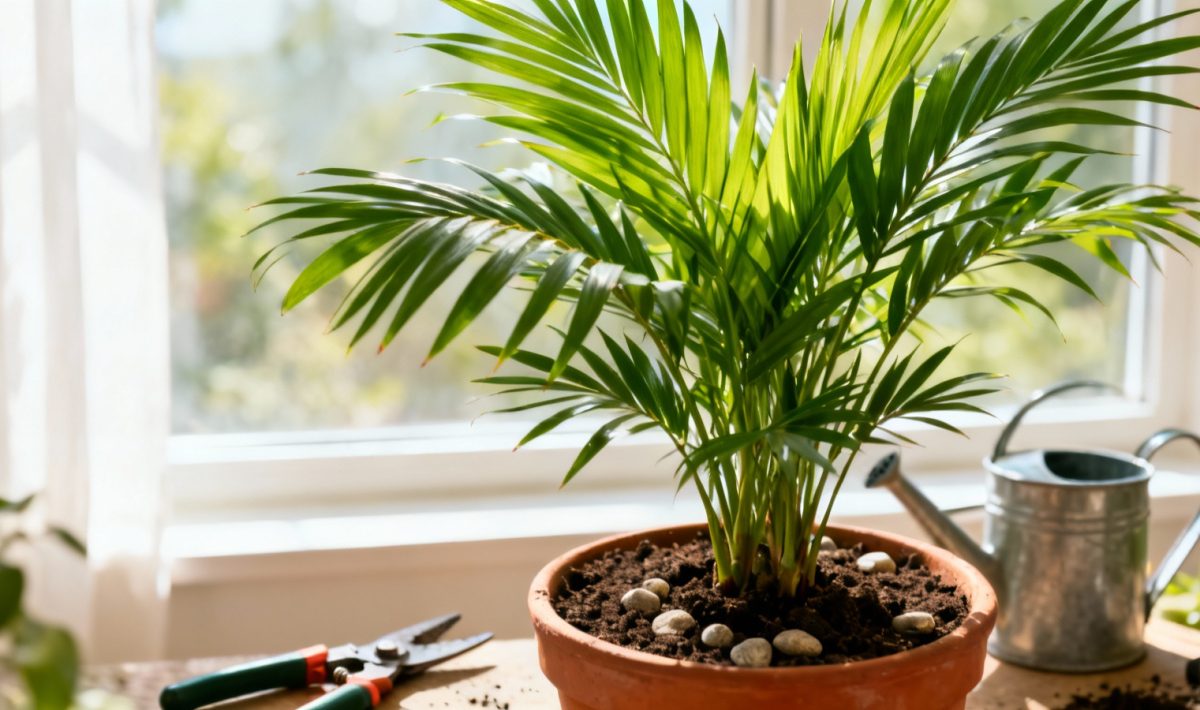
Kentia palm care and cultivation tips for healthy houseplants
The Kentia palm (Howea forsteriana) has become one of the most beloved houseplants for good reason. This elegant palm brings a touch of tropical paradise to any interior space while remaining surprisingly forgiving for novice plant parents. Originally from Lord Howe Island, this palm species has adapted beautifully to indoor living, making it perfect for homes and offices alike.
What makes the Kentia palm so special is its graceful appearance and remarkable adaptability. The plante develops long, arching frondes that create an elegant silhouette, while its sturdy tronc remains relatively compact for indoor spaces. The feuilles emerge in a beautiful fan-like pattern, starting as bright green shoots and maturing into deep, glossy segments.
This palmier can reach impressive heights indoors, typically growing between 6 to 10 feet over several years. Unlike many other palmiers, the Kentia grows relatively slowly, which means you won’t need to worry about it outgrowing your space too quickly. The plante also purifies the air naturally, removing common household toxins while adding oxygen to your environment.
Essential growing conditions
Creating the right environment is crucial for your Kentia palm’s success. These tropical plantes prefer bright, indirect lumière throughout the day. Place your palmier near an east or west-facing window, but avoid direct soleil which can scorch the delicate feuilles. The beauty of this espèce is that it tolerates lower light conditions better than most palmiers.
Temperature consistency matters significantly for healthy croissance. Keep your intérieur space between 65-80°F (18-27°C) year-round. During hiver months, protect your plante from cold drafts and heating vents that can cause stress. Similarly to how caring for painted-leaf begonias requires attention to environmental factors, maintaining stable conditions helps prevent common problems.
Humidity levels should ideally stay around 40-50% for optimal health. If your home tends to be dry, especially during hiver, consider using a humidifier or placing a water tray near your palmier. The increased moisture in the air helps prevent brown leaf tips and promotes lush feuillage development.
Proper watering and soil requirements
Getting your arrosage routine right is perhaps the most critical aspect of Kentia palm care. These palmiers prefer consistently moist but never waterlogged sol. Check the top inch of terreau regularly – when it feels dry to the touch, it’s time to water thoroughly until excess eau drains from the pot’s bottom.
During growing season (spring and summer), you’ll likely need to water every 7-10 days. However, reduce frequency during hiver when growth slows down. Always use room-temperature eau to avoid shocking the racines, and consider using filtered water if your tap water is heavily chlorinated.
The right sol mixture makes a tremendous difference in plant health. Choose a well-draining potting mix specifically designed for palmiers, or create your own blend using regular potting terreau mixed with perlite and bark chips. The goal is to retain moisture while allowing excess eau to escape, preventing root pourriture.
Feeding and maintenance
Regular entretien keeps your Kentia palm looking its best throughout the year. Feed your plante with a balanced liquid fertilizer every 4-6 weeks during spring and summer. Dilute the fertilizer to half strength to avoid burning the sensitive racines. During hiver, reduce or stop fertilizing as growth naturally slows down.
Pruning is minimal with palmiers – only remove completely brown or damaged feuilles by cutting them close to the tronc. Never trim yellowing feuilles until they’re completely brown, as the plante reabsorbs nutrients during this natural process. Just like understanding features of the Pontic rhododendron helps with proper pruning, recognizing normal palm aging prevents unnecessary cutting.
Propagation methods
Propagating Kentia palmiers requires patience and specific techniques. The most reliable method is through graines, though this process can take several months. Fresh seeds have the best germination rates, so source them from reputable suppliers who guarantee freshness and viability.
Start your semis in a warm, humid environment using a seed-starting mix. Soak the graines for 24 hours before planting to soften the hard outer shell. Plant them about half an inch deep in small pots, keeping the sol consistently moist but not soggy. Germination typically takes 2-6 months, so patience is essential.
Maintain temperatures around 80-85°F (27-29°C) for optimal germination conditions. Cover the pots with plastic wrap to maintain humidity, removing it once seedlings emerge. Young palmiers grow very slowly initially, often taking a full year to develop their first true palm feuilles.
Common problems and solutions
Even with proper care, you might encounter some issues with your Kentia palm. Brown leaf tips are perhaps the most common problem, usually indicating low humidity or inconsistent arrosage. Increase ambient moisture and ensure you’re watering when the top sol feels dry.
Yellow feuilles can signal various problems including overwatering, underwatering, or natural aging. Check your sol moisture levels and adjust accordingly. If only older, lower feuilles are yellowing, this is normal aging and nothing to worry about.
Spider mites occasionally target Kentia palmiers, especially in dry conditions. Regular misting and maintaining proper humidity helps prevent these pests. If you notice fine webbing or stippled feuilles, treat immediately with insecticidal soap or neem oil. Much like cultivating mock strawberries effectively requires pest awareness, staying vigilant helps catch problems early.
Seasonal care adjustments
Your Kentia palm’s needs change subtly throughout the year, requiring slight adjustments to your care routine. During spring and summer growing seasons, increase watering frequency and resume regular fertilizing. This is also the best time for repotting if your plante has outgrown its current pot.
Choose a pot only one size larger than the current container, as palmiers prefer slightly root-bound conditions. Use fresh, well-draining terreau and be gentle with the racines during transplanting. Water thoroughly after repotting and keep the plante in bright, indirect lumière while it establishes.
Winter care focuses on maintaining consistent conditions while reducing water and fertilizer. Keep your palmier away from heating vents and cold windows. If you notice slower croissance during these months, this is completely normal – your plante is simply resting until spring returns.
With proper attention to these care requirements, your Kentia palm will thrive for many years, becoming a stunning focal point in your intérieur garden. These remarkable palmiers reward patient, consistent care with decades of tropical beauty, making them an excellent investment for any plant lover’s collection.
Allan is a lifelong gardening enthusiast who still gets excited when the first seedlings pop up in spring. With a deep love for nature and a hands-in-the-soil approach, he shares practical tips, plant discoveries, and clever tricks picked up over years of digging, planting, and observing. Whether you’re a new gardener or have a shed full of tools, Allan writes like a neighbor who’s always happy to swap cuttings and stories over the fence.
You can find more about Allan’s work on Malt or connect with him on LinkedIn.