
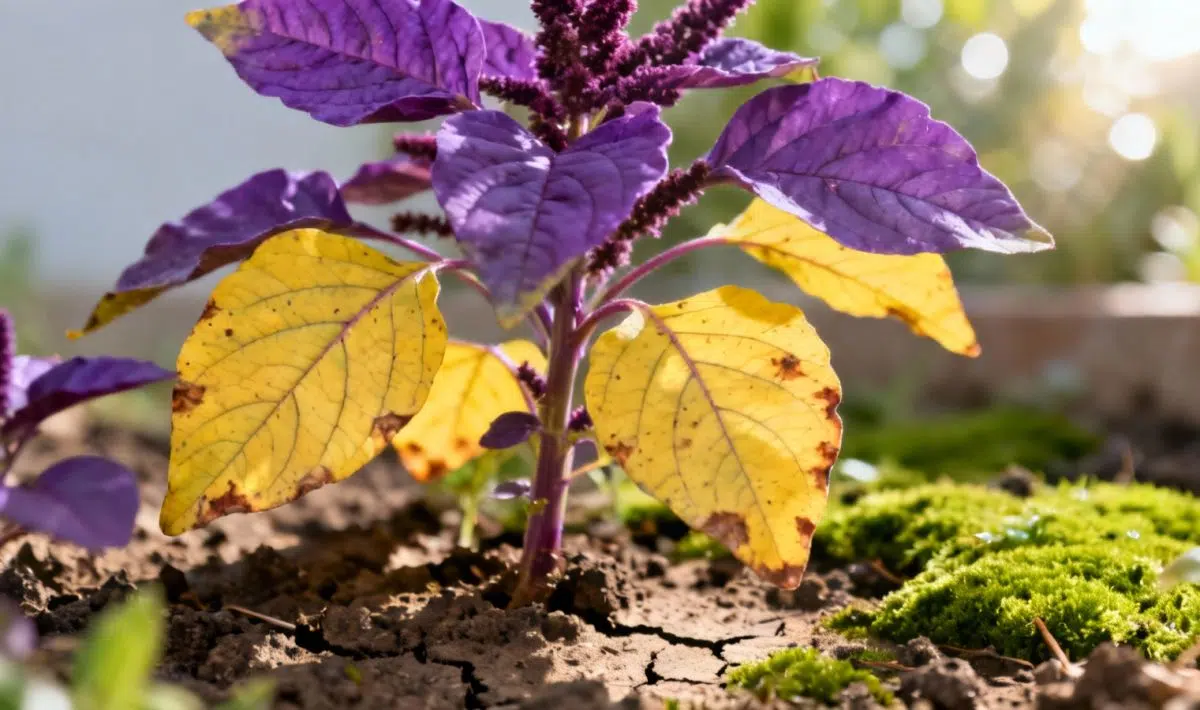
Understanding purple amaranth and common leaf yellowing causes
Purple amaranth is a stunning annual plant that adds vibrant color to any garden with its deep burgundy foliage and nutritious edible leaves. However, when those beautiful purple leaves start turning yellow, it can signal several underlying issues that need attention. Understanding why are my purple amaranth leaves turning yellow helps you take quick action to restore your plant’s health.
Amaranth varieties are typically hardy plants, but they have specific needs that must be met for optimal growth. The yellowing of leaves often indicates stress from environmental factors, nutrient deficiencies, or cultural practices that don’t align with the plant’s requirements.
✅ Quick Checklist
- Is the soil too wet or too dry?
- Is the plant getting 6+ hours of sunlight daily?
- Have you fertilized in the last 2 months?
- Are there visible pests under the leaves?
- Does the pot have adequate drainage?
Diagnose your plant in one click!
AI instant diagnosis • Personalized solutions • 50,000+ species
Environmental factors affecting amaranth leaf color
Temperature stress and frost damage
Purple amaranth plants are heat-loving annuals that thrive in warm conditions but are extremely sensitive to cold temperatures. When exposed to frost or temperatures below 50°F (10°C), the plant’s cellular structure becomes damaged, causing leaves to yellow and eventually die back completely.
Cold stress typically affects the oldest leaves first, which may turn yellow before progressing to brown and dropping off. If you’ve noticed yellowing after a particularly cool night or unexpected temperature drop, this is likely the cause. Amaranth varieties grown in cooler climates should be protected with row covers or moved indoors when temperatures threaten to drop.
Soil drainage and moisture issues
Poor drainage can cause waterlogged conditions that prevent root systems from accessing oxygen, leading to yellowing leaves from the bottom up. Amaranth plants prefer well-draining soil that retains some moisture but doesn’t become soggy. When soil remains consistently wet, root rot can develop, which manifests as yellowing foliage.
Conversely, drought stress from inadequate watering will also cause leaves to yellow and wilt. The plant conserves energy by shedding older leaves when water is scarce. Finding the right balance is crucial for maintaining healthy purple foliage.
Light requirements and sun exposure
Amaranth plants require full sun exposure (at least 6-8 hours of direct sunlight daily) to maintain their vibrant purple coloration and overall health. Insufficient light causes the plant to become leggy and weak, with leaves gradually losing their deep color and turning yellow-green before becoming fully yellow.
Plants grown in shadier conditions often struggle to photosynthesize efficiently, which directly impacts leaf health and color retention. If your amaranth is planted in a location that receives partial shade, consider relocating it to a sunnier spot.
Nutrient deficiencies causing leaf yellowing
Nitrogen deficiency symptoms
Nitrogen deficiency is one of the most common causes of yellowing in amaranth plants. This essential nutrient is required for chlorophyll production and overall plant vigor. When nitrogen is lacking, older leaves turn yellow first as the plant redistributes available nitrogen to newer growth.
The yellowing typically starts at the leaf tips and spreads inward, eventually affecting the entire leaf. Plants may also exhibit stunted growth and reduced leaf production. Regular feeding with a balanced fertilizer can help prevent this issue.
Other essential nutrient imbalances
Iron deficiency causes yellowing between leaf veins while the veins remain green, creating a distinctive pattern called chlorosis. This often occurs in alkaline soils where iron becomes unavailable to the plant. Magnesium deficiency produces similar symptoms but typically affects older leaves first.
Potassium deficiency manifests as yellowing leaf margins that may progress to brown, scorched-looking edges. Over-fertilization can also cause problems, particularly with high-nitrogen fertilizers that promote excessive foliage growth at the expense of overall plant health.
Common pests and diseases affecting amaranth
Fungal diseases and their impact
Fungal infections such as downy mildew and leaf spot diseases can cause yellowing and browning of amaranth leaves. These issues are more common in humid conditions with poor air circulation. Affected leaves often show yellow spots or patches that gradually expand and may develop fuzzy growth on the undersides.
Prevention involves proper plant spacing to improve air circulation, avoiding overhead watering, and removing affected foliage promptly. Many leaf yellowing issues in other plants share similar characteristics, as seen with reasons for yellowing honeysuckle leaves which also relate to fungal problems and environmental stress.
Insect pests causing leaf damage
Aphids, spider mites, and flea beetles are common pests that can cause amaranth leaves to yellow and become distorted. These insects feed on plant sap, weakening the plant and reducing its ability to maintain healthy foliage. Heavy infestations can cause significant yellowing and leaf drop.
Regular inspection of your plants helps catch pest problems early. Look for small insects on leaf undersides, sticky honeydew residue from aphids, or tiny holes from flea beetle feeding. Similar yellowing patterns occur in other edible plants, such as causes of yellowing pomegranate leaves which can help identify common pest-related issues.
✅ Quick Checklist
- Is the soil too wet or too dry?
- Is the plant getting 6+ hours of sunlight daily?
- Have you fertilized in the last 2 months?
- Are there visible pests under the leaves?
- Does the pot have adequate drainage?
Diagnose your plant in one click!
AI instant diagnosis • Personalized solutions • 50,000+ species
Practical solutions for healthy amaranth plants
Improving growing conditions
Start by assessing your plant’s growing environment. Ensure the soil drains well by adding organic matter such as compost or perlite if needed. Water deeply but less frequently, allowing the top inch of soil to dry between waterings. This encourages deep root development and prevents waterlogged conditions.
For container-grown amaranth, use pots with adequate drainage holes and a well-draining potting mix. Position plants in the sunniest location available, as adequate light is crucial for maintaining the characteristic purple coloration of the foliage.
Nutritional management and feeding schedule
Feed amaranth plants with a balanced fertilizer every 3-4 weeks during the growing season. A fertilizer with an NPK ratio of 10-10-10 or similar works well for most varieties. Avoid over-fertilizing, which can lead to excessive vegetative growth at the expense of overall plant health.
If you notice signs of specific nutrient deficiencies, address them promptly. For nitrogen deficiency, apply a slightly higher-nitrogen fertilizer or side-dress with compost. Iron deficiency may require an iron chelate application or soil pH adjustment to improve iron availability.
Prevention and early intervention strategies
Regular monitoring is key to preventing serious yellowing issues. Check plants weekly for signs of stress, pest activity, or disease symptoms. Remove yellowing leaves promptly to prevent the spread of diseases and to redirect the plant’s energy to healthy growth.
Maintain good garden hygiene by cleaning up fallen leaves and debris that can harbor pests and diseases. Proper plant spacing improves air circulation, which helps prevent fungal issues that often lead to leaf yellowing. Consider companion planting with beneficial flowers that attract predatory insects to help control pest populations naturally.

Allan is a lifelong gardening enthusiast who still gets excited when the first seedlings pop up in spring. With a deep love for nature and a hands-in-the-soil approach, he shares practical tips, plant discoveries, and clever tricks picked up over years of digging, planting, and observing. Whether you’re a new gardener or have a shed full of tools, Allan writes like a neighbor who’s always happy to swap cuttings and stories over the fence.
You can find more about Allan’s work on Malt or connect with him on LinkedIn.


