
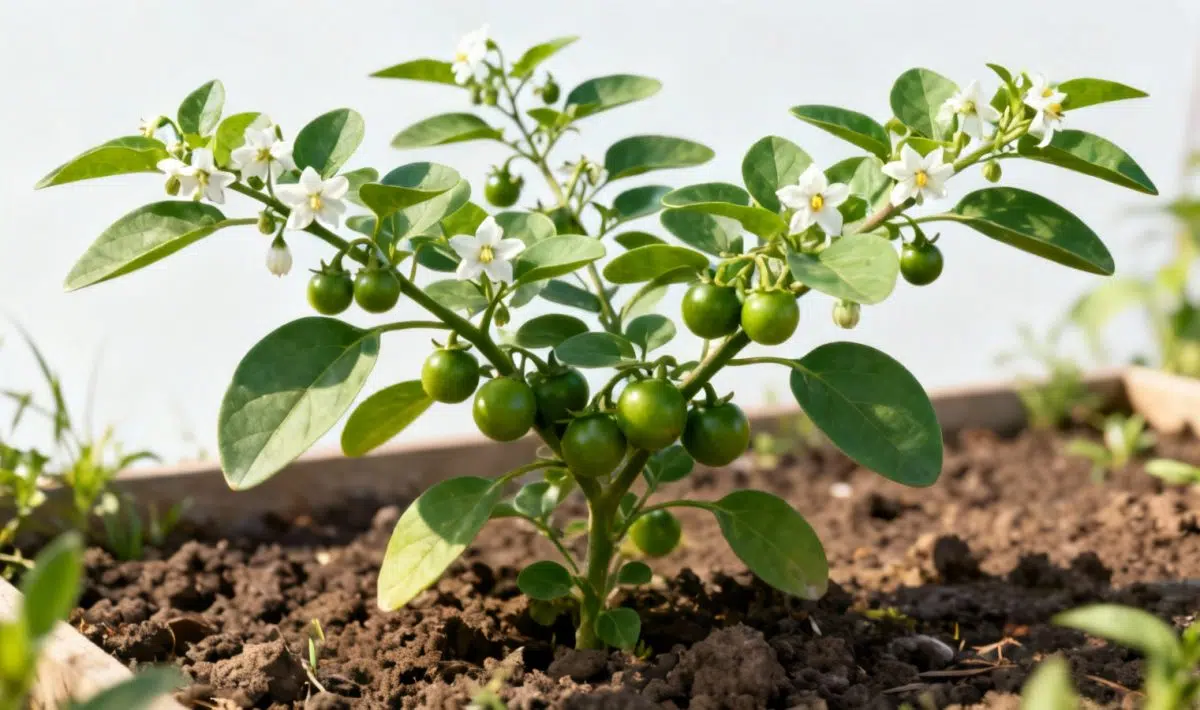
The American black nightshade (Solanum americanum) stands as one of the most intriguing members of the Solanaceae family. This herbaceous plant, reaching up to one meter in height, has captured the attention of botanists and gardeners worldwide for its distinctive characteristics and complex nature. Understanding this species requires careful consideration of its botanical features, cultural significance, and proper cultivation methods.
Understanding Solanum americanum characteristics
The American black nightshade displays remarkable morphological features that distinguish it within the Solanum genus. Its green stems grow upright and sturdy, supporting delicate leaves that appear slightly hairy on their undersides. The plant develops a fibrous root system with a prominent taproot that anchors it effectively in various soil conditions.
During its flowering period, the plant produces striking white star-shaped flowers that eventually give way to small black berries. These fruits contain numerous seeds that contribute to the plant’s natural propagation abilities. However, it’s crucial to note that despite their appealing appearance, these berries contain alkaloids like solanine that make them toxic to humans and animals.
The plant exhibits considerable variability across different growing conditions. Some specimens may complete their lifecycle as annuals, while others persist as perennials depending on climate and environmental factors. This adaptability has allowed Solanum americanum to establish itself across diverse geographical regions.
Botanical classification and species relationships
Within the extensive Solanum genus, the American black nightshade holds a significant position among the black nightshade species complex. Scientists have identified several closely related species, including Solanum nigrum, which shares many similar characteristics but displays subtle morphological differences.
The classification of these plants has evolved considerably as botanical research advances. Modern DNA analysis has helped clarify the relationships between different nightshade species, though some taxonomic questions remain under investigation. This ongoing research continues to refine our understanding of the Solanum americanum lineage and its place within the broader family tree.
Traditional usage has varied significantly across different cultures, particularly in Africa where various Solanum species serve as leafy vegetables. Much like how gardeners might learn about black walnut care for their landscapes, understanding nightshade cultivation requires specific knowledge and precautions.
Cultivation requirements and growing conditions
Successfully growing Solanum americanum requires attention to several key environmental factors. The plant thrives in well-draining soil with a slightly acidic to neutral pH range. Proper soil preparation involves incorporating organic matter to improve drainage and fertility, as waterlogged conditions can lead to root problems.
Sunlight exposure plays a crucial role in healthy plant development. American black nightshade performs best in full sun to partial shade conditions, receiving at least six hours of direct sunlight daily. Temperature considerations are equally important, as the plant prefers warm growing conditions and may struggle in areas with prolonged cold periods.
The growing season typically spans several months, with germination occurring rapidly under optimal conditions. Plants can reach flowering stage within approximately two months of germination, followed by fruit development and seed maturation. This relatively quick lifecycle makes it possible to grow multiple generations in favorable climates.
Soil preparation and planting techniques
Effective soil preparation begins with testing the existing soil composition and pH levels. The ideal growing medium should drain well while retaining adequate moisture for plant establishment. Adding compost or well-aged manure can improve soil structure and provide essential nutrients for healthy growth.
When preparing planting areas, ensure adequate spacing between plants to prevent overcrowding and promote good air circulation. This spacing also reduces competition for nutrients and helps minimize potential disease issues that can arise in dense plantings.
Container growing offers another viable option for those with limited garden space. Choose containers with drainage holes and use a high-quality potting mix designed for vegetable plants. Just as gardeners might explore guava cultivation methods for container growing, nightshade plants can adapt well to pot culture with proper care.
Propagation methods and techniques
Propagating American black nightshade primarily occurs through seed collection and sowing. Fresh seeds germinate more readily than older ones, so collecting seeds from recently ripened fruits yields the best results. The epigeal germination process means seedlings emerge with their cotyledons above ground, making early identification straightforward.
Seed starting can begin indoors several weeks before the last expected frost date. Use seed trays filled with sterile seed-starting mix, maintaining consistent moisture and temperature around 70-75°F for optimal germination rates. Most seeds will sprout within 7-14 days under these conditions.
Once seedlings develop their first true leaves, they can be transplanted into larger containers or prepared garden beds. Handle young plants carefully during transplanting, as their delicate root systems can be easily damaged. Hardening off seedlings gradually over several days helps them adjust to outdoor conditions.
Alternative propagation approaches
While seed propagation remains the primary method, some growers experiment with cutting propagation for certain cultivars. This technique involves taking healthy stem cuttings during the growing season and rooting them in appropriate growing medium. Success rates vary, but this method can preserve specific plant characteristics.
Natural self-seeding often occurs when mature fruits drop and decompose, releasing seeds into the surrounding soil. Birds also contribute to seed dispersal by consuming the berries and depositing seeds in new locations. This natural propagation ability explains why some gardeners find volunteer plants appearing in unexpected areas.
Similar to how growers might understand common coleus features for propagation success, nightshade cultivation benefits from understanding the plant’s natural reproduction patterns and timing.
Care and maintenance practices
Ongoing care for American black nightshade involves regular monitoring and maintenance activities. Watering should be consistent but not excessive, allowing soil to dry slightly between waterings. Deep, infrequent watering encourages healthy root development and helps plants become more drought-tolerant over time.
Fertilization needs are generally modest, as these plants can grow well in average garden soil. A balanced, slow-release fertilizer applied at planting time often provides sufficient nutrients for the entire growing season. Over-fertilizing can lead to excessive vegetative growth at the expense of flower and fruit production.
Pest monitoring becomes essential as the growing season progresses. Common garden pests may target nightshade plants, requiring integrated pest management approaches. Regular inspection allows for early detection and treatment of any issues before they become serious problems.
Seasonal care considerations
Throughout the growing season, remove any damaged or diseased plant material promptly to maintain plant health. Pruning requirements are minimal, though some gardeners prefer to remove lower branches to improve air circulation around the base of the plant.
Mulching around plants helps retain soil moisture and suppress weed competition. Organic mulches like straw or shredded leaves work well and break down to improve soil structure over time. Maintain mulch several inches away from plant stems to prevent moisture-related issues.
Just as gardeners might discover golden dewdrops tips for seasonal maintenance, nightshade care requires attention to changing needs throughout the growing cycle.
Important safety considerations
Safety awareness remains paramount when growing any Solanum species due to their toxic properties. All parts of the American black nightshade contain varying levels of alkaloids that can cause serious illness if ingested. This toxicity extends to both humans and domestic animals, making proper education essential for anyone cultivating these plants.
Clear labeling and strategic placement help prevent accidental ingestion, particularly in households with children or pets. Consider growing nightshade plants in areas that are less accessible or clearly marked to avoid confusion with edible garden plants.
The invasive potential of this species also requires consideration in many regions. Seeds can spread readily through natural dispersal mechanisms, potentially establishing populations beyond intended growing areas. Responsible cultivation includes managing seed production and preventing unwanted spread into natural areas.
Unlike more straightforward ornamental plants where gardeners might get tips for garden cosmos care without major safety concerns, nightshade cultivation demands heightened awareness and precautionary measures.
Research applications and future potential
Scientific research continues to explore the potential applications of Solanum americanum in various fields. Agricultural researchers have identified genes within this species that confer resistance to important plant pathogens, including Phytophthora infestans, which causes late blight in potatoes and tomatoes.
Traditional medicinal applications in various cultures have sparked interest in phytochemical research. Studies in Guatemala, Brazil, and Hawaii have documented historical uses for treating conditions ranging from conjunctivitis to respiratory ailments, though modern medical applications require extensive testing and validation.
The plant’s ability to thrive in diverse environmental conditions also makes it an interesting subject for climate adaptation studies. Understanding how Solanum americanum responds to changing growing conditions could provide insights relevant to agricultural resilience and food security research.
Growing American black nightshade requires careful attention to both cultural requirements and safety considerations. This fascinating member of the Solanaceae family offers opportunities for botanical study and research applications while demanding respect for its toxic properties. Success comes from understanding the plant’s natural growth patterns, providing appropriate growing conditions, and maintaining awareness of its potential impacts on both cultivated and natural environments.

Allan is a lifelong gardening enthusiast who still gets excited when the first seedlings pop up in spring. With a deep love for nature and a hands-in-the-soil approach, he shares practical tips, plant discoveries, and clever tricks picked up over years of digging, planting, and observing. Whether you’re a new gardener or have a shed full of tools, Allan writes like a neighbor who’s always happy to swap cuttings and stories over the fence.
You can find more about Allan’s work on Malt or connect with him on LinkedIn.


