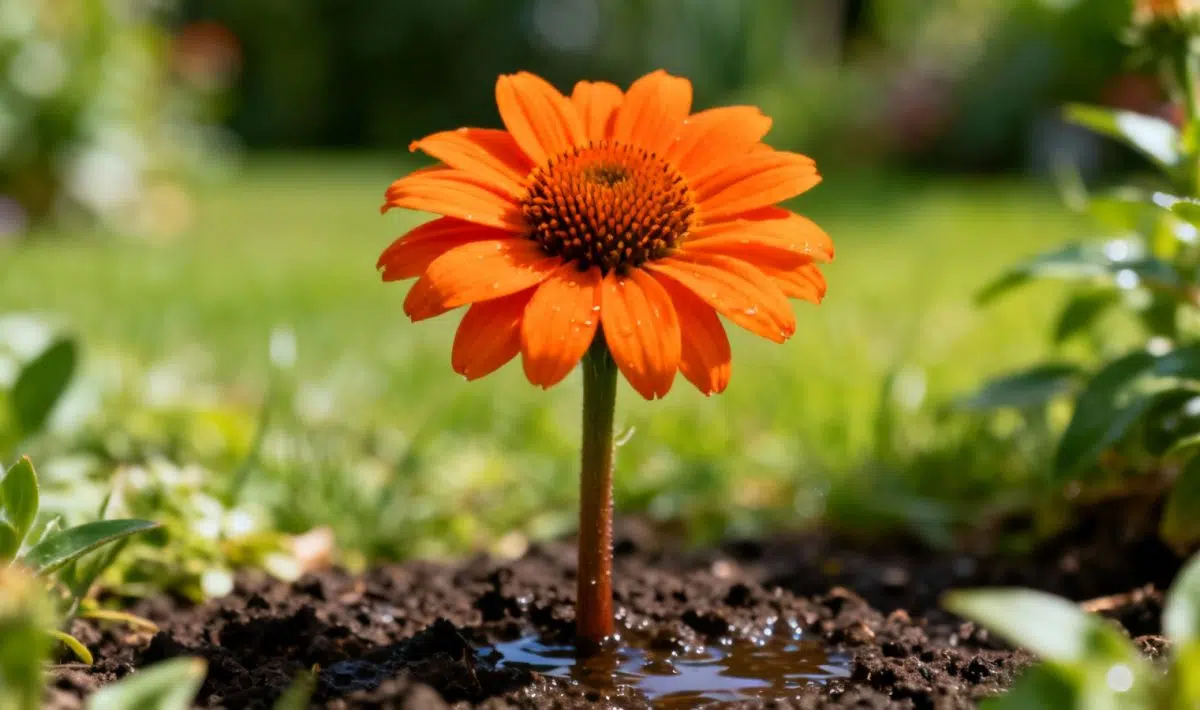
Orange coneflower, a stunning hybrid variety of echinacea, brings vibrant color to gardens with its bold orange blooms. This hardy perennial requires careful attention to watering, especially when establishing new plants in your garden. Understanding how often should you water your orange coneflower depends on several factors including season, soil type, and plant maturity.
These remarkable plants are naturally drought-tolerant once established, which means they can survive periods with minimal water. However, proper hydration during their growing season will help maintain healthy foliage and encourage abundant flowering. The key is finding the right balance between providing adequate moisture and avoiding waterlogged soil that can damage the plant’s root system.
Orange coneflowers thrive in well-draining soil with organic matter that helps retain moisture without becoming soggy. Their deep root system allows them to access water from lower soil layers, making them more resilient than many other garden plants. For optimal care practices with different plant varieties, you might find similarities when exploring optimal care for your money plant techniques.
Seasonal watering schedule for orange coneflower
Spring and summer watering requirements
During the active growing season, orange coneflowers require more frequent watering to support new growth and flower production. In spring, water your plants once weekly, providing deep irrigation that reaches the entire root zone. As temperatures rise in summer, you may need to increase watering frequency to twice weekly during hot, dry periods.
Summer care becomes particularly important when temperatures exceed normal ranges. The soil surface should be allowed to dry between waterings, but the deeper layers should retain some moisture. Monitor your plants closely during heat waves, as stressed coneflowers will show wilting leaves that indicate immediate watering needs.
Using organic mulch around your plants helps conserve soil moisture and reduces the frequency of watering required. This material creates a protective barrier that prevents rapid water evaporation from the soil surface. Different plants have varying water needs, which you can see when comparing techniques used in watering tips for your watermelon plants cultivation.
Fall and winter water management
As autumn approaches, gradually reduce watering frequency to help your orange coneflowers prepare for dormancy. Most established plants will require watering only during extended dry periods in fall. The reduction in water helps the plants develop cold hardiness and prevents root rot during winter months.
Winter watering is typically unnecessary for established orange coneflowers, as they enter a dormant state and their water requirements drop significantly. Snow and winter precipitation usually provide adequate moisture for dormant plants. However, if you experience an unusually dry winter, occasional deep watering may be beneficial.
Effective watering techniques and methods
Deep watering strategies
The most effective approach involves deep, infrequent watering rather than light, daily applications. This method encourages the development of strong, deep root systems that can access water from lower soil layers. Apply water slowly at the base of the plant, allowing it to penetrate deeply into the soil rather than running off the surface.
Drip irrigation systems work exceptionally well for orange coneflowers, delivering water directly to the root zone with minimal waste. These systems can be programmed to provide consistent moisture levels throughout the growing season. Hand watering with a soaker hose or watering wand also provides excellent control over water application.
When watering established plants, apply enough water to moisten the soil to a depth of 6-8 inches. This typically requires about one inch of water per week, including rainfall. Check soil moisture by inserting your finger several inches into the ground near the plant base.
Mulching for moisture retention
Organic mulch serves multiple purposes in orange coneflower care, helping retain soil moisture while suppressing weeds and regulating soil temperature. Apply a 2-3 inch layer of organic material such as shredded bark, compost, or leaves around your plants, keeping mulch several inches away from the plant stems.
The organic matter gradually decomposes, improving soil structure and adding nutrients that benefit plant growth. This natural process creates an environment that supports beneficial soil organisms and helps maintain consistent moisture levels. Similar moisture management principles apply to other garden plants, as demonstrated in caring for your smoketree effectively practices.
Soil conditions and drainage considerations
Optimal soil composition
Orange coneflowers perform best in well-draining soil with good organic content. Clay soils that retain too much water can lead to root rot, while sandy soils may drain too quickly and require more frequent watering. The ideal soil composition includes a mixture of organic matter that retains some moisture while allowing excess water to drain away.
Soil analysis can help determine if amendments are needed to improve drainage or water retention. Adding compost or other organic material improves both clay and sandy soils, creating better growing conditions for your plants. The soil surface should never remain waterlogged, as this creates anaerobic conditions harmful to root health.
Test your soil drainage by digging a hole and filling it with water. If water remains standing after 24 hours, you may need to improve drainage by adding organic amendments or creating raised planting areas. Proper drainage becomes even more critical during wet seasons when natural rainfall is abundant.
Environmental factors affecting water needs
Several environmental conditions influence how often you should water your orange coneflower. Wind exposure increases water loss through transpiration, requiring more frequent irrigation. Plants in full sun locations typically need more water than those in partial shade, though orange coneflowers prefer sunny locations for best flowering.
Temperature fluctuations also affect watering schedules, with hot, dry conditions requiring increased attention to soil moisture. Humidity levels in your area influence how quickly water evaporates from both soil and plant surfaces. Consider these factors when developing your watering routine throughout the growing season.
Container-grown orange coneflowers require more frequent watering than garden-planted specimens, as pots dry out more quickly. The small volume of soil in containers cannot retain moisture as effectively as ground soil. For comparison, vegetable gardens often require similar attention to watering schedules, as seen in best watering practices for winter squash cultivation.
Recognizing watering problems and plant health
Signs of overwatering and underwatering
Overwatered orange coneflowers often display yellowing leaves that may develop brown spots or edges. The soil around these plants typically feels soggy and may have a musty odor indicating poor drainage or excessive moisture. Root rot can develop quickly in waterlogged conditions, potentially killing the plant if not addressed promptly.
Underwatered plants show different symptoms, including wilting during the hottest part of the day, even when soil feels moist deeper down. Leaves may become crispy or brown at the edges, and flower production may decrease significantly. The plant’s overall growth slows, and new leaves appear smaller than normal.
Monitor your plants regularly for these warning signs, adjusting your watering schedule accordingly. Healthy orange coneflowers have vibrant green foliage and produce abundant flowers throughout their blooming period. The leaves should feel firm and show no signs of stress during normal weather conditions.
Establishing young plants
Newly planted orange coneflowers require more consistent moisture during their first growing season as they establish their root systems. Water these plants twice weekly during dry periods, ensuring the soil remains evenly moist but not waterlogged. This regular schedule helps encourage deep root development.
Gradually reduce watering frequency as plants become established, typically after their first full growing season. Established plants develop the drought tolerance that makes orange coneflowers popular choices for low-maintenance gardens. Similar establishment principles apply to many garden plants, which you can explore through ensuring healthy tulip poplar growth methods.
Young plants benefit from morning watering, which allows leaves to dry before evening and reduces disease risk. Avoid watering late in the day when moisture on foliage can encourage fungal problems. Tree species also follow similar watering guidelines, as demonstrated in watering your sycamore tree properly care techniques.
Creating the perfect growing environment
Orange coneflowers thrive with proper spacing that allows air circulation around each plant, reducing humidity levels that can lead to fungal diseases. Plant spacing also affects watering needs, as crowded plants compete for available soil moisture and may require more frequent irrigation.
Choose planting locations that receive adequate morning sun, which helps dry dew from leaves quickly. This natural drying process reduces disease pressure and creates healthier growing conditions overall. The combination of proper watering, good drainage, and appropriate sun exposure creates an ideal environment for vigorous orange coneflower growth.
Regular monitoring of soil moisture, combined with understanding seasonal water requirements, will help you maintain healthy, flowering orange coneflowers year after year. These resilient plants reward proper care with abundant blooms and strong growth that enhances any garden space.
Allan is a lifelong gardening enthusiast who still gets excited when the first seedlings pop up in spring. With a deep love for nature and a hands-in-the-soil approach, he shares practical tips, plant discoveries, and clever tricks picked up over years of digging, planting, and observing. Whether you’re a new gardener or have a shed full of tools, Allan writes like a neighbor who’s always happy to swap cuttings and stories over the fence.
You can find more about Allan’s work on Malt or connect with him on LinkedIn.