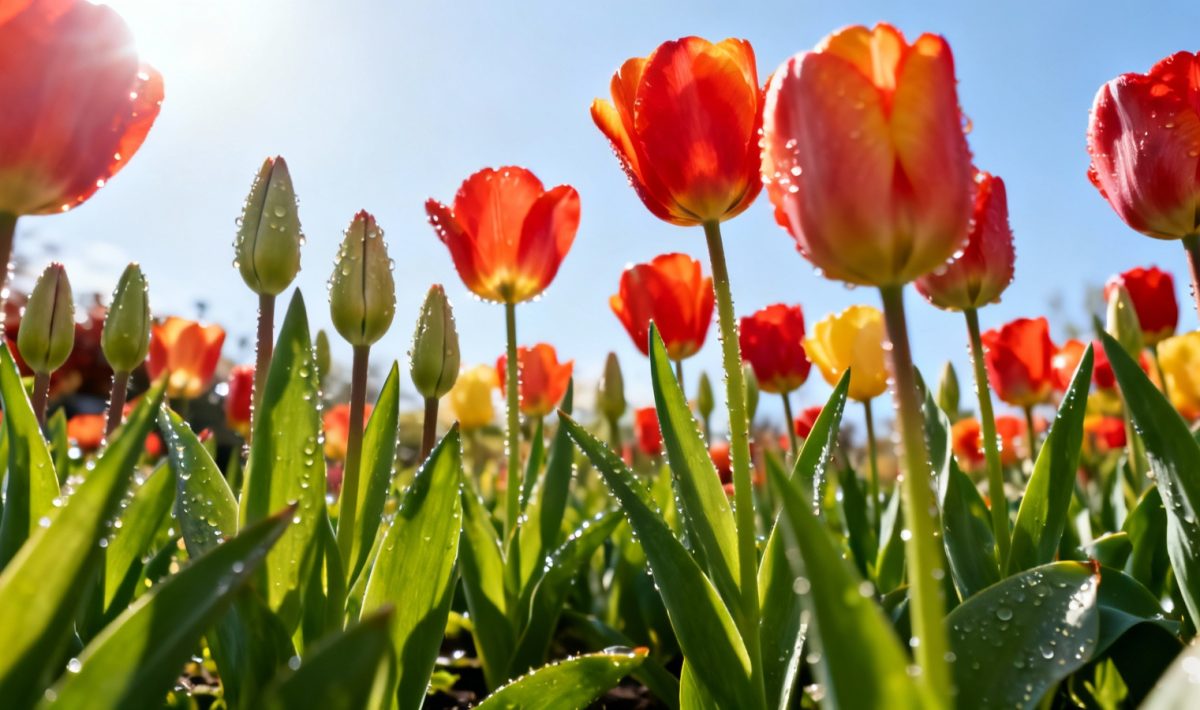
How much sunlight does garden tulip need for perfect blooms
Garden tulips are among spring’s most beloved flowers, but many gardeners wonder exactly how much sunlight does garden tulip need for those spectacular blooms we all cherish. The answer is surprisingly straightforward: these beautiful plants require at least 6 hours of direct sunlight daily to thrive and produce their vibrant, picture-perfect flowers.
Understanding the relationship between light and tulip health is essential for any gardener hoping to create stunning spring displays. These gorgeous flowers use sunlight for photosynthesis, which fuels their growth and helps them develop those rich, saturated colors that make them garden favorites.
When tulips receive adequate sunlight, they develop strong stems that can properly support their flower heads. The process of photosynthesis also helps the bulbs store energy for the following year’s growth cycle. Without sufficient light, you’ll notice weaker plants with pale leaves and disappointing blooms.
Different tulip varieties have slightly different light preferences, though most garden tulips share similar requirements. Single-flowered types tend to be quite forgiving, while double-flowered varieties often need more consistent light exposure to support their heavier blooms.
Optimal sunlight requirements for healthy growth
The ideal scenario for garden tulips involves full sun exposure, which means 6 to 8 hours of direct sunlight throughout the day. This level of light ensures robust growth, vibrant flower colors, and healthy bulb development that will benefit future seasons.
However, tulips can tolerate partial shade conditions reasonably well. If your garden only receives 4 to 5 hours of direct sunlight, particularly morning sun, your tulips will still bloom, though perhaps not as vigorously. Morning light is especially beneficial because it helps dry dew from the leaves, reducing the risk of fungal diseases.
Much like how sunlight requirements for garden phlox vary depending on the specific growing conditions, tulips can adapt to different light situations with proper care and attention to their other needs.
Recognizing sunlight stress in tulips
When tulips don’t receive enough sunlight, they show clear signs of distress. The most obvious indicator is weak, elongated stems that bend or flop over instead of standing tall and proud. You might also notice pale, yellowish leaves that lack the deep green color of healthy plants.
Insufficient blooming is another telltale sign of inadequate light exposure. Your tulips might produce buds that fail to open properly, or the flowers themselves might appear smaller and less colorful than expected. These symptoms indicate that the plant isn’t receiving enough energy through photosynthesis to support full flower development.
Choosing the perfect planting location
Selecting the right spot for your tulip plantation is crucial for long-term success. Look for areas in your garden that receive morning sunlight, as this helps the soil warm up gradually and provides the energy tulips need for their daily growth processes.
Avoid planting tulips in areas that are heavily shaded by large trees, buildings, or other structures during the peak growing season. While tulips are dormant during summer when deciduous trees are in full leaf, they need maximum light exposure during their active spring growth period.
Consider the changing light patterns in your garden throughout the seasons. An area that seems perfectly sunny in late winter when you’re planning your garden might become partially shaded once nearby plants begin their spring growth.
Container gardening considerations
Growing tulips in containers offers the advantage of mobility, allowing you to move your plants to follow the sun throughout the day. This flexibility can be particularly useful if your garden has limited sunny spots or if you want to create focal points on patios or decks.
When choosing containers, ensure they’re deep enough to accommodate the tulip bulbs properly. A depth of at least 8 inches is recommended for most tulip varieties. Just as sweetgum’s sunlight needs for growth must be considered for tree placement, container positioning requires thoughtful planning for optimal results.
Place containers where they’ll receive the most morning and midday sun, but consider providing some afternoon shade in extremely hot climates. This balance helps prevent the soil from becoming too warm, which can stress the bulbs.
Adapting care based on light conditions
Your watering schedule should reflect the amount of sunlight your tulips receive. Plants in full sun will generally need more frequent watering than those in partial shade, as the soil dries out more quickly in bright, warm conditions.
Monitor soil moisture regularly, especially during active growth periods in spring. The soil should remain consistently moist but never waterlogged, as soggy conditions can lead to bulb rot regardless of how much sunlight the plants receive.
Fertilization timing can also be adjusted based on light exposure. Tulips in ideal sunny locations typically benefit from a balanced fertilizer applied when shoots first emerge in spring. Those in partial shade might need additional feeding to compensate for reduced photosynthetic activity.
Companion planting strategies
Choose companion plants carefully to avoid creating unwanted shade for your tulips. Low-growing annuals like pansies or forget-me-nots work well because they don’t interfere with light reaching the tulip bulbs and leaves.
Consider plants that complement tulips’ growing cycle. Since tulips are spring bloomers that go dormant in summer, you can plant summer-flowering species in the same area to provide continued garden interest. Understanding mugwort light requirements in gardens can help you make informed decisions about mixed plantings.
Avoid planting tall, spreading plants too close to your tulips, as these can shade the bulbs during their crucial growth period. Instead, use these larger plants as background elements that won’t interfere with your tulips’ light requirements.
Seasonal light management
Spring is when your attention to sunlight becomes most critical. As tulips emerge from their winter dormancy, they need maximum light exposure to fuel rapid growth and flower development. Remove any debris or mulch that might be blocking light from reaching emerging shoots.
Monitor how changing sun angles affect your garden as spring progresses. Areas that were sunny in early spring might become shadier as deciduous trees leaf out, so be prepared to adjust your care routine accordingly.
After flowering, maintain good light exposure for the foliage. The leaves continue photosynthesis for several weeks after blooms fade, building energy reserves in the bulb for next year’s display. This post-bloom period is just as important as the flowering stage for long-term tulip health.
Climate considerations
In cooler climates, maximize sun exposure whenever possible, as tulips benefit from the additional warmth that sunlight provides. The combination of light and warmth helps extend the blooming period and promotes healthier overall growth.
However, in very hot regions, some afternoon shade can actually benefit tulips by preventing excessive heat stress. Much like sunlight needs for sweet alyssum must be balanced with temperature considerations, tulip care requires attention to your specific climate conditions.
Pay attention to local weather patterns and adjust your expectations accordingly. Unusually cloudy springs might result in delayed blooming or slightly less vibrant colors, but this doesn’t indicate poor plant health if other care requirements are met.
Maximizing tulip success in your garden
Success with garden tulips comes from understanding that sunlight is just one piece of the puzzle, albeit a crucial one. Combine proper light exposure with well-draining soil, appropriate planting depth, and consistent moisture for the best results.
Plan your tulip displays with sunlight patterns in mind. Group varieties with similar light requirements together, and consider how the mature height of different types will affect shading patterns within your planting area.
Document which areas of your garden provide the best conditions for tulips, noting both sunlight exposure and flowering success. This information becomes invaluable for future planting decisions and helps you create increasingly spectacular spring displays.
Remember that gardening is an ongoing learning process. What works for optimal sunlight for sweet mock-orange might differ from tulip needs, so observe your plants carefully and adjust your approach based on their performance.
With proper attention to sunlight requirements and consistent care, your garden tulips will reward you with stunning spring blooms that brighten even the dreariest late-winter days. Understanding how much sunlight these beautiful flowers need is the first step toward creating the garden of your dreams.
Whether you’re planning a formal tulip bed or incorporating these flowers into mixed borders, remember that adequate sunlight forms the foundation of tulip success. Just as sunlight needs of garden mums guide fall garden planning, understanding tulip light requirements ensures your spring garden reaches its full potential.
Allan is a lifelong gardening enthusiast who still gets excited when the first seedlings pop up in spring. With a deep love for nature and a hands-in-the-soil approach, he shares practical tips, plant discoveries, and clever tricks picked up over years of digging, planting, and observing. Whether you’re a new gardener or have a shed full of tools, Allan writes like a neighbor who’s always happy to swap cuttings and stories over the fence.
You can find more about Allan’s work on Malt or connect with him on LinkedIn.