
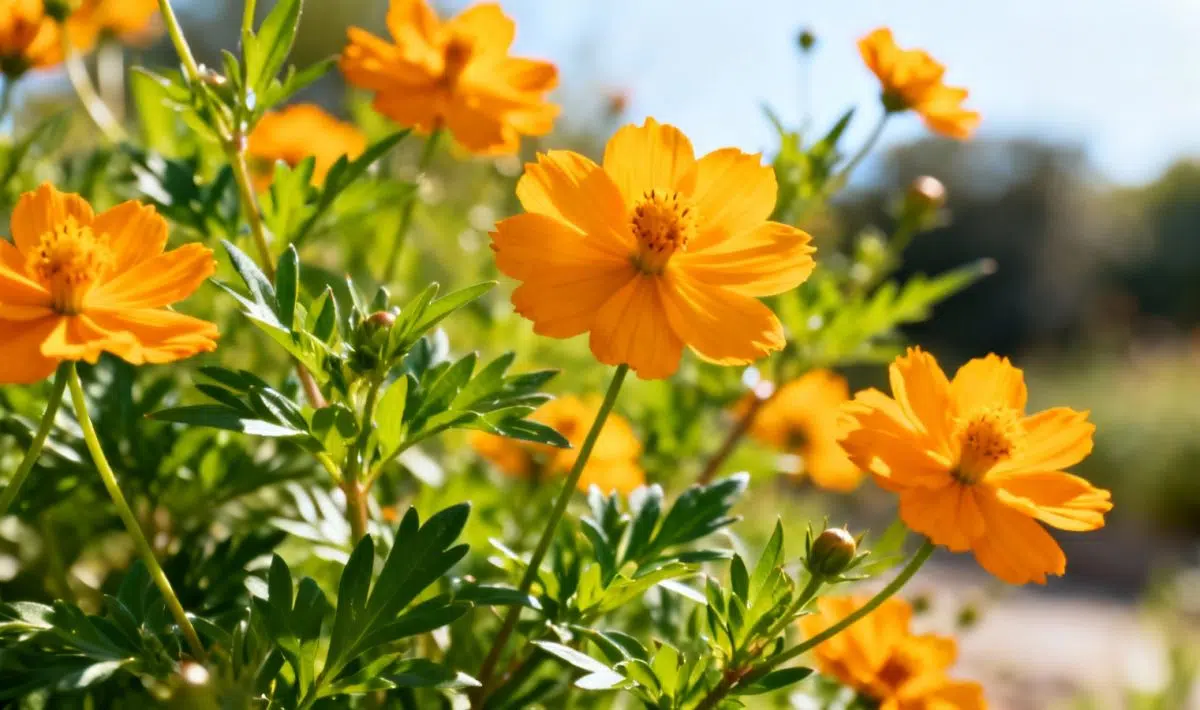
Growing sulfur cosmos successfully starts with understanding their sunlight needs. These vibrant orange and yellow flowers are true sun worshippers, requiring specific light conditions to produce their most stunning blooms. With the right amount of sunshine, your sulfur cosmos will reward you with continuous flowering from summer until the first frost.
How much sunlight does sulfur cosmos need for optimal growth
Sulfur cosmos (Cosmos sulphureus) thrives in full sun conditions, needing at least 6 to 8 hours of direct sunlight daily. This bright exposure ensures robust growth and abundant flowering throughout the growing season. When planted in the right sunny location, these flowers can reach heights of 2 to 3 feet with a vibrant display that attracts butterflies and beneficial insects.
The process of photosynthesis in sulfur cosmos becomes most efficient with extended sun exposure. Plants receiving 8 to 10 hours of direct light produce the strongest stems and most colorful blooms. However, they can tolerate partial shade conditions, though this will result in reduced flowering and potentially leggier growth.
Like other sun-loving plants such as watermelon, understanding proper light requirements is crucial for success. Similar principles apply when considering optimal sunlight for watermelon growth in your garden planning.
Understanding sulfur cosmos light requirements
The natural habitat of sulfur cosmos provides insight into their sunlight preferences. These flowers originate from Mexico and Central America, where they grow in open areas with abundant sunshine. This background explains why they perform best with maximum light exposure in cultivation.
Based on horticultural studies, sulfur cosmos receiving less than 6 hours of direct sunlight show a 30-50% reduction in bloom production. The size of individual flowers may also decrease, and the overall plant structure becomes less compact. For gardeners seeking vibrant results, prioritizing full sun locations is essential.
The temperature and light combination creates optimal growing conditions. Sulfur cosmos can handle intense heat better than many annual flowers, making them perfect for hot, sunny borders and containers.
Best growing conditions for sulfur cosmos
Beyond sunlight, several factors contribute to successful sulfur cosmos cultivation. These hardy annuals prefer well-draining soil and actually perform better in average to poor soil conditions. Rich, fertile soil can lead to excessive foliage growth at the expense of flowering.
Water requirements are moderate, with established plants showing good drought tolerance. The vibrant flowers maintain their color intensity even during hot summer periods when other annuals might fade. This resilience makes them excellent choices for low-maintenance sunny gardens.
Just as herbs have specific light needs, different plants require tailored approaches. For instance, growing spearmint with adequate sunlight involves different considerations than cosmos cultivation.
Planting and care techniques
Start sulfur cosmos seeds directly in the garden after the last frost date. The process is straightforward – scatter seeds on prepared soil and lightly cover with a thin layer of earth. Seeds typically germinate within 7-14 days when soil temperatures reach 65-70°F.
Space plants 12-18 inches apart to allow for proper air circulation and light penetration. This spacing ensures each plant receives adequate sunlight without competition from neighboring plants. Regular deadheading encourages continued blooming throughout the season.
For container growing, choose large pots positioned in the sunniest location available. The surface area of the container should accommodate the plant’s mature size while ensuring proper drainage.
Maximizing bloom production
To encourage maximum flowering, avoid over-fertilizing sulfur cosmos. These plants produce their best displays when grown in lean conditions with plenty of sunshine. Excessive nitrogen can result in lush foliage but fewer flowers.
The formation of new buds continues throughout the growing season with proper care. Regular removal of spent flowers redirects the plant’s energy into producing new blooms rather than seed formation. This simple maintenance task significantly extends the flowering period.
Different flowering plants have varying bloom timing requirements. While cosmos flower continuously, other garden favorites like sunlight needs for blooming hydrangeas follow different patterns based on their light exposure.
Common growing challenges and solutions
Insufficient sunlight is the most common issue affecting sulfur cosmos performance. Plants grown in shade develop weak, spindly stems that may require staking. Moving containers to sunnier locations or selecting different planting sites can resolve these problems.
Overwatering combined with inadequate light creates conditions favorable for fungal diseases. The nature of these plants makes them quite forgiving, but proper drainage and full sun exposure prevent most issues.
Some gardeners find success growing various crops with similar sun requirements together. For example, combining cosmos with other sun-loving plants like those needing sunlight requirements for growing pineapple can create efficient garden layouts.
Seasonal considerations and timing
Plant sulfur cosmos after soil temperatures consistently reach 60°F and frost danger has passed. In most temperate climates, this occurs in late spring. The long daylight hours of summer provide ideal conditions for vigorous growth and continuous blooming.
As autumn approaches and daylight hours decrease, flower production naturally slows. However, sulfur cosmos continue blooming until killed by frost, making them valuable for extending garden color into fall. The process of gradual seasonal transition allows gardeners to enjoy these flowers for several months.
For succession planting, sow new seeds every 3-4 weeks through midsummer. This approach ensures continuous blooms and maintains garden interest throughout the growing season with fresh, vibrant plants regularly joining the display.

Allan is a lifelong gardening enthusiast who still gets excited when the first seedlings pop up in spring. With a deep love for nature and a hands-in-the-soil approach, he shares practical tips, plant discoveries, and clever tricks picked up over years of digging, planting, and observing. Whether you’re a new gardener or have a shed full of tools, Allan writes like a neighbor who’s always happy to swap cuttings and stories over the fence.
You can find more about Allan’s work on Malt or connect with him on LinkedIn.


