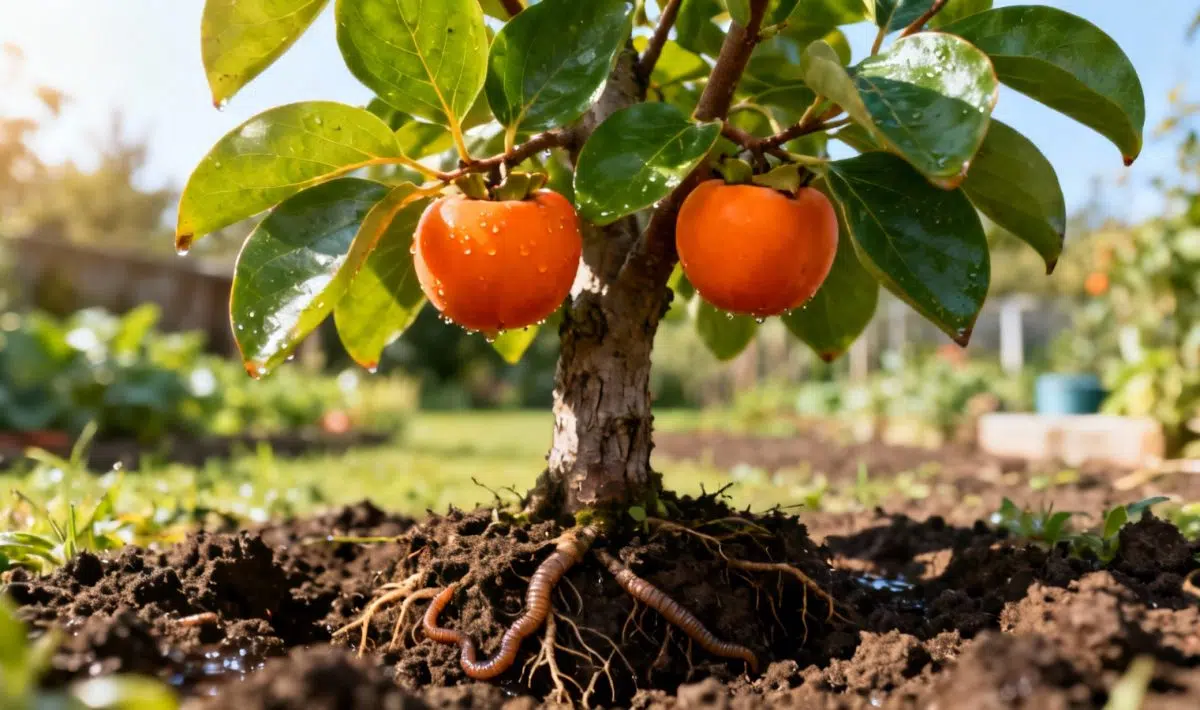
Knowing how often should you water your common persimmon starts with understanding that these magnificent trees have varying water requirements throughout their lifecycle. Your persimmon tree’s thirst depends on several factors including its age, the season, and your local climate conditions. Young trees will demand more frequent attention, while mature specimens develop impressive drought tolerance once established.
The importance of proper watering cannot be overstated for these fruit-bearing trees. Just like when you care for your hackberry bonsai, consistent moisture management directly impacts both tree health and fruit quality. Too little water leads to stress, poor fruit development, and potential leaf drop, while excessive watering can cause root rot and other serious complications.
Your soil type plays a crucial role in determining frequency. Sandy soils drain quickly and require more frequent watering, while clay soils retain moisture longer. Testing your soil’s drainage capacity will help you establish the perfect watering routine for your specific growing conditions.
Seasonal watering schedules for optimal growth
During spring and summer months, your persimmon tree will need the most water as it focuses energy on new growth and fruit development. Plan to water deeply once or twice per week, providing approximately 2-3 centimeters of water each time. This deep watering encourages roots to grow downward, creating a stronger, more resilient tree.
Fall watering requirements decrease significantly as temperatures drop and growth slows. Reduce frequency to once weekly, then gradually taper off as winter approaches. However, don’t completely stop watering until the ground freezes, as trees still need moisture for winter survival.
Winter watering needs are minimal in most climates, but don’t ignore your tree entirely. During warm winter spells or in areas with little snow cover, occasional deep watering prevents winter desiccation. Similar principles apply when watering your common mugwort during dormant periods.
Adjusting for weather conditions
Rain changes everything in your watering schedule. After significant rainfall, check soil moisture before adding more water. Your persimmon tree appreciates consistent moisture, but waterlogged conditions spell trouble. During hot, windy weather, increase watering frequency as these conditions accelerate water loss through transpiration.
Temperature extremes require special attention. During heat waves, consider light morning watering in addition to your regular schedule. Cold snaps mean reducing water temporarily, as frozen soil cannot absorb moisture effectively.
Age-specific watering requirements
Young persimmon trees under three years old need your closest attention. Water them deeply every 2-3 days during growing season, ensuring the root zone stays consistently moist but not soggy. These establishing trees haven’t developed extensive root systems yet, making them vulnerable to drought stress.
Mature persimmon trees over five years old have developed impressive drought tolerance. They typically thrive with weekly deep watering during active growing periods. However, during fruit development, maintaining consistent moisture becomes critical for preventing fruit drop and ensuring good size and flavor.
The transition period between young and mature requires gradual adjustment. Trees aged 3-5 years benefit from watering every 4-5 days, slowly training them toward the more independent watering schedule they’ll enjoy at maturity.
Testing soil moisture effectively
The finger test remains one of the most reliable methods for checking soil moisture. Insert your finger 2-3 inches into the soil near your tree’s base. If it feels dry at this depth, it’s time to water. This simple technique works just as well as when you’re determining watering needs for proper care for Norfolk Island pine.
Moisture meters provide more precise readings if you prefer technical solutions. These inexpensive tools eliminate guesswork and help you develop consistent watering habits. Look for meters that measure moisture at different soil depths for the most accurate assessment.
Visual cues from your tree also indicate watering needs. Slightly drooping leaves during hot afternoons are normal, but persistent wilting, leaf yellowing, or premature leaf drop signals water stress. Conversely, yellowing leaves combined with soggy soil indicates overwatering.
Soil preparation for better water retention
Adding organic matter like compost or well-aged manure improves soil structure and water retention. This amendment helps sandy soils hold moisture longer while improving drainage in clay soils. Apply a 2-3 inch layer around your tree’s root zone, keeping mulch away from the trunk.
Proper mulching significantly reduces watering frequency by conserving soil moisture and regulating temperature. Use organic materials like wood chips, straw, or shredded leaves, maintaining a 3-4 inch layer that extends to the tree’s drip line.
Common watering mistakes to avoid
Overwatering kills more persimmon trees than underwatering. Signs include yellowing leaves, soft or blackened roots, and fungal growth around the base. If you notice these symptoms, immediately reduce watering frequency and improve soil drainage around your tree.
Shallow, frequent watering creates weak, surface root systems that cannot support the tree during drought conditions. Instead, focus on deep, less frequent watering that encourages roots to grow deeper into the soil profile.
Watering timing matters more than many gardeners realize. Early morning watering allows plants to absorb moisture before daily heat increases evaporation rates. Evening watering can promote fungal diseases by keeping foliage wet overnight, though this approach works well for optimal care for porcelainflower plants in some situations.
Special considerations for container-grown trees
Potted persimmon trees have dramatically different watering needs compared to ground-planted specimens. Container soil dries much faster, often requiring daily watering during summer months. Check containers daily by lifting them or testing soil moisture with your finger.
Drainage becomes critical in containers. Ensure pots have adequate drainage holes and use well-draining potting mix specifically formulated for fruit trees. Poor drainage in containers leads to root rot faster than in ground plantings.
Watering techniques for maximum efficiency
Drip irrigation systems provide the most efficient water delivery for persimmon trees. These systems deliver water directly to root zones with minimal evaporation loss. Set timers to water during early morning hours for best results, similar to tips for watering gladiolus flowers during their growing season.
Soaker hoses offer an affordable alternative to drip systems. Lay them in circles around your tree’s drip line, covering the entire root zone. This method delivers water slowly and evenly, promoting deep root growth.
Hand watering works well for single trees but requires more time and attention. Use a watering wand or hose with a gentle spray pattern to avoid soil erosion. Water slowly, allowing soil to absorb moisture rather than running off the surface.
Water quality considerations
Your persimmon tree prefers slightly acidic to neutral water with pH between 6.0-7.0. If your tap water is extremely alkaline, consider collecting rainwater or allowing tap water to sit overnight before using. This practice helps chlorine evaporate and brings water closer to room temperature.
Hard water with high mineral content can build up in soil over time, potentially affecting nutrient availability. If you live in a hard water area, periodic soil testing helps monitor mineral accumulation and guides any necessary soil amendments.
Maximizing fruit quality through proper watering
Consistent moisture during fruit development directly impacts persimmon size, sweetness, and texture. Irregular watering can cause fruit to crack, drop prematurely, or develop poor flavor. Maintain steady soil moisture from fruit set through harvest for the best results.
The critical period for water management occurs 4-6 weeks before harvest when fruits rapidly increase in size. During this time, never allow soil to completely dry out, as stressed trees may drop fruit or produce smaller, less flavorful persimmons.
Post-harvest watering helps trees recover from the energy demands of fruit production and prepares them for winter dormancy. Continue regular watering until leaves drop naturally, then gradually reduce frequency as temperatures decline.
With proper attention to watering frequency and technique, your common persimmon tree will reward you with years of delicious fruit and beautiful seasonal display. Remember that consistency matters more than perfection – your tree will adapt to a regular schedule better than irregular heavy watering followed by drought periods.
Allan is a lifelong gardening enthusiast who still gets excited when the first seedlings pop up in spring. With a deep love for nature and a hands-in-the-soil approach, he shares practical tips, plant discoveries, and clever tricks picked up over years of digging, planting, and observing. Whether you’re a new gardener or have a shed full of tools, Allan writes like a neighbor who’s always happy to swap cuttings and stories over the fence.
You can find more about Allan’s work on Malt or connect with him on LinkedIn.