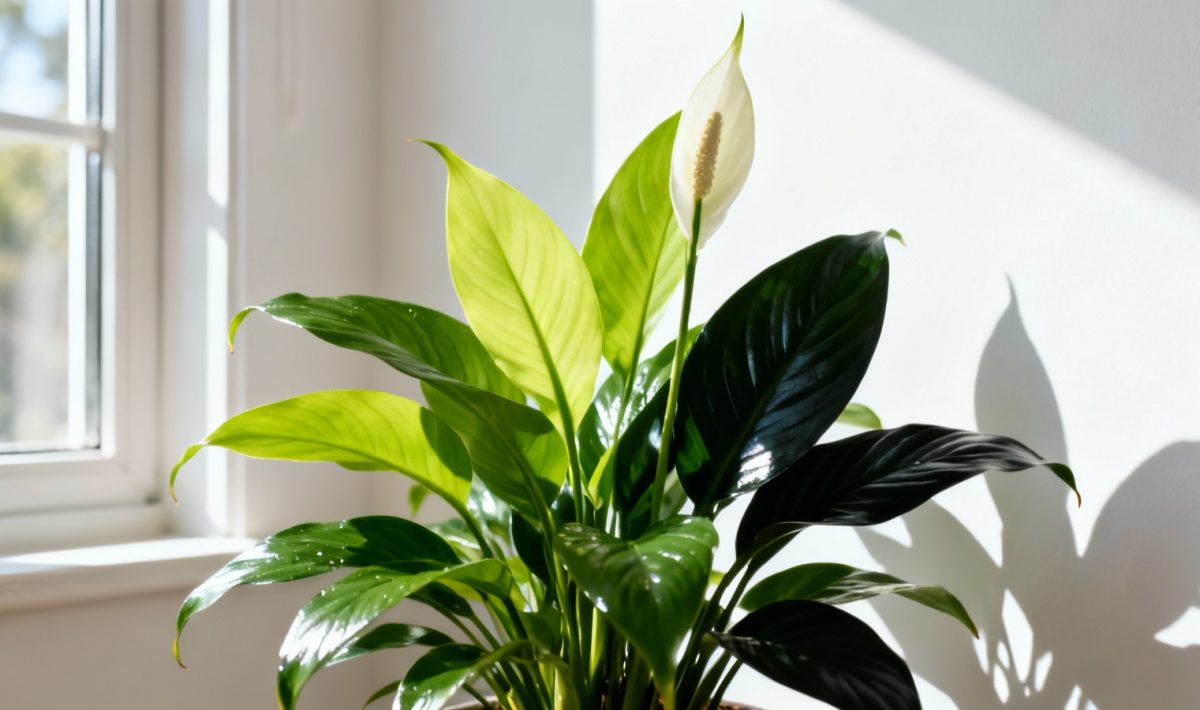
How much sunlight does Peace lily need for healthy indoor growth
Understanding how much sunlight does Peace lily need is crucial for anyone wanting to grow this popular houseplant successfully. These elegant flowering plants are known for their adaptability to low light conditions, making them perfect companions for indoor environments where natural light might be limited.
Peace lilies thrive best in bright, indirect light, though they’re remarkably tolerant of lower light conditions. Unlike many flowering plants that demand direct sunlight, these houseplants actually prefer filtered light that mimics their natural forest floor habitat. Direct sunlight can scorch their delicate leaves, causing unsightly brown spots and stress.
The ideal lighting for your peace lily falls between 200-400 foot-candles, which translates to a well-lit room without direct sun exposure. You can achieve this by placing your plant near a north-facing window or several feet away from an east or west-facing window. This setup provides enough brightness to maintain healthy growth while protecting the foliage from harsh rays.
Interestingly, while we focus on peace lilies, other plants have vastly different needs. For instance, understanding the sunlight needs of African lilies reveals how outdoor flowering plants require much more intense light than their indoor counterparts.
Signs your Peace lily needs better lighting
Your plant will communicate its lighting needs through various visual cues. When peace lilies receive insufficient light, their leaves often become elongated and pale green as they stretch toward available light sources. This process, called etiolation, weakens the plant and reduces its aesthetic appeal.
Another clear indicator is the absence of those beautiful white flowers that make peace lilies so desirable. While these plants can survive in low light, they need adequate brightness to produce their characteristic blooms. If your lily hasn’t flowered in over a year, consider relocating it to a brighter spot.
Yellowing leaves can signal both too much and too little light. However, when combined with slow growth and weak stems, it typically indicates insufficient lighting rather than overexposure.
Optimal growing conditions beyond light
Temperature plays a vital role in your peace lily’s health. These plants prefer consistent temperatures between 65-80°F (18-27°C) and dislike sudden temperature fluctuations. Keep them away from heating vents, air conditioning units, and drafty windows that can stress the plant.
Humidity is equally important for peace lilies, as they naturally grow in humid forest environments. Aim for humidity levels around 40-60%. You can increase humidity by placing a water tray near the plant, using a humidifier, or grouping multiple plants together to create a microclimate.
Much like how optimal sunlight for watermelon growth requires specific conditions for fruit development, peace lilies need their environmental sweet spot for flowering success.
Watering and soil care essentials
Proper watering technique significantly impacts how well your peace lily utilizes available light. These plants prefer consistently moist but not waterlogged soil. Water when the top inch of soil feels dry to the touch, typically every 1-2 weeks depending on your home’s humidity and temperature.
Use well-draining potting mix that retains some moisture while allowing excess water to escape. A combination of peat moss, perlite, and regular potting soil works well. Poor drainage can lead to root rot, which prevents the plant from properly absorbing nutrients needed for healthy growth.
During the growing season (spring and summer), your peace lily will need more frequent watering as it actively grows and may require more water to support new leaf and flower development.
Troubleshooting common lighting problems
If you notice brown, crispy leaf tips, your peace lily might be receiving too much direct sunlight. Move it to a location with filtered light or use sheer curtains to diffuse harsh rays. This is particularly important during summer months when sun intensity peaks.
For homes with limited natural light, consider supplementing with grow lights. LED grow lights positioned 12-24 inches above the plant can provide adequate illumination for healthy growth. Run them for 12-14 hours daily to compensate for insufficient natural light.
Just as sunlight requirements for spearmint demonstrate the importance of proper light management for herbs, peace lilies benefit from consistent, appropriate lighting schedules.
Seasonal lighting adjustments
Your peace lily’s lighting needs may change with the seasons. During winter months when daylight hours are shorter and sun angles are lower, you might need to move your plant closer to windows or supplement with artificial lighting.
Summer brings longer days but also more intense sunlight. Monitor your plant for signs of stress during hot months and provide additional shade if necessary. Rotating your plant weekly ensures even light distribution and prevents one-sided growth.
Spring is often the best time to relocate your peace lily if you’ve noticed it struggling with its current lighting situation. The moderate temperatures and increasing daylight hours make this transition period ideal for plant adjustments.
Creating the perfect indoor garden environment
Peace lilies work wonderfully as part of a mixed indoor plant collection. They complement other low-light plants like snake plants, pothos, and spider plants. When grouping plants, ensure each species’ specific needs are met while creating an attractive display.
Consider the unique requirements of different plants when planning your indoor garden. While we focus on peace lilies’ moderate light needs, plants like sunlight needed for garden snapdragons require much different conditions for their vibrant flower production.
Position your peace lily where it can serve as a focal point while receiving optimal lighting. A corner with bright, indirect light from multiple windows often provides the ideal conditions for these elegant houseplants.
Long-term care for sustained health
Regular maintenance helps your peace lily make the most of available light. Dust accumulation on leaves can block light absorption, so gently wipe leaves monthly with a damp cloth. This simple practice significantly improves the plant’s ability to photosynthesize effectively.
Fertilize your peace lily monthly during growing season with a balanced liquid fertilizer diluted to half strength. Well-nourished plants are better equipped to handle varying light conditions and produce more flowers.
Unlike sun-loving plants such as the ghost plant sunlight requirements which thrive in intense light, peace lilies reward consistent care with steady growth and occasional blooming cycles.
Advanced tips for optimal flowering
To encourage flowering, provide your peace lily with slightly cooler nighttime temperatures (around 65°F) while maintaining good light levels. This temperature variation mimics natural conditions that trigger blooming cycles.
Some growers find success with brief periods of reduced watering followed by normal care. This mild stress can sometimes encourage flower production, though it should be done carefully to avoid damaging the plant.
Remember that even with perfect conditions, peace lilies typically bloom only once or twice per year. Patience is key when waiting for those stunning white flowers to appear. Even plants growing in natural outdoor conditions, like stinging nettle’s sunlight needs demonstrate, follow natural cycles that can’t be rushed.
Understanding how much sunlight your peace lily needs is the foundation of successful indoor gardening with this beautiful plant. By providing bright, indirect light and maintaining proper care practices, you’ll enjoy healthy foliage and occasional elegant blooms that make these houseplants so beloved by indoor gardeners everywhere.
Allan is a lifelong gardening enthusiast who still gets excited when the first seedlings pop up in spring. With a deep love for nature and a hands-in-the-soil approach, he shares practical tips, plant discoveries, and clever tricks picked up over years of digging, planting, and observing. Whether you’re a new gardener or have a shed full of tools, Allan writes like a neighbor who’s always happy to swap cuttings and stories over the fence.
You can find more about Allan’s work on Malt or connect with him on LinkedIn.