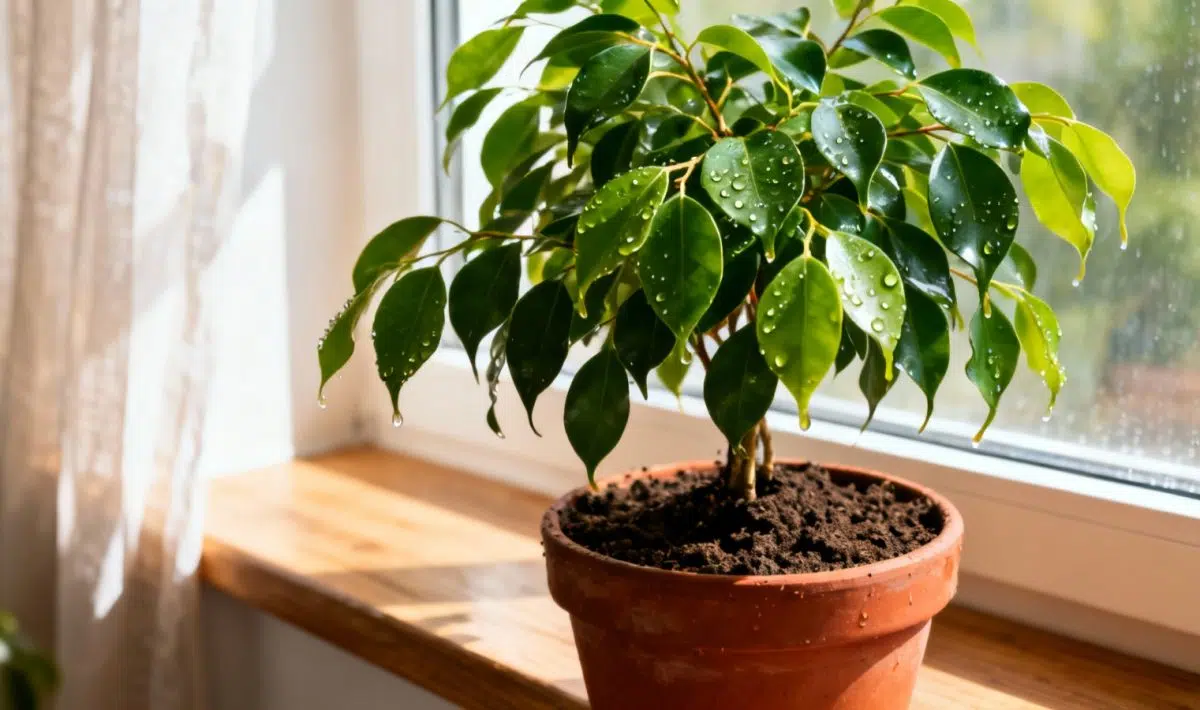
The weeping fig, or Ficus benjamina, is a stunning indoor plant that literally “weeps” when stressed from improper watering. This beautiful plant thrives with consistent moisture but absolutely despises soggy conditions. Getting the watering frequency right is crucial for maintaining those glossy green leaves and preventing the dreaded leaf drop that gives this plant its common name.
Your weeping fig typically needs water once a week during its active growing season from spring through summer. However, this isn’t a rigid rule – the key is checking the soil moisture rather than following a strict calendar. The top 2-3 inches of soil should dry out between waterings, creating the perfect balance this tropical beauty craves.
Factors that influence how often you should water
Seasonal variations matter significantly
During warmer months, your weeping fig drinks more water as it actively grows new leaves and branches. You’ll likely water every 5-7 days when temperatures rise and daylight hours increase. In winter, however, growth slows dramatically and you can extend watering to every 10-15 days. The plant essentially takes a rest, requiring much less moisture to stay healthy.
Summer heat and increased light exposure mean faster soil drying, while winter’s lower light and cooler temperatures slow evaporation. Always let the plant’s actual needs guide you rather than sticking to a rigid schedule that doesn’t account for seasonal changes.
Pot size and drainage considerations
The type of pot you choose dramatically affects watering frequency. Terra cotta pots dry out faster than plastic ones, meaning you’ll water more often with clay containers. A standard 20cm diameter pot typically needs about 200-250ml of water when it’s time for a drink, but this varies based on soil composition and plant size.
Proper drainage is absolutely essential – your weeping fig will quickly develop root rot in waterlogged conditions. Always ensure your pot has drainage holes and never let the plant sit in standing water for extended periods. Good drainage means you can water thoroughly without fear of over-saturation.
Testing soil moisture effectively
The finger test remains the most reliable method for checking soil moisture. Simply stick your finger 2-3 inches deep into the soil near the pot’s edge. If it feels dry at this depth, it’s time to water. If there’s still moisture, wait another day or two and test again.
Some gardeners prefer using a moisture meter for more precise readings, especially helpful when you’re still learning your plant’s patterns. These inexpensive tools eliminate guesswork and help you develop confidence in reading your weeping fig’s needs. Just like watering your loquat tree effectively, consistency in monitoring makes all the difference.
Proper watering techniques
The thorough soak method
When it’s time to water, do it thoroughly. Pour water slowly around the entire soil surface until you see it draining from the bottom holes. This ensures the entire root system receives moisture, encouraging healthy growth patterns throughout the pot.
Avoid frequent light waterings that only wet the surface – this creates shallow root development and makes your plant more susceptible to stress. A deep, thorough watering followed by proper drying time is always preferable to frequent shallow drinks.
Water quality considerations
Room temperature water works best for your weeping fig. Cold water can shock the roots, while hot water can damage delicate root hairs. If your tap water is heavily chlorinated, let it sit overnight before using, or consider filtered water for optimal plant health.
The color of your plant’s leaves can indicate water quality issues. Brown leaf edges often signal too much fluoride or salt in the water, while yellow leaves might indicate pH problems. Similar to optimal watering for rosemary plants, water quality affects overall plant vigor significantly.
Recognizing watering problems
Signs of underwatering
When your weeping fig doesn’t get enough water, it communicates clearly. Leaves become dull and may curl slightly inward. The soil pulls away from the pot edges, and the entire plant may appear droopy despite adequate light conditions.
Severe underwatering causes leaf drop, starting with older leaves at the bottom of the plant. The remaining leaves may feel papery or crispy to the touch. Quick action with proper watering usually reverses these symptoms, though dropped leaves won’t regrow.
Identifying overwatering damage
Overwatering creates more serious problems that take longer to resolve. Yellow leaves that feel soft and mushy indicate root rot from too much moisture. The soil may develop a sour smell, and you might notice small fungus gnats hovering around the pot.
Advanced overwatering can cause rapid leaf drop and eventual plant death. If you suspect this problem, check the roots for black, mushy areas and consider repotting in fresh, well-draining soil. Prevention through proper watering frequency remains the best approach.
Environmental factors affecting water needs
Light and humidity impacts
Plants in bright, indirect light use water faster than those in lower light conditions. If you move your weeping fig to a sunnier location, expect to increase watering frequency accordingly. Similarly, air conditioning and heating systems affect humidity levels and soil moisture.
Higher humidity means slower soil drying, while dry indoor air accelerates water loss through both soil and leaves. Consider these environmental changes when adjusting your watering schedule, much like you would when proper care for arborvitae watering outdoors.
Seasonal adjustments
Spring brings renewed growth and increased water demands as your weeping fig emerges from winter dormancy. Summer requires the most frequent watering, while fall signals the beginning of slower growth and reduced water needs.
Winter watering requires the most restraint – overwatering during this dormant period causes more problems than slight underwatering. Monitor your plant carefully during seasonal transitions and adjust gradually rather than making dramatic changes to your routine.
Additional care tips for healthy growth
Beyond proper watering, your weeping fig benefits from consistent care routines. Regular fertilizing during growing seasons supports healthy foliage, while periodic soil refreshing keeps the root environment optimal. Clean leaves occasionally to remove dust and maintain their natural glossy appearance.
Like other houseplants such as those requiring keeping coriander leaves fresh through proper moisture management, your weeping fig rewards consistent attention with beautiful, lasting growth.
Remember that every plant develops its own rhythm based on your specific growing conditions. Start with these general guidelines, but always let your individual plant’s responses guide your long-term watering approach. With practice, you’ll develop an intuitive sense for your weeping fig’s needs, ensuring years of healthy, beautiful growth. Whether you’re also ensuring healthy chive growth or focusing solely on your fig, consistency in observation and care makes all the difference in plant success.
Allan is a lifelong gardening enthusiast who still gets excited when the first seedlings pop up in spring. With a deep love for nature and a hands-in-the-soil approach, he shares practical tips, plant discoveries, and clever tricks picked up over years of digging, planting, and observing. Whether you’re a new gardener or have a shed full of tools, Allan writes like a neighbor who’s always happy to swap cuttings and stories over the fence.
You can find more about Allan’s work on Malt or connect with him on LinkedIn.