Persian cyclamen care: optimal conditions, watering and propagation tips
Persian cyclamen brings elegance and charm to any indoor space with its distinctive butterfly-shaped flowers and beautifully marbled foliage. This Mediterranean native species has captured the hearts of plant enthusiasts worldwide for its remarkable ability to bloom during the cooler months when most other plants are dormant.
What makes this plant particularly special is its unique growing cycle and relatively straightforward care requirements. Unlike many houseplants, Persian cyclamen thrives in cooler temperatures and offers spectacular blooms from autumn through winter, making it a perfect companion for the indoor gardener seeking year-round beauty.
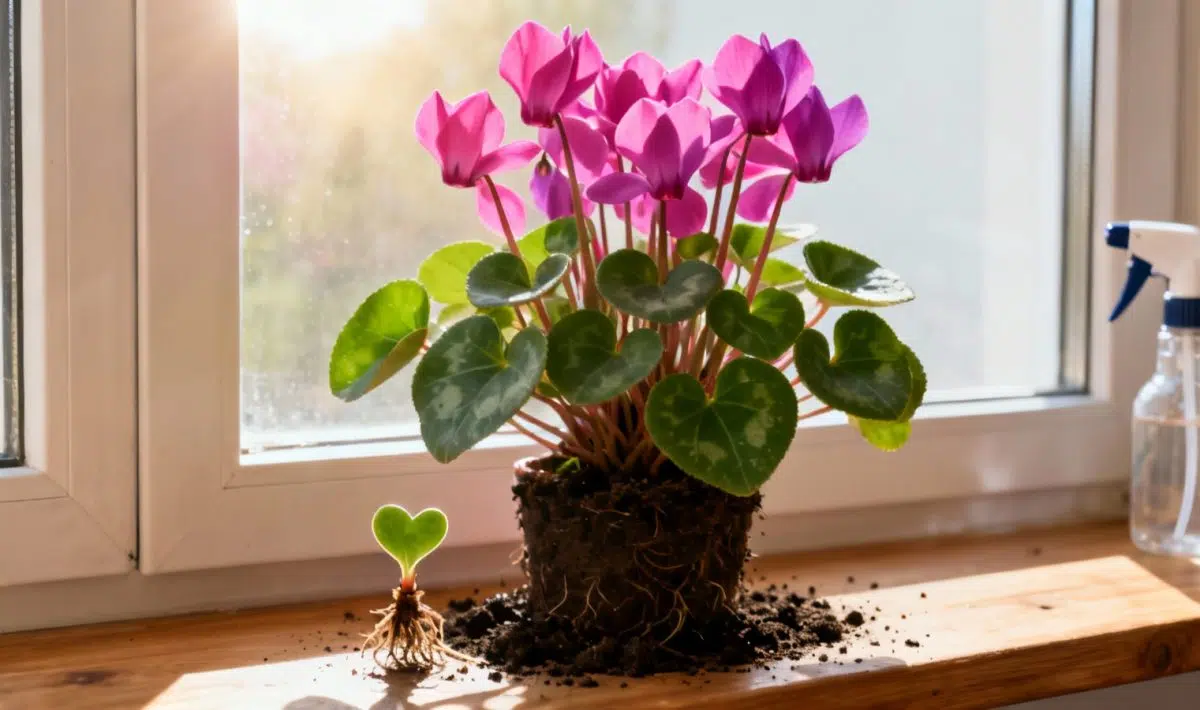
The Persian cyclamen stands out with its heart-shaped leaves that display stunning silver marbling patterns. These distinctive leaves emerge from a central tuber and create an attractive backdrop for the delicate flowers. The plant typically reaches heights of 15-25 centimeters, making it ideal for windowsill displays and tabletop arrangements.
The flowers themselves are truly remarkable, featuring five reflexed petals in shades of white, pink, red, or purple. Each bloom can measure up to 5 centimeters across and carries a subtle fragrance. The flowering period extends from October through March, providing months of continuous color during the darker seasons.
The central tuber serves as the plant’s storage organ and can live for many years with proper care. This underground structure stores nutrients and energy, allowing the plant to survive its summer dormancy period. Understanding this natural cycle is crucial for successful long-term cultivation.
Optimal growing conditions for Persian cyclamen
Temperature management plays a critical role in Persian cyclamen care. These plants prefer cool conditions between 12-15°C during their active growing season. Higher temperatures can cause stress and premature dormancy, while consistent cool temperatures promote healthy growth and extended flowering periods.
Light requirements are equally important for optimal development. Bright, indirect light provides the best conditions for healthy growth. Direct sunlight can scorch the delicate leaves, while insufficient light may result in weak stems and poor flowering. East-facing windows typically offer ideal lighting conditions throughout the day.
Humidity levels should remain moderate, around 50-60 percent. Dry indoor air can stress the plant and make it more susceptible to pest problems. Placing the pot on a humidity tray filled with pebbles and water can help maintain appropriate moisture levels around the plant.
Good air circulation prevents fungal issues while supporting healthy growth. However, avoid placing plants in drafty areas or near heating vents, as sudden temperature fluctuations can shock the sensitive root system.
Watering and soil requirements
Proper watering technique is essential for Persian cyclamen health. Water from the bottom by placing the pot in a saucer of water for 20-30 minutes, allowing the soil to absorb moisture through the drainage holes. This method prevents water from collecting around the tuber, which can lead to rot.
The soil surface should dry slightly between waterings, but never allow the soil to become completely dry. During the active growing season, plants typically need watering every 3-4 days, though this varies based on environmental conditions and pot size.
Well-draining potting soil is crucial for preventing waterlogged conditions. A mixture of quality potting compost with added perlite or sand provides excellent drainage while retaining appropriate moisture levels. The tuber should be planted with its top third exposed above the soil surface.
Much like how care tips for common persimmons emphasize proper drainage and soil conditions, Persian cyclamen requires similar attention to these fundamental growing requirements for optimal health.
Fertilization and feeding schedule
During the active growing season, Persian cyclamen benefits from regular feeding with a balanced, diluted fertilizer. Apply a half-strength liquid fertilizer every two weeks from autumn through early spring when the plant is actively growing and flowering.
Avoid fertilizing during the summer dormancy period when the plant naturally rests. Over-fertilization can lead to excessive foliage growth at the expense of flower production, so maintaining a light feeding schedule produces the best results.
Phosphorus-rich fertilizers can encourage better flower production, while nitrogen should be used sparingly to prevent soft, weak growth that’s more susceptible to disease problems.
Managing the dormancy period
Persian cyclamen naturally enters dormancy during summer months, typically from May through September. During this period, the foliage yellows and dies back, which is completely normal and healthy for the plant.
Gradually reduce watering as the leaves begin to yellow, and stop watering entirely once all foliage has died back. Store the dormant tuber in its pot in a cool, dry location away from direct sunlight. A basement or garage often provides ideal conditions for dormant storage.
Check the tuber occasionally during dormancy to ensure it remains firm and hasn’t developed any soft spots that might indicate rot. The tuber should feel solid and show no signs of decay throughout the resting period.
New growth typically appears in late summer or early autumn, signaling the end of dormancy. At this point, gradually resume watering and move the plant back to its growing location.
Propagation methods
Seed propagation offers the most reliable method for reproducing Persian cyclamen. Fresh seeds have the highest germination rates, though the process requires patience as it can take 12-18 months for seedlings to reach flowering size.
Soak seeds in warm water for 24 hours before sowing to improve germination rates. Plant seeds in a well-draining seed compost, barely covering them with soil. Maintain temperatures around 18-20°C and keep the soil consistently moist but not waterlogged.
Germination typically occurs within 4-8 weeks, though some seeds may take several months to sprout. Once seedlings develop their first true leaves, they can be gradually acclimatized to cooler conditions suitable for mature plants.
Division of mature tubers is possible but carries higher risk than seed propagation. This method should only be attempted on large, healthy tubers during the dormancy period, and each division must include growing points to ensure survival.
Common problems and solutions
Yellowing leaves during the growing season often indicate overwatering or poor drainage. Adjust watering practices and ensure the pot has adequate drainage holes. If the tuber shows signs of rot, it may be necessary to remove affected areas and treat with fungicide.
Pest issues occasionally affect Persian cyclamen, with aphids and spider mites being the most common problems. Regular inspection helps catch infestations early when they’re easier to control with insecticidal soap or neem oil treatments.
Poor flowering can result from several factors including insufficient light, high temperatures, or over-fertilization with nitrogen-rich fertilizers. Addressing these environmental factors typically restores normal blooming patterns. Just as guidelines for golden pothos care emphasize environmental factors for healthy growth, Persian cyclamen requires similar attention to lighting and temperature conditions.
Flower buds that fail to open properly may indicate low humidity or temperature stress. Increasing humidity around the plant and ensuring stable, cool temperatures often resolves this issue.
Repotting and container selection
Persian cyclamen benefits from repotting every 2-3 years, typically done during the dormancy period when handling the tuber is safest. Choose a pot only slightly larger than the previous one, as these plants prefer being somewhat pot-bound.
Terra cotta pots provide excellent drainage and allow the soil to breathe, making them ideal for cyclamen cultivation. Ensure any container has adequate drainage holes to prevent water accumulation around the tuber.
When repotting, examine the tuber carefully for any signs of damage or rot. Remove any soft or discolored areas with a clean knife and allow cut surfaces to dry before replanting. Position the tuber with its growing points facing upward and the top third exposed above the soil surface.
Fresh potting soil provides renewed nutrients and improved drainage for the upcoming growing season. Avoid disturbing the roots unnecessarily during the repotting process, as cyclamen roots can be quite delicate.
Similar to how to care for catnip plants that benefit from periodic repotting for renewed vigor, Persian cyclamen also thrives with occasional fresh soil and container updates.
Seasonal care calendar
Autumn marks the beginning of the active growing season when new foliage emerges and flower buds develop. Resume regular watering and begin biweekly fertilization. Move plants to their winter growing locations with bright, indirect light and cool temperatures.
Winter provides the peak flowering period when Persian cyclamen displays its most spectacular blooms. Maintain consistent cool temperatures and regular watering schedules. Remove spent flowers to encourage continued blooming throughout the season.
Spring signals the gradual wind-down of the flowering period as temperatures naturally increase. Reduce fertilization frequency and allow the plant to complete its blooming cycle naturally. This gradual transition prepares the plant for its upcoming dormancy period.
Summer requires minimal care as the plant enters its natural rest period. Store dormant tubers in cool, dry conditions and resist the temptation to water or disturb them until new growth appears in autumn.
Varieties and cultivar selection
Modern Persian cyclamen cultivars offer an impressive range of flower colors and forms. Standard varieties produce flowers in classic white, pink, and red shades, while newer cultivars introduce purple, salmon, and bicolor options for expanded decorative possibilities.
Miniature varieties have gained popularity for their compact size and profuse flowering habits. These smaller cultivars work particularly well in terrariums and small container arrangements while maintaining all the charm of their larger relatives.
Fragrant varieties add another dimension to cyclamen cultivation, offering subtle sweet scents alongside their visual appeal. These special cultivars command premium prices but provide enhanced sensory experiences for dedicated enthusiasts.
When selecting plants, choose specimens with firm, healthy foliage and numerous flower buds in various stages of development. Avoid plants with yellowing leaves or soft, mushy tubers, as these may indicate poor health or improper care. Much like tips on common lantana care emphasize selecting healthy specimens, choosing vigorous Persian cyclamen plants provides the foundation for successful cultivation.
With proper care and attention to their unique requirements, Persian cyclamen can provide years of beautiful blooms and elegant foliage. Their distinctive growing cycle and spectacular winter flowers make them truly special additions to any plant collection.
Allan is a lifelong gardening enthusiast who still gets excited when the first seedlings pop up in spring. With a deep love for nature and a hands-in-the-soil approach, he shares practical tips, plant discoveries, and clever tricks picked up over years of digging, planting, and observing. Whether you’re a new gardener or have a shed full of tools, Allan writes like a neighbor who’s always happy to swap cuttings and stories over the fence.
You can find more about Allan’s work on Malt or connect with him on LinkedIn.