
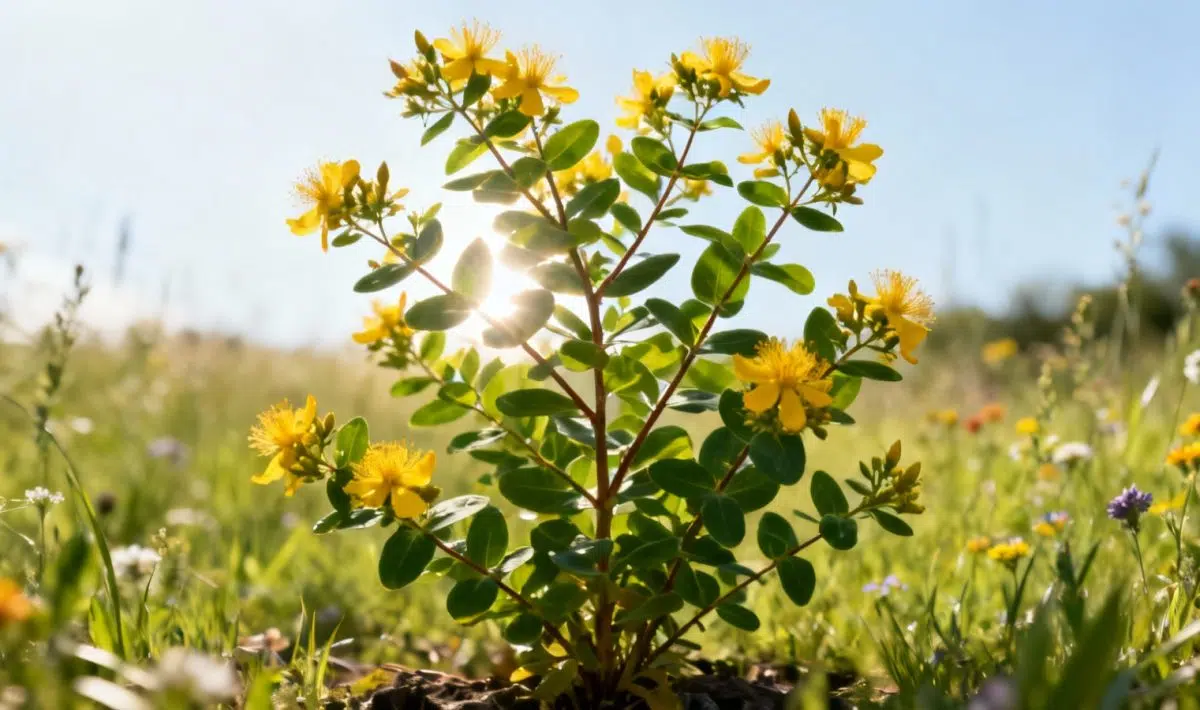
Understanding common St. John’s wort sunlight requirements
When you’re growing common St. John’s wort in your garden, understanding how much sunlight this remarkable herb needs will make all the difference between thriving plants and struggling ones. Like many medicinal herbs, St. John’s wort has specific light requirements that directly impact its health and potency.
Common St. John’s wort (Hypericum perforatum) thrives with at least 6 to 8 hours of direct sunlight daily during the growing season. This sunny disposition isn’t just a preference – it’s essential for the plant’s development and the production of its beneficial compounds. You’ll find that plants receiving adequate light develop stronger stems, more vibrant yellow flowers, and higher concentrations of active ingredients.
The herb naturally grows along roadsides, forest edges, and open meadows where it basks in full sun exposure. This tells us everything we need to know about its preferred growing conditions. Unlike shade-tolerant herbs, St. John’s wort simply won’t reach its full potential without abundant sunshine.
Optimal daily light exposure for maximum health
During spring and summer months, your St. John’s wort plants will perform best with morning sun exposure starting early in the day. The recommended 6 to 8 hours should ideally include the intense midday sun, though the plant can tolerate some afternoon shade in extremely hot climates.
In regions with harsh summer heat, you might notice that plants benefit from slight protection during the hottest part of the day. However, this should never compromise the total daily light exposure. Think of it as providing a brief respite rather than extended shade. Just as other sun-loving herbs like dandelion sunlight exposure needs require consistent bright conditions, St. John’s wort demands reliable sunshine.
Fast-growing specimens in optimal conditions will reward you with abundant yellow blooms from late spring through early fall. These flowers not only look beautiful but contain the highest concentrations of hypericin, the compound responsible for many of the plant’s beneficial properties.
Seasonal sunlight adjustments and garden placement
Winter months bring shorter days, but established St. John’s wort plants handle reduced light well during their dormant period. The key is ensuring they receive maximum available sunlight even when day length is limited. Position plants where they’ll catch the low winter sun without obstruction from buildings or taller plants.
Spring emergence marks the beginning of increased light needs. As new growth appears, gradually increasing daylight hours perfectly match the plant’s growing energy requirements. This natural synchronization explains why wild populations flourish so reliably each season.
Summer represents peak light demands when plants are actively growing, flowering, and setting seed. During these crucial months, any reduction in sunlight will immediately impact plant vigor. Similar to sunlight requirements for common yarrow and other medicinal herbs, consistent exposure throughout the growing season ensures robust development.
Soil and location considerations for optimal growth
While sunlight remains the primary concern, soil conditions work hand-in-hand with light exposure to determine plant success. Well-draining soil prevents root rot, especially important since St. John’s wort prefers dry to moderately moist conditions. Clay soils often retain too much moisture, creating problems even with perfect sun exposure.
Choose garden locations that receive morning sun first, as this helps dry any overnight dew quickly. Wet foliage combined with intense heat can sometimes cause issues, so good air circulation around plants proves beneficial. Avoid low-lying areas where water might collect after rain.
Rocky or sandy soils with good drainage work exceptionally well, mimicking the plant’s natural habitat. If you’re working with heavy soil, consider raised beds or containers to improve drainage while maintaining full sun exposure.
Signs of inadequate sunlight and troubleshooting
Plants receiving insufficient light display several telltale signs that are easy to recognize. Leggy growth with elongated stems reaching toward light sources indicates the plant is struggling to find adequate illumination. Reduced flowering is another clear indicator – healthy plants in full sun produce abundant bright yellow blooms.
Pale or yellowish foliage often signals light deficiency, though this can also indicate other issues. However, when combined with weak stems and sparse flowering, insufficient sunlight becomes the likely culprit. You might also notice reduced pest resistance in plants that aren’t receiving enough light.
If moving plants isn’t possible, consider pruning nearby shrubs or trees that might be blocking sunlight. Sometimes small adjustments to the garden layout can significantly improve light availability. Remember that even partial shade can dramatically impact plants that require full sun exposure, much like hornbeam sunlight requirements for growth differ from sun-loving herbs.
Container growing and light management
Growing St. John’s wort in containers offers excellent control over light exposure, allowing you to move plants as needed throughout the season. Large pots work best since the herb develops an extensive root system over time. Position containers where they’ll receive the recommended 6 to 8 hours of direct sunlight.
During extremely hot summer days, container plants may benefit from being moved to locations with morning sun and afternoon protection. However, this should be a temporary adjustment rather than a permanent arrangement. The flexibility of container growing proves especially valuable in challenging garden situations.
Monitor container plants more closely than ground-planted specimens, as pots can dry out quickly in full sun. Adequate watering becomes crucial, but avoid keeping soil consistently wet. Like sunlight needs of common selfheal and other herbs, proper drainage remains essential even with increased water needs.
Maximizing plant benefits through proper sun exposure
The connection between sunlight exposure and plant potency cannot be overstated when growing St. John’s wort. Hypericin production directly correlates with light intensity and duration. Plants grown in optimal conditions produce significantly higher concentrations of active compounds compared to those struggling in insufficient light.
Harvest timing also relates to sun exposure – morning collection after dew has evaporated but before the heat of midday often yields the best results. The plant’s response to ultraviolet light actually enhances certain beneficial compounds, making full sun exposure doubly important.
For gardeners interested in other sun-loving edible plants, understanding these principles applies broadly. Plants like strawberry sunlight needs for health share similar requirements for abundant light to develop properly.
Common mistakes to avoid with St. John’s wort cultivation
One frequent error involves underestimating this plant’s true sun requirements. Many gardeners assume partial shade will suffice, leading to disappointing results. Another mistake involves planting in areas that receive morning shade, even if total daily hours seem adequate.
Overwatering combined with insufficient drainage creates problems that even perfect sun exposure cannot remedy. The combination of wet soil and intense heat can damage roots and reduce overall plant health. Always prioritize drainage alongside sun exposure for optimal results.
Placing plants too close to structures that cast shadows during peak sun hours represents another common oversight. Remember that shadow patterns change throughout the growing season, so consider the full range of sun angles when selecting planting locations.
Long-term care and seasonal maintenance
Established St. John’s wort plants become increasingly drought-tolerant, making them excellent choices for sunny, low-maintenance garden areas. Annual pruning in late winter helps maintain compact growth while ensuring maximum light penetration to all parts of the plant.
Self-seeding is common in optimal conditions, so you might find new plants appearing in other sunny areas of your garden. This natural propagation indicates that growing conditions are ideal and the plants are thriving in their current light environment.
Monitor plants throughout the growing season and make adjustments as needed. Sometimes nearby vegetation grows and begins casting new shadows, requiring attention to maintain optimal light levels for continued healthy growth and abundant flowering.

Allan is a lifelong gardening enthusiast who still gets excited when the first seedlings pop up in spring. With a deep love for nature and a hands-in-the-soil approach, he shares practical tips, plant discoveries, and clever tricks picked up over years of digging, planting, and observing. Whether you’re a new gardener or have a shed full of tools, Allan writes like a neighbor who’s always happy to swap cuttings and stories over the fence.
You can find more about Allan’s work on Malt or connect with him on LinkedIn.


