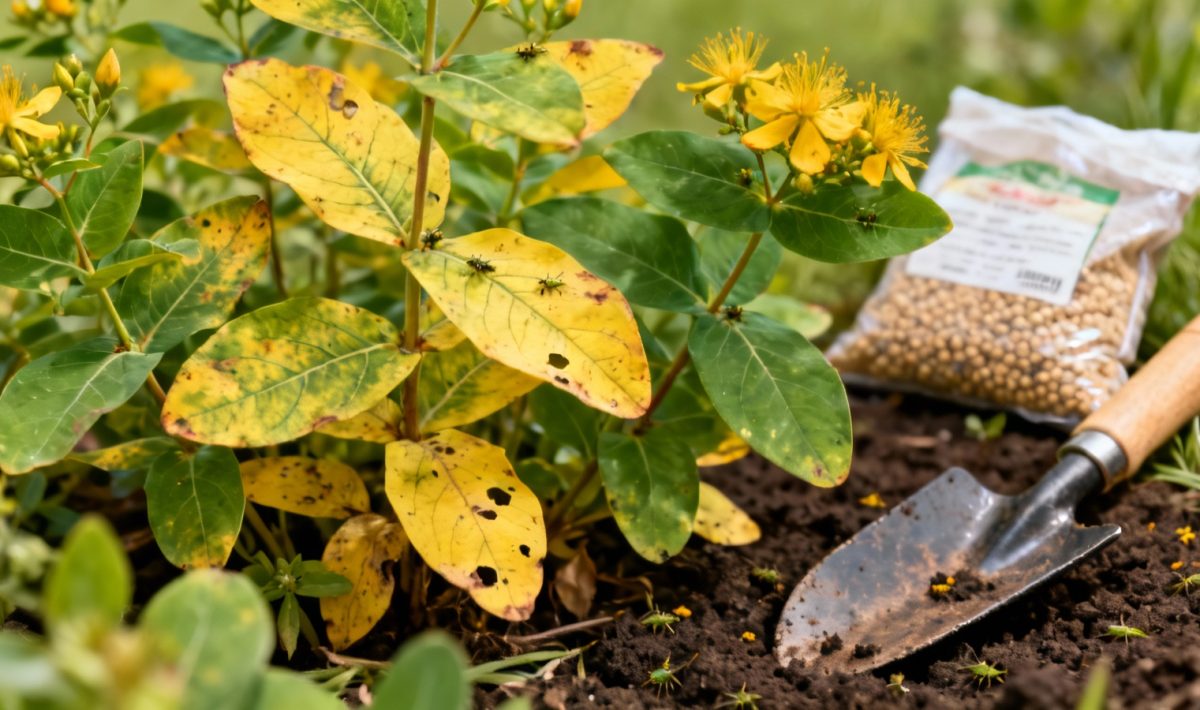
Understanding common st. john’s wort and its yellowing leaves
If you’ve noticed your st. john’s wort developing yellow leaves, you’re not alone. This medicinal plant, known for its bright yellow flowers and therapeutic properties, can show signs of stress through leaf discoloration. The good news is that most causes are reversible with proper care and attention.
Common st. john’s wort (Hypericum perforatum) has been used for centuries in traditional medicine, particularly for its antidepressant properties. However, like all plants, it requires specific conditions to thrive. When these needs aren’t met, yellowing leaves often serve as the first warning sign that something needs adjustment in your care routine.
✅ Quick Checklist
Is the soil too wet or too dry?
Is the plant getting 6+ hours of sunlight daily?
Have you fertilized in the last 2 months?
Are there visible pests under the leaves?
Does the pot have adequate drainage?
🔥 FREE
📱
Diagnose your plant in one click!
AI instant diagnosis • Personalized solutions • 50,000+ species
Primary causes of yellow leaves in st. john’s wort
Watering problems: too much or too little
The most common reason for yellowing leaves is improper watering. St. john’s wort prefers well-draining soil that stays moderately moist but never waterlogged. Overwatering creates soggy conditions that suffocate the roots, preventing them from absorbing nutrients properly.
On the other hand, underwatering stresses the plant and causes older leaves to yellow first as the plant redirects its limited resources to newer growth. You can test soil moisture by inserting your finger about two inches deep – the soil should feel slightly damp but not wet.
Nutrient deficiencies affecting leaf color
Nitrogen deficiency is another major culprit behind yellow st. john’s wort leaves. This essential nutrient supports healthy green foliage, and when it’s lacking, leaves start turning yellow from the bottom up. Similar issues can occur with other nutrients like magnesium or iron, which are crucial for chlorophyll production.
Regular fertilization during the growing season helps prevent these deficiencies. Use a balanced, slow-release fertilizer every six to eight weeks from spring through early fall. Avoid over-fertilizing, as this can burn the roots and cause more problems than it solves.
Environmental factors that cause leaf yellowing
Light requirements and sun exposure
St. john’s wort thrives in full sun to partial shade, needing at least six hours of direct sunlight daily for optimal health. Insufficient light weakens the plant and makes it more susceptible to various problems, including yellowing leaves.
However, in extremely hot climates, too much intense afternoon sun can scorch leaves and cause them to yellow or brown at the edges. If you live in such an area, providing some afternoon shade can help protect your plants from heat stress.
Soil conditions and drainage issues
Poor soil drainage is often overlooked but plays a crucial role in plant health. St. john’s wort prefers slightly alkaline to neutral soil with good drainage. Clay soils that retain too much water or compacted earth can lead to root problems and subsequent leaf yellowing.
Adding organic matter like compost or aged manure improves soil structure and drainage. For container plants, ensure pots have adequate drainage holes and use a quality potting mix that doesn’t become waterlogged.
Diseases and pests that affect st. john’s wort
Common fungal infections
Fungal diseases like root rot or leaf spot can cause yellowing in st. john’s wort. These problems often develop in humid conditions with poor air circulation. Root rot, in particular, prevents proper nutrient uptake, leading to yellow leaves that eventually drop off.
Prevention is key with fungal issues. Ensure good spacing between plants for air circulation, avoid overhead watering, and remove any affected leaves promptly. If you notice similar symptoms in other garden plants, such as common mallow leaf discoloration causes, the solution often involves improving growing conditions and removing infected plant material.
Insect damage and identification
Various insects can attack st. john’s wort and cause leaf yellowing. Aphids, spider mites, and scale insects all feed on plant juices, weakening the plant and causing leaves to yellow and drop. Check the undersides of leaves regularly for signs of these pests.
Natural predators like ladybugs can help control aphid populations, while insecticidal soap works well against most soft-bodied insects. For severe infestations, you may need to use more targeted treatments, but always try the gentlest methods first.
✅ Quick Checklist
Is the soil too wet or too dry?
Is the plant getting 6+ hours of sunlight daily?
Have you fertilized in the last 2 months?
Are there visible pests under the leaves?
Does the pot have adequate drainage?
🔥 FREE
📱
Diagnose your plant in one click!
AI instant diagnosis • Personalized solutions • 50,000+ species
It’s important to distinguish between problematic yellowing and natural seasonal changes. St. john’s wort is a perennial that naturally drops some older leaves as it prepares for winter. This process typically starts in late summer or early fall and is completely normal.
During this time, you’ll notice yellowing starts with the oldest leaves at the bottom of the plant and works its way up gradually. This differs from stress-related yellowing, which can affect leaves randomly throughout the plant or start with younger growth.
Winter dormancy preparations
As temperatures drop, st. john’s wort begins entering dormancy, and some leaf yellowing is expected. The plant redirects its energy to the root system for winter survival. This natural process shouldn’t cause alarm, but you can help by reducing watering and avoiding fertilization during this period.
Other perennial plants in your garden may show similar patterns. For instance, common hawthorn leaf yellowing solutions often involve understanding these seasonal cycles and adjusting care accordingly.
Solutions and prevention strategies
Proper watering techniques
Establishing a consistent watering routine is crucial for preventing yellow leaves. Water deeply but less frequently, allowing the top inch of soil to dry between waterings. This encourages deep root growth and prevents both overwatering and underwatering issues.
During hot summer months, you may need to water more frequently, while cooler periods require less water. Always check soil moisture rather than following a strict schedule, as weather conditions and soil types affect water needs significantly.
Nutritional support and fertilization
Feed your st. john’s wort with a balanced fertilizer (10-10-10 or similar) every six to eight weeks during the growing season. Organic options like compost tea or fish emulsion work well and provide slow-release nutrients that won’t burn the roots.
If you suspect a specific nutrient deficiency, consider a soil test to identify exactly what’s missing. This targeted approach is more effective than guessing and can save both time and money in the long run.
When to seek professional help
Sometimes, despite your best efforts, yellow leaves persist or worsen. If you’ve addressed watering, light, and nutrition issues but still see declining plant health, it may be time to consult a local garden center or extension service.
Persistent yellowing accompanied by other symptoms like wilting, unusual spots, or pest activity often requires professional diagnosis. Many problems are easier to treat when caught early, so don’t hesitate to seek expert advice when needed.
Remember that healthy st. john’s wort plants are naturally resilient and will often recover quickly once their needs are met. With proper care and attention to environmental factors, you can enjoy vibrant green foliage and those characteristic bright yellow flowers that make this plant so special in the garden.
Allan is a lifelong gardening enthusiast who still gets excited when the first seedlings pop up in spring. With a deep love for nature and a hands-in-the-soil approach, he shares practical tips, plant discoveries, and clever tricks picked up over years of digging, planting, and observing. Whether you’re a new gardener or have a shed full of tools, Allan writes like a neighbor who’s always happy to swap cuttings and stories over the fence.
You can find more about Allan’s work on Malt or connect with him on LinkedIn.