
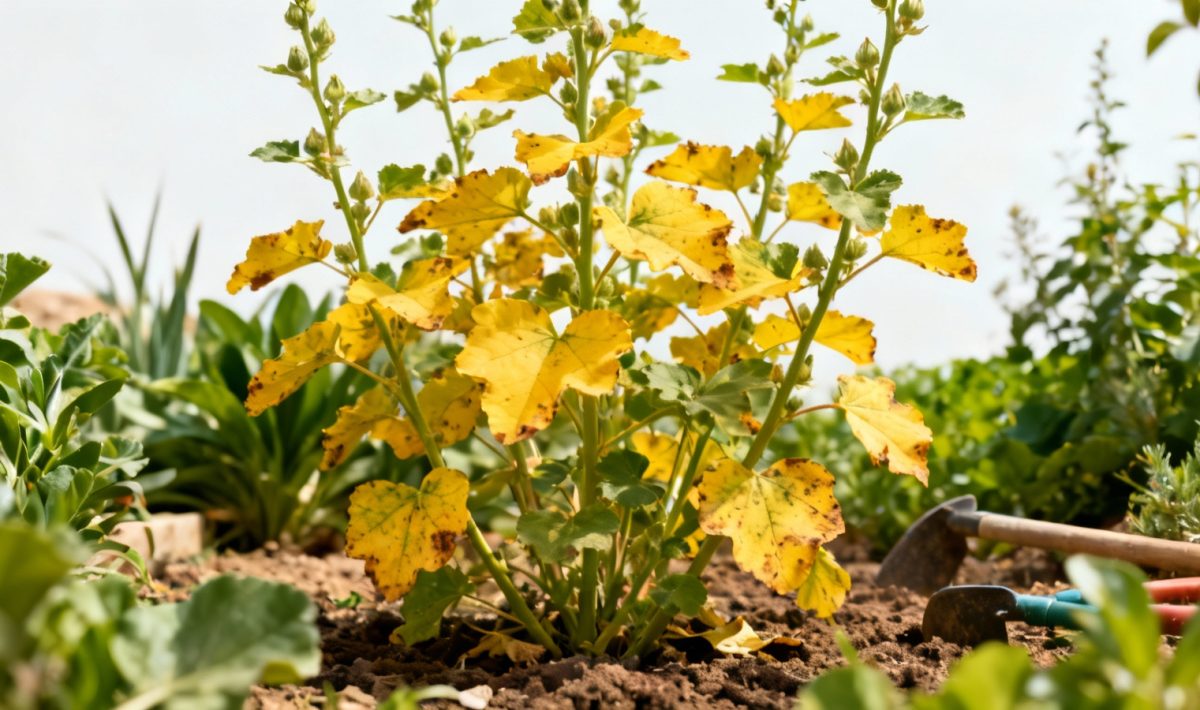
If you’ve noticed your common mallow leaves turning yellow, you’re not alone in this gardening concern. This Mediterranean plant, beloved for its resilient nature and beautiful flowers, can sometimes show signs of distress through yellowing foliage. Understanding the underlying causes will help you restore your plant’s health and prevent future issues.
Yellow leaves on common mallow typically indicate that something in the plant’s environment or care routine needs adjustment. From watering problems to nutrient deficiencies, several factors can trigger this color change. The good news is that with proper diagnosis and timely intervention, you can often reverse the yellowing and get your mallow thriving again.
Understanding the yellowing process in common mallow
The yellowing of mallow leaves, scientifically known as chlorosis, occurs when chlorophyll breaks down faster than it’s produced. This green pigment is essential for photosynthesis, the process that allows plants to convert sunlight into energy. When chlorophyll diminishes, other pigments become visible, causing the characteristic yellow appearance.
Several environmental and care factors can disrupt chlorophyll production in your garden. Temperature fluctuations, inconsistent watering, and poor soil conditions all play a role in how well your mallow maintains its vibrant green foliage. Mediterranean plants like mallow are generally hardy, but they have specific needs that must be met for optimal health.
The timing of yellowing also provides clues about the cause. If leaves turn yellow gradually from the bottom up, this often indicates natural aging or nutrient deficiency. However, sudden yellowing across the entire plant suggests more urgent issues like overwatering or disease.
✅ Quick Checklist
- Is the soil too wet or too dry?
- Is the plant getting 6+ hours of sunlight daily?
- Have you fertilized in the last 2 months?
- Are there visible pests under the leaves?
- Does the pot have adequate drainage?
Diagnose your plant in one click!
AI instant diagnosis • Personalized solutions • 50,000+ species
Common causes of yellowing mallow leaves
Watering issues
Improper watering is the most frequent culprit behind yellowing mallow leaves. These Mediterranean plants prefer deep, infrequent watering rather than frequent shallow drinks. When you overwater, the roots become waterlogged and cannot absorb oxygen properly, leading to root rot and subsequent yellowing.
Conversely, underwatering stresses the plant and causes it to drop older leaves to conserve moisture. The key is finding the right balance for your specific garden conditions. Mallow plants typically need about 1 inch of water per week, but this varies with temperature, humidity, and soil type.
Check soil moisture by inserting your finger 2-3 inches deep into the ground. If it feels dry at that depth, it’s time to water. If it’s still moist, wait another day or two before checking again.
Nutrient deficiencies
Nitrogen deficiency commonly causes yellowing in mallow plants, starting with older leaves at the bottom and progressing upward. This nutrient is crucial for chlorophyll production and overall plant vigor. Without adequate nitrogen, plants cannot maintain their green color or produce healthy new growth.
Iron deficiency also leads to yellowing, but typically affects younger leaves first, creating a pattern where leaf veins remain green while the areas between them turn yellow. This condition, called iron chlorosis, often occurs in alkaline soils where iron becomes less available to plants.
Other nutrient imbalances can contribute to yellowing as well. Potassium deficiency may cause leaf edges to yellow and brown, while magnesium deficiency creates yellowing between leaf veins, similar to iron deficiency but typically affecting older leaves first.
Environmental stress factors
Temperature extremes can shock mallow plants and trigger yellowing. While these Mediterranean natives tolerate heat well, sudden cold snaps or unseasonably hot weather can stress them. Similarly, poor air circulation around plants can create conditions favorable for fungal diseases that cause yellowing.
Light conditions also matter significantly. Mallow plants need full sun to thrive – at least 6 hours of direct sunlight daily. When planted in too much shade, they become leggy and may develop yellow leaves as they struggle to photosynthesize effectively.
Similar yellowing patterns can occur in other garden plants, such as the causes of yellowing hawthorn leaves which share some environmental stress factors with mallow plants.
Solutions for restoring healthy foliage
Adjusting watering practices
Create a consistent watering schedule that accounts for seasonal changes and weather patterns. During hot summer months, you may need to water more frequently, while spring and fall typically require less frequent irrigation. Always water early morning or late evening to reduce evaporation and allow plants to absorb moisture effectively.
Improve soil drainage if water tends to pool around your mallow plants. Add organic compost or coarse sand to heavy clay soils to increase drainage capacity. For potted plants, ensure containers have adequate drainage holes and use a well-draining potting mix designed for Mediterranean plants.
Consider installing drip irrigation or soaker hoses for consistent, deep watering. These systems deliver water directly to the root zone and reduce water waste while maintaining optimal soil moisture levels.
Fertilizing for plant health
Apply a balanced, slow-release fertilizer in early spring to provide steady nutrition throughout the growing season. Look for formulations with equal parts nitrogen, phosphorus, and potassium, such as a 10-10-10 blend. This will address nitrogen deficiency while supporting overall plant health.
For iron deficiency, apply chelated iron fertilizer according to package directions. This form of iron remains available to plants even in alkaline soils. You can also lower soil pH slightly by incorporating sulfur or organic matter like pine needles into the planting area.
Organic fertilizers like compost, aged manure, or fish emulsion provide gentle, long-lasting nutrition without the risk of burning plants. Apply these materials in a 2-3 inch layer around the base of plants, keeping them away from stems to prevent rot.
Creating optimal growing conditions
Position your mallow plants where they’ll receive full morning sun with some afternoon protection in extremely hot climates. Good air circulation prevents fungal diseases while still providing the warmth these Mediterranean plants crave.
Mulch around plants with organic materials like wood chips or straw to regulate soil temperature and retain moisture. Keep mulch 2-3 inches away from plant stems to prevent pest and disease issues while still providing benefits to the root zone.
Test your soil pH and adjust if necessary. Mallow plants prefer slightly alkaline conditions with a pH between 6.5 and 7.5. If your soil is too acidic, add lime gradually over several seasons to raise pH without shocking plants.
✅ Quick Checklist
- Is the soil too wet or too dry?
- Is the plant getting 6+ hours of sunlight daily?
- Have you fertilized in the last 2 months?
- Are there visible pests under the leaves?
- Does the pot have adequate drainage?
Diagnose your plant in one click!
AI instant diagnosis • Personalized solutions • 50,000+ species
Prevention strategies for future health
Establishing proper planting practices
When selecting a location for new mallow plants, choose spots with excellent drainage and full sun exposure. Avoid low-lying areas where water collects after rain, as this can lead to root problems and subsequent yellowing. Space plants adequately to ensure good air circulation and reduce disease pressure.
Prepare planting sites by incorporating compost or well-aged manure into the soil. This improves both drainage and nutrition while creating an environment where beneficial soil organisms can thrive and support plant health.
Consider companion planting with other Mediterranean species that have similar water and light requirements. This creates a cohesive garden ecosystem where plants support each other’s growth and health.
Monitoring and maintenance routines
Inspect your mallow plants weekly during the growing season for early signs of stress or disease. Look for changes in leaf color, wilting, or pest activity that could indicate developing problems. Early detection allows for more effective treatment and prevents minor issues from becoming major problems.
Keep garden records noting watering schedules, fertilizer applications, and any environmental stresses your plants experience. This information helps you identify patterns and adjust care routines for better results next season.
Remove yellowed leaves promptly to prevent disease spread and improve plant appearance. However, don’t remove more than one-third of the foliage at once, as this can stress the plant further. Fruit trees can experience similar yellowing issues, and you can learn more about reasons for yellowing pear leaves which shares some diagnostic approaches.
Seasonal care adjustments
Adapt your care routine throughout the year to match your mallow’s changing needs. During winter months, reduce watering frequency and avoid fertilizing, as plants enter dormancy and require less nutrition. Spring brings renewed growth, making it the ideal time for pruning, fertilizing, and refreshing mulch layers.
Summer care focuses on consistent moisture and protection from extreme heat. Provide afternoon shade in regions with intense sun, and maintain deep watering schedules that encourage strong root development.
Fall preparation includes gradual reduction of watering and a final light fertilization to help plants store energy for winter. Clean up fallen leaves and debris that could harbor pests or diseases over the dormant season.
With proper attention to these care factors, your common mallow plants will maintain healthy, vibrant foliage throughout the growing season. Remember that prevention is always easier than treatment, so establishing good practices from the beginning will save you time and effort while ensuring beautiful, thriving plants in your Mediterranean garden.

Allan is a lifelong gardening enthusiast who still gets excited when the first seedlings pop up in spring. With a deep love for nature and a hands-in-the-soil approach, he shares practical tips, plant discoveries, and clever tricks picked up over years of digging, planting, and observing. Whether you’re a new gardener or have a shed full of tools, Allan writes like a neighbor who’s always happy to swap cuttings and stories over the fence.
You can find more about Allan’s work on Malt or connect with him on LinkedIn.


