
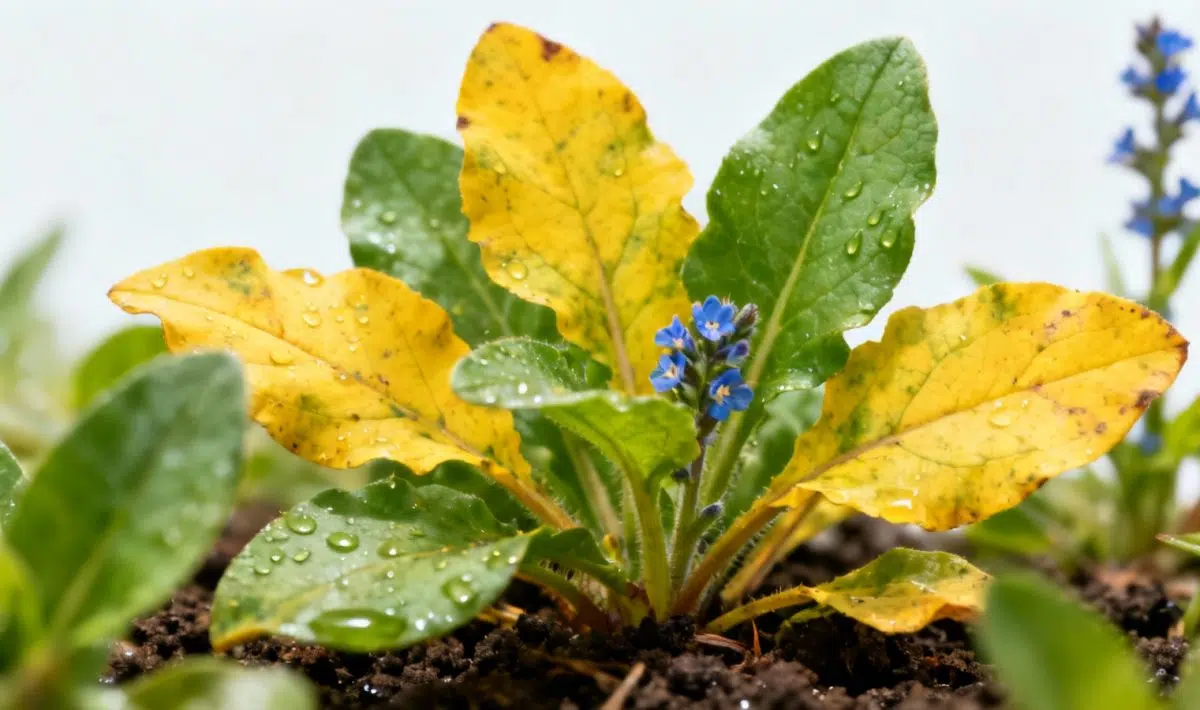
Nothing’s more concerning than watching your beautiful common bugle plant suddenly develop yellow leaves. This hardy ground cover, known for its stunning purple flowers and robust nature, shouldn’t be showing signs of distress without reason. Today I’m sharing the most common causes behind those troubling yellow leaves and practical solutions that actually work.
Understanding your common bugle’s growing needs
The common bugle thrives in specific conditions, and yellowing leaves often signal that something’s off balance. This wild beauty prefers partial shade to full sun exposure, requiring at least six hours of natural light daily for optimal growth. When plants don’t receive adequate light, they begin pulling nutrients from older leaves, causing them to turn yellow and drop.
Soil quality plays an equally crucial role in your plant’s health. Poor drainage creates waterlogged conditions that suffocate roots and prevent proper nutrient absorption. The ground should feel moist but never soggy, allowing water to flow freely through the soil without pooling around the base.
✅ Quick Checklist
- Is the soil too wet or too dry?
- Is the plant getting 6+ hours of sunlight daily?
- Have you fertilized in the last 2 months?
- Are there visible pests under the leaves?
- Does the pot have adequate drainage?
Diagnose your plant in one click!
AI instant diagnosis • Personalized solutions • 50,000+ species
Overwatering ranks as the number one killer of common bugle plants, and yellow leaves serve as the first warning sign. When roots sit in waterlogged soil, they begin to rot and lose their ability to transport nutrients effectively. This creates a domino effect where leaves turn yellow from the bottom up, eventually becoming brown and mushy.
Conversely, underwatering also triggers yellowing, though the pattern differs slightly. Water-stressed plants develop yellow leaves that feel dry and crispy rather than soft and soggy. The key lies in finding that sweet spot where soil remains consistently moist without becoming saturated.
To check your watering habits, stick your finger about two inches deep into the soil. If it feels bone dry, increase watering frequency. If it feels soggy or smells sour, reduce watering and improve drainage immediately.
Environmental factors affecting leaf color
Temperature fluctuations can shock your common bugle into defensive mode, causing rapid leaf yellowing. These plants prefer stable conditions with moderate temperatures between 60-75°F. Sudden hot spells or unexpected cold snaps stress the plant, leading to premature leaf drop.
Similarly, humidity levels impact leaf health significantly. Very dry air causes leaves to lose moisture faster than roots can replace it, resulting in yellow, wilted foliage. Consider placing a humidity tray nearby or grouping plants together to create a more favorable microclimate.
Wind exposure also plays a role, particularly for potted plants. Strong winds strip moisture from leaves and can cause physical damage that manifests as yellowing along leaf edges.
Nutrient deficiencies and fertilization issues
Yellow leaves often indicate nutrient deficiencies, particularly nitrogen shortage. Nitrogen-deficient plants display yellowing that starts with older, lower leaves and gradually moves upward. The yellow color typically appears uniform across the entire leaf surface.
Iron deficiency creates a different pattern called chlorosis, where leaf veins remain green while the areas between them turn pale yellow. This condition often occurs in alkaline soils where iron becomes unavailable to plant roots, even when present in adequate amounts.
Over-fertilization can be equally problematic, causing nutrient burn that appears as yellow leaf edges or brown spots. Always follow package directions and err on the side of caution when feeding your plants. A balanced, slow-release fertilizer applied in spring typically provides sufficient nutrition for the entire growing season.
Common diseases and pest problems
Fungal diseases thrive in humid conditions and poor air circulation, often manifesting as yellow spots or patches on leaves. Root rot, caused by various soil-borne fungi, prevents proper nutrient uptake and causes widespread yellowing throughout the plant.
Pest infestations can also trigger yellowing as insects feed on plant sap and weaken overall plant health. Small spider mites, aphids, or scale insects often go unnoticed until damage becomes visible as yellow, stippled leaves.
Similar issues affect other plants in the garden family, and understanding these patterns helps with early detection. For instance, causes of yellowing rutabaga leaves often stem from comparable environmental stresses and care mistakes.
Practical solutions for healthy foliage
Start by adjusting your watering routine based on your plant’s actual needs rather than a fixed schedule. Water deeply but less frequently, allowing the top inch of soil to dry between waterings. This encourages deep root growth and prevents the waterlogged conditions that lead to yellow leaves.
Improve soil drainage by adding organic matter like compost or well-aged manure to heavy clay soils. For container plants, ensure pots have adequate drainage holes and use a well-draining potting mix designed for outdoor plants.
Address lighting issues by relocating plants to areas with appropriate sun exposure. Common bugle tolerates partial shade but performs best with morning sun and afternoon shade in hot climates. Consider pruning nearby shrubs or trees that may be blocking essential light.
✅ Quick Checklist
- Is the soil too wet or too dry?
- Is the plant getting 6+ hours of sunlight daily?
- Have you fertilized in the last 2 months?
- Are there visible pests under the leaves?
- Does the pot have adequate drainage?
Diagnose your plant in one click!
AI instant diagnosis • Personalized solutions • 50,000+ species
Prevention and long-term care strategies
Regular monitoring helps catch problems before they become serious. Check your plants weekly for changes in leaf color, texture, or overall appearance. Early intervention prevents minor issues from escalating into major plant health crises.
Maintain consistent care routines throughout the growing season. This includes proper watering, appropriate fertilization, and seasonal adjustments to account for changing weather conditions. Many gardeners face similar challenges with other plants, such as issues with yellow honeysuckle leaves , which often require comparable management approaches.
Consider the natural lifecycle of your common bugle as well. Some yellowing is normal as older leaves age and make way for new growth, particularly in spring when plants redirect energy toward fresh foliage and flower production.
With proper attention to watering, lighting, and nutrition, your common bugle will reward you with healthy green leaves and beautiful purple flower spikes. Remember that plants communicate through their foliage, and yellow leaves are simply your bugle’s way of asking for help. Listen to what it’s telling you, make the necessary adjustments, and you’ll soon see improvement in overall plant health and vitality.

Allan is a lifelong gardening enthusiast who still gets excited when the first seedlings pop up in spring. With a deep love for nature and a hands-in-the-soil approach, he shares practical tips, plant discoveries, and clever tricks picked up over years of digging, planting, and observing. Whether you’re a new gardener or have a shed full of tools, Allan writes like a neighbor who’s always happy to swap cuttings and stories over the fence.
You can find more about Allan’s work on Malt or connect with him on LinkedIn.


