
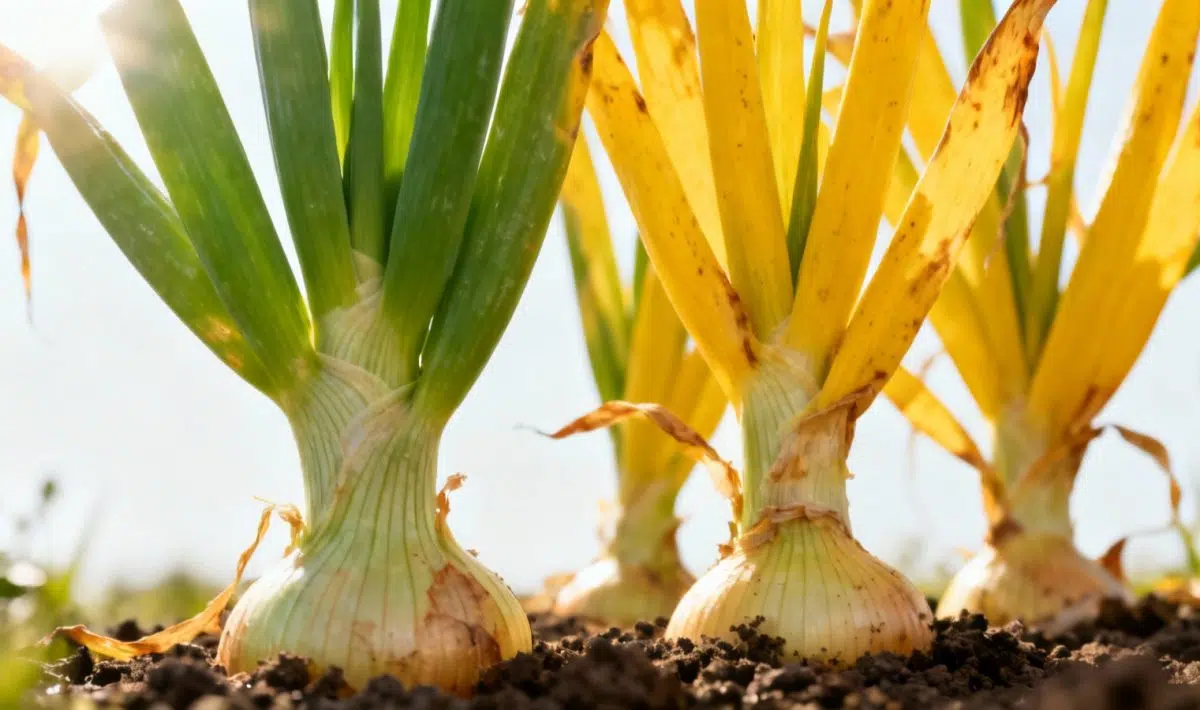
Seeing your onion leaves turn yellow can be quite frustrating, especially when you’ve been nurturing your crop with care. This common issue affects gardeners worldwide and can stem from various factors ranging from natural aging to serious diseases. Understanding why your onion leaves are yellowing is the first step toward maintaining a healthy and productive onion crop.
Healthy onion foliage plays a crucial role in bulb development, as the leaves photosynthesize to create energy for growth. When leaves begin to yellow prematurely, it often signals that something in your growing environment needs attention. The good news is that most causes of yellowing onion leaves can be addressed with proper diagnosis and timely intervention.
Natural aging versus problematic yellowing
Before panicking about yellow leaves, it’s important to distinguish between natural aging and problematic yellowing. As onions mature, their outer leaves naturally begin to yellow and die back, starting from the tips. This process typically occurs during the final weeks of the growing season and is completely normal.
However, when yellowing occurs early in the season or affects multiple leaves simultaneously, it usually indicates an underlying problem. Young plants with yellow leaves, or mature plants with rapid yellowing across the entire plant, require immediate attention to prevent crop loss.
✅ Quick Checklist
- Is the soil too wet or too dry?
- Is the plant getting 6+ hours of sunlight daily?
- Have you fertilized in the last 2 months?
- Are there visible pests under the leaves?
- Does the pot have adequate drainage?
Diagnose your plant in one click!
AI instant diagnosis • Personalized solutions • 50,000+ species
Improper watering is one of the most common culprits behind yellowing onion leaves. Both overwatering and underwatering can stress plants and cause foliage to turn yellow. Overwatered onions develop yellow leaves starting from the bottom, often accompanied by soft, rotting bulbs.
Underwatered plants also show yellowing, but typically with crispy, dry leaf tips. The key is maintaining consistent soil moisture without waterlogging. Onions prefer well-draining soil that stays evenly moist but never soggy. Check soil moisture regularly by inserting your finger about two inches deep into the soil.
Soil drainage and its impact
Poor soil drainage creates conditions that promote root rot and fungal diseases, both of which cause yellowing leaves. Heavy clay soils or areas with poor drainage trap water around onion roots, leading to oxygen deprivation and eventual yellowing. Adding organic matter like compost or creating raised beds can significantly improve drainage.
Similarly, planting onions in containers requires proper drainage holes and well-draining potting mix. Without adequate drainage, even perfectly watered plants can develop yellowing leaves due to stagnant water conditions.
Nutrient deficiencies and yellowing foliage
Nutrient deficiencies frequently cause onion leaves to turn yellow, with nitrogen deficiency being the most common. Nitrogen-deficient plants show yellowing that starts with older leaves and progresses upward. This typically occurs in poor soils or when plants haven’t been fertilized adequately.
Other nutrient deficiencies can also cause yellowing. Magnesium deficiency creates yellowing between leaf veins, while potassium deficiency causes yellowing leaf edges. Regular soil testing helps identify specific nutrient needs and guides proper fertilization strategies.
Proper fertilization schedule
Onions benefit from regular feeding throughout their growing season. Apply a balanced fertilizer every 3-4 weeks during active growth, focusing on nitrogen-rich fertilizers early in the season. As bulbs begin to develop, reduce nitrogen and increase phosphorus and potassium to support bulb formation.
Organic options like compost, fish emulsion, or blood meal provide steady nutrition without the risk of burning plants. Always follow package directions and water thoroughly after fertilizing to prevent leaf burn.
Common diseases affecting onion foliage
Several diseases can cause onion leaves to turn yellow, with downy mildew being particularly problematic. This fungal disease creates yellow patches on leaves that eventually turn brown and die. It thrives in cool, humid conditions and can spread rapidly through a crop.
Fusarium basal rot is another serious disease that causes yellowing from the ground up, eventually killing entire plants. Purple blotch creates purple-centered yellow spots on leaves, while botrytis leaf blight causes gray-brown lesions surrounded by yellow halos. Just as japanese honeysuckle leaf discoloration can indicate various issues in ornamental plants, yellowing in onions often signals disease problems that require prompt attention.
Prevention and treatment strategies
Preventing diseases starts with proper cultural practices. Ensure good air circulation by spacing plants adequately and avoiding overhead watering when possible. Remove infected plant debris promptly and rotate crops yearly to break disease cycles.
When diseases do occur, organic fungicides containing copper or neem oil can help control spread. Apply treatments early in the morning or evening to avoid leaf burn, and always follow label instructions carefully.
✅ Quick Checklist
- Is the soil too wet or too dry?
- Is the plant getting 6+ hours of sunlight daily?
- Have you fertilized in the last 2 months?
- Are there visible pests under the leaves?
- Does the pot have adequate drainage?
Diagnose your plant in one click!
AI instant diagnosis • Personalized solutions • 50,000+ species
Pest problems leading to yellow leaves
Various pests can cause onion leaves to turn yellow through their feeding activities. Thrips are tiny insects that create silvery streaks on leaves before causing yellowing and dieback. Onion maggots tunnel into bulbs, causing plants to yellow and eventually collapse.
Aphids cluster on leaves and stems, sucking plant juices and causing yellowing. These small, soft-bodied insects can multiply rapidly and also transmit viral diseases. Regular inspection of plants helps catch pest problems early when they’re easier to control.
Integrated pest management
Managing pests effectively requires a combination of preventive and reactive measures. Encourage beneficial insects by planting diverse flowers nearby and avoiding broad-spectrum pesticides. Row covers can protect young plants from flying pests during vulnerable growth stages.
When pests are detected, start with gentle controls like insecticidal soap or neem oil. These products are effective against soft-bodied pests while being safer for beneficial insects. For severe infestations, targeted organic pesticides may be necessary.
Environmental stress factors
Environmental conditions can stress onion plants and cause yellowing even when water, nutrients, and pests aren’t issues. Extreme temperatures, both hot and cold, can cause physiological stress that manifests as yellowing leaves. Sudden temperature changes are particularly problematic for young plants.
Insufficient sunlight also leads to weak, yellowing plants. Onions require at least 6-8 hours of direct sunlight daily for optimal growth. Plants grown in too much shade stretch toward light sources and develop pale, yellow foliage. Much like yellowing pomegranate leaves causes can be traced to environmental factors, onion yellowing often results from suboptimal growing conditions that can be corrected with proper site selection and care.
Creating optimal growing conditions
Choose planting sites with full sun exposure and protection from strong winds. Mulching around plants helps moderate soil temperature and retain moisture during hot weather. During cold snaps, row covers or cold frames can protect plants from temperature stress.
Consider your local climate when timing plantings. In hot climates, plant onions early in spring or fall to avoid extreme summer heat. Cold-climate gardeners should wait until soil temperatures consistently reach 50°F before planting.
Recovery and prevention strategies
Once you’ve identified the cause of yellowing leaves, taking swift action can often save affected plants. Remove severely damaged leaves to redirect energy to healthy growth, but avoid removing more than one-third of the foliage at once. This maintains the plant’s ability to photosynthesize while eliminating diseased tissue.
Address underlying issues systematically. Improve drainage if waterlogging is the problem, adjust watering schedules for drought-stressed plants, or apply appropriate fertilizers for nutrient deficiencies. Monitor plants closely after implementing changes to ensure recovery is progressing.
Prevention remains the best strategy for maintaining healthy onion crops. Establish good cultural practices from the beginning, including proper soil preparation, appropriate spacing, and regular monitoring. Keep detailed garden records to track what works best in your specific growing conditions, helping you refine your approach over time and prevent future yellowing issues.

Allan is a lifelong gardening enthusiast who still gets excited when the first seedlings pop up in spring. With a deep love for nature and a hands-in-the-soil approach, he shares practical tips, plant discoveries, and clever tricks picked up over years of digging, planting, and observing. Whether you’re a new gardener or have a shed full of tools, Allan writes like a neighbor who’s always happy to swap cuttings and stories over the fence.
You can find more about Allan’s work on Malt or connect with him on LinkedIn.


