
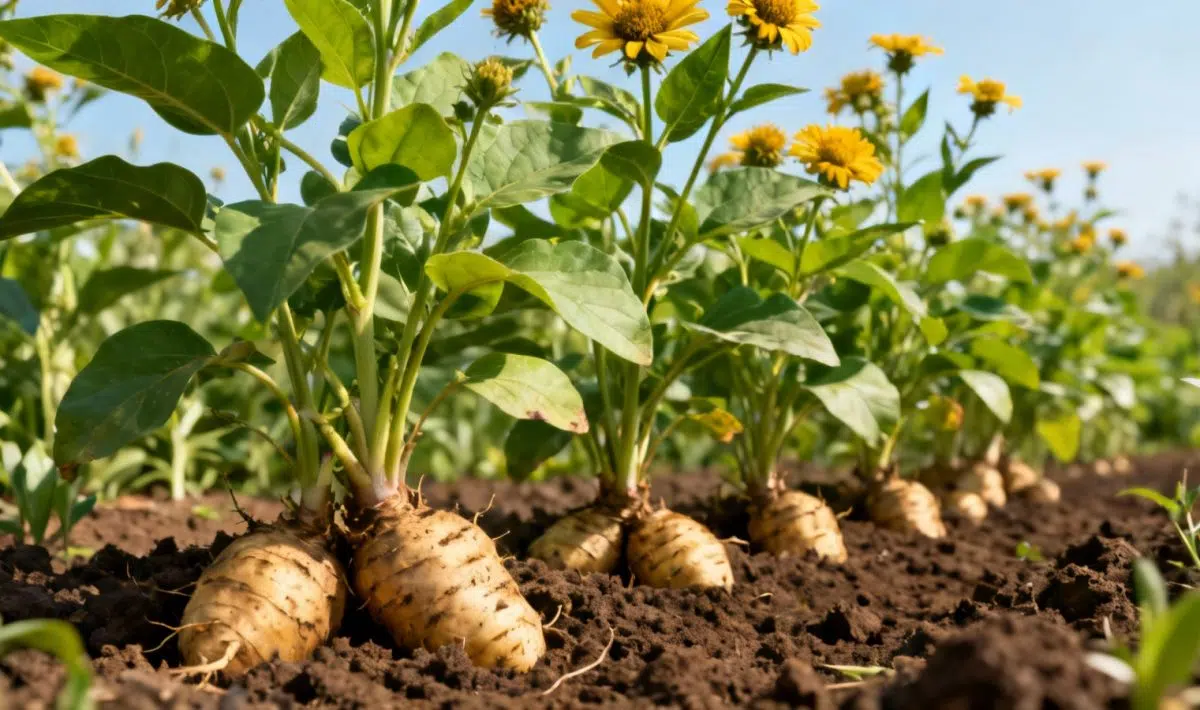
The Jerusalem artichoke, scientifically known as Helianthus tuberosus, stands as one of the most rewarding vegetables you can grow in your garden. This hardy perennial plant produces delicious, nutritious tubercules that thrive even in challenging conditions. Despite its name suggesting Middle Eastern origins, this remarkable plante actually comes from North America and has been feeding families for centuries.
Understanding the Jerusalem artichoke plant characteristics
Jerusalem artichokes are impressive plantes that can reach heights of 2-3 meters, making them excellent windbreaks or privacy screens. The tall stems support broad, rough-textured leaves that create dense foliage throughout the growing season. In late summer, cheerful yellow fleurs appear at the top of the plant, resembling small sunflowers.
The real treasure lies underground where the tubercules develop. These knobby, potato-like structures contain high levels of inuline, a prebiotic fiber that supports digestive health. Each plante typically produces 4-8 tubercules, though some varieties can yield even more with proper care.
The espèce adapts remarkably well to various climates, thriving in zones 3-9. This vivace légume tolerates both drought and wet conditions better than many other root vegetables. Just as gardeners appreciate the resilience found in care tips for Oleander plants, Jerusalem artichokes demonstrate exceptional hardiness in diverse growing conditions.
Soil preparation and planting requirements
Jerusalem artichokes aren’t particularly fussy about sol conditions, but they perform best in well-draining terre that retains some moisture. A neutre to slightly alkaline soil pH between 6.0-7.5 creates ideal conditions for tubercule development. Even poor soils can support decent rendement, making this an excellent choice for challenging garden zones.
Plant your tubercules in early spring, about 2-3 weeks before the last frost date. Choose a sunny location with at least 6 hours of direct sunlight daily. Space the tubercules 12-18 inches apart and bury them 3-4 inches deep. Each tubercule will grow into a substantial plante, so adequate spacing prevents overcrowding.
Before planting, work some aged compost into the sol to improve texture and water retention. Unlike heavy feeders, Jerusalem artichokes don’t require rich soil amendments, though they’ll appreciate organic matter for better tubercule development.
Water and temperature considerations
These adaptable plantes tolerate a wide range of températures and can survive winter freezing in most regions. During the growing période, provide consistent eau without waterlogging the sol. Deep, weekly watering encourages strong root development and larger tubercules.
In hot climates, some afternoon shade can prevent stress, while northern gardeners should ensure full sun exposure for optimal growth. The plantes naturally die back after frost, signaling harvest time.
Care and maintenance throughout the season
Jerusalem artichoke entretien remains refreshingly simple compared to many garden vegetables. Once established, these robust plantes require minimal intervention. Regular weeding during early growth helps young plantes establish themselves, but mature specimens typically outcompete most herbes naturally.
Tall varieties may benefit from staking or support, especially in windy areas. Install stakes early in the season to avoid disturbing the developing root system later. Some gardeners tie the stems loosely to prevent toppling during storms.
Unlike more demanding garden favorites such as those requiring specific Philodendron Birkin care instructions, Jerusalem artichokes thrive with minimal attention once properly established.
Fertilization and soil management
Light fertilization in early spring supports vigorous growth, though these plantes often perform well without additional feeding. A balanced, slow-release fertilizer applied once per année provides sufficient nutrients for healthy production. Avoid high-nitrogen fertilizers that promote excessive foliage at the expense of tubercule development.
Mulching around the plantes conserves soil moisture and suppresses weeds. Organic mulches like straw or shredded leaves gradually decompose, improving soil structure over time.
Propagation methods and variétés selection
Jerusalem artichokes propagate easily through tubercule division, making them one of the most reliable crops for beginning gardeners. Each tubercule piece with at least one “eye” can grow into a full plante. Cut larger tubercules into sections if desired, allowing cut surfaces to dry for 24 hours before planting.
Popular variétés include ‘Dwarf Sunray’ for smaller spaces, ‘Fuseau’ for smooth tubercules, and ‘Stampede’ for container growing. Each variety offers slightly different flavors and growing characteristics, allowing gardeners to experiment and find their favorites.
The quantité of tubercules produced varies by variety and growing conditions. While some gardeners appreciate the controlled environment techniques used for guide to Monstera obliqua care, Jerusalem artichokes reward even novice growers with abundant harvests.
Harvest timing and storage
Harvest begins after the first frost kills the above-ground foliage, typically in late autumn. The tubercules actually improve in flavor after exposure to cold températures, developing a sweeter taste. Dig carefully to avoid damaging the tubercules, which can be quite deep in the sol.
Fresh tubercules store well in cool, humid conditions for several months. Many gardeners prefer to leave some tubercules in the ground for spring harvest, as they remain viable through winter in most climates.
Growing in containers and small spaces
Container cultivation works well for dwarf variétés, though you’ll need large pots at least 20 gallons in size. Use a well-draining potting mix and ensure adequate drainage holes. Container-grown plantes require more frequent watering and benefit from regular fertilization.
For urban gardeners or those with limited space, Jerusalem artichokes in containers provide vertical interest while producing food. The tall growth habit maximizes production in minimal ground space. Similar to how specialized techniques benefit plants like those described in Southern magnolia care tips, container growing allows precise control over growing conditions.
Common challenges and solutions
Few pests seriously threaten Jerusalem artichokes, though slugs may nibble young shoots and aphids occasionally appear on leaves. Row covers protect emerging plantes from pest damage during vulnerable early growth stages.
The biggest challenge often involves managing the plant’s vigorous spreading nature. Jerusalem artichokes can become invasive if not properly contained. Install root barriers or plant in designated areas where spreading won’t create problems.
Disease problems rarely occur, though waterlogged conditions can promote root rot. Ensuring proper drainage prevents most disease issues. The natural resilience that makes these plantes so appealing also means they recover quickly from minor setbacks.
Much like the adaptable nature seen in Fuchsia magellanica culture and care, Jerusalem artichokes demonstrate remarkable recovery abilities when provided with basic growing requirements.
Nutritional benefits and culinary applications
The tubercules offer impressive nutritional valeurs, particularly their high inuline content which supports beneficial gut bacteria. This makes Jerusalem artichokes valuable for digestive health while providing essential minerals and vitamins. The slightly sweet, nutty flavor works well in both raw and cooked applications.
Popular cooking methods include roasting, sautéing, and adding to soups. The texture resembles a cross between potato and water chestnut, offering versatility in many recipes. Some people experience digestive sensitivity initially, but tolerance typically develops with regular consumption.
Growing your own ensures the freshest possible harvest while providing an unusual conversation piece for garden visitors. The combination of ornamental appeal, ease of culture, and nutritional benefits makes Jerusalem artichokes an excellent addition to diverse garden settings.

Allan is a lifelong gardening enthusiast who still gets excited when the first seedlings pop up in spring. With a deep love for nature and a hands-in-the-soil approach, he shares practical tips, plant discoveries, and clever tricks picked up over years of digging, planting, and observing. Whether you’re a new gardener or have a shed full of tools, Allan writes like a neighbor who’s always happy to swap cuttings and stories over the fence.
You can find more about Allan’s work on Malt or connect with him on LinkedIn.


