
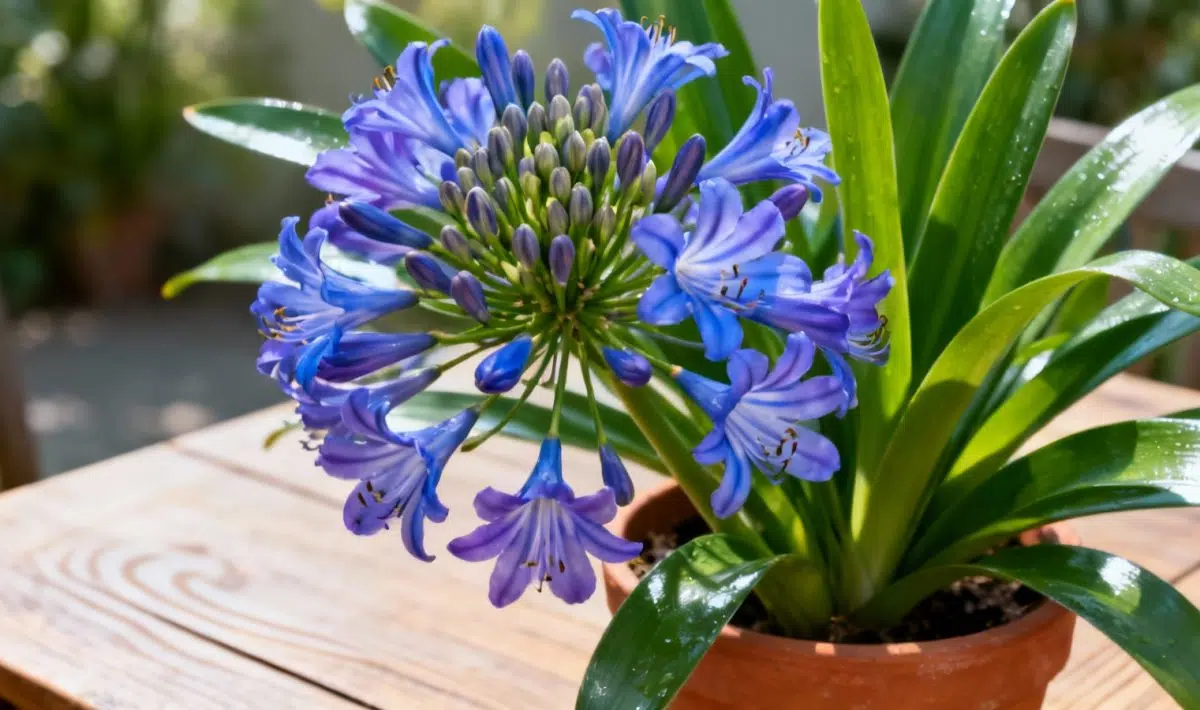
Introduction to the African lily
The African lily, scientifically known as Agapanthus praecox, is a stunning herbaceous perennial plant that brings elegance and color to any garden. This beautiful plant originates from South Africa’s eastern Cape Province and belongs to the Amaryllidaceae family. With its graceful flower heads and attractive foliage, it’s become a favorite among gardeners worldwide who appreciate its remarkable resilience and spectacular blooms.
What makes this plant particularly special is its ability to thrive in various conditions while maintaining its striking appearance. The African lily forms spreading clumps with evergreen or semi-evergreen dark green foliage, creating beautiful architectural elements in the garden. Its long, strap-like leaves reach approximately 40 cm in length, providing an attractive backdrop for the magnificent flower displays that follow.
Characteristics and appearance of Agapanthus praecox
Plant size and structure
The African lily typically reaches heights of 0.9 to 1.5 meters when including the flower stalks, making it an impressive specimen plant. The overall spread can reach up to 60 cm x 40 cm, creating substantial clumps over time. This slow-growing plant develops into robust clusters that become more spectacular with age, rewarding patient gardeners with increasingly impressive displays.
The plant’s growth habit is clumping, with new shoots emerging from the base to form dense, attractive foliage masses. This characteristic makes it excellent for creating bold statements in borders or as focal points in garden designs. Much like when you learn about growing rutabaga plants, understanding the mature size helps with proper spacing and garden planning.
Foliage and flowers
The foliage consists of long, narrow leaves that arch gracefully from the plant’s base. These dark green, strap-shaped leaves are persistent in mild climates but may become semi-deciduous in colder regions. The leaves provide year-round structure and interest, making the plant valuable even when not in bloom.
The spectacular flowers appear on tall, straight stems rising above the foliage. These impressive flower heads consist of numerous individual trumpet-shaped blooms arranged in rounded umbels. The flowers come in various shades including blue, mauve, purple, and white, creating stunning color displays from summer through to the first frosts.
Growing conditions and culture requirements
Optimal growing environment
African lilies thrive in full sun to partial shade, though they produce the best flower displays in sunny locations with at least six hours of direct sunlight daily. These adaptable plants can tolerate coastal conditions, including salt spray and strong winds, making them excellent choices for seaside gardens. They’re also remarkably drought-tolerant once established, requiring minimal water during dry periods.
Temperature tolerance varies among cultivars, but most can withstand temperatures down to -7°C to -15°C depending on the specific variety. In colder regions, protection during the first two winters is essential, typically achieved through mulching around the crown. The plants are generally suited to USDA hardiness zones 8-11, though some varieties can survive in zone 7 with proper protection.
Soil preferences and preparation
These versatile plants prefer well-draining soil but can adapt to various soil types, from sandy to clay-based. The ideal pH range is neutral to slightly alkaline, though they’ll tolerate slightly acidic conditions. Good drainage is crucial, as waterlogged conditions can lead to root rot, particularly during winter months.
Before planting, improve heavy soils by incorporating coarse sand or gravel to enhance drainage. In lighter soils, adding organic matter helps retain some moisture while maintaining good drainage. The plant’s adaptability to different soil conditions makes it as versatile as other garden favorites, similar to when you discover care tips for painted-leaf begonia for indoor cultivation.
Care and maintenance
Watering and fertilization
Established African lilies are surprisingly drought-tolerant and require minimal watering during their growing season. Water deeply but infrequently, allowing the soil to dry between watering sessions. During winter, reduce watering significantly, as the plant enters a rest period and excessive moisture can cause problems.
Feed your plants with a balanced fertilizer in spring as new growth begins. A slow-release granular fertilizer works well, or you can use liquid fertilizer every few weeks during the growing season. Avoid over-fertilizing, particularly with high-nitrogen feeds, as this can promote excessive foliage growth at the expense of flowers.
Disease prevention and pest management
African lilies are generally robust plants with few serious pest or disease problems. However, they can occasionally suffer from aphids, particularly on new growth and flower buds. Regular inspection and early intervention with insecticidal soap or natural predators usually resolves these issues quickly.
Fungal problems are rare but can occur in poorly drained or overly humid conditions. Ensure good air circulation around plants and avoid overhead watering to minimize disease risks. Remove any damaged or yellowing leaves promptly to maintain plant health and appearance.
Propagation methods
Division and clump separation
The most reliable method of propagating African lilies is through division of established clumps. This process is best undertaken in spring as new growth begins, though it can also be done in early autumn in milder climates. Carefully dig up the entire clump and use a sharp spade or knife to separate sections, ensuring each division has both roots and growing points.
Each division should include several growing points for the best chance of success. Plant the divisions immediately in prepared soil, watering them well and providing some shade for the first few weeks while they establish. This method maintains the characteristics of the parent plant and typically results in flowering within one to two years.
Growing from seed
While possible, growing African lilies from seed requires patience as plants may take three to five years to reach flowering size. Collect fresh seeds from spent flower heads in autumn and sow them in spring in seed-raising mix. Keep the seedlings in a protected environment with consistent moisture and bright, indirect light.
Seedlings will show considerable variation in flower color and form, which can be exciting for gardeners who enjoy surprises. However, for specific cultivars, division remains the preferred method. The process requires similar attention to detail as when you explore the pontic rhododendron species for successful establishment.
Garden uses and companion planting
African lilies work magnificently in mixed borders, providing vertical interest and spectacular summer color. They pair beautifully with ornamental grasses, roses, and other perennials that share similar growing requirements. Their architectural form makes them excellent specimen plants, while their clumping habit suits mass plantings for dramatic effect.
Consider combining them with plants that offer contrasting textures and bloom times to extend the garden’s interest throughout the season. Mediterranean-style gardens particularly benefit from their drought tolerance and striking appearance. For gardeners interested in diverse plant combinations, you might find out how to grow Brazilian jasmine as another spectacular flowering option for warm-climate gardens.
The long-lasting flowers also make excellent cut flowers, bringing the garden’s beauty indoors. With proper care and attention to their basic needs, these remarkable plants will reward you with years of stunning displays and minimal maintenance requirements.

Allan is a lifelong gardening enthusiast who still gets excited when the first seedlings pop up in spring. With a deep love for nature and a hands-in-the-soil approach, he shares practical tips, plant discoveries, and clever tricks picked up over years of digging, planting, and observing. Whether you’re a new gardener or have a shed full of tools, Allan writes like a neighbor who’s always happy to swap cuttings and stories over the fence.
You can find more about Allan’s work on Malt or connect with him on LinkedIn.


