
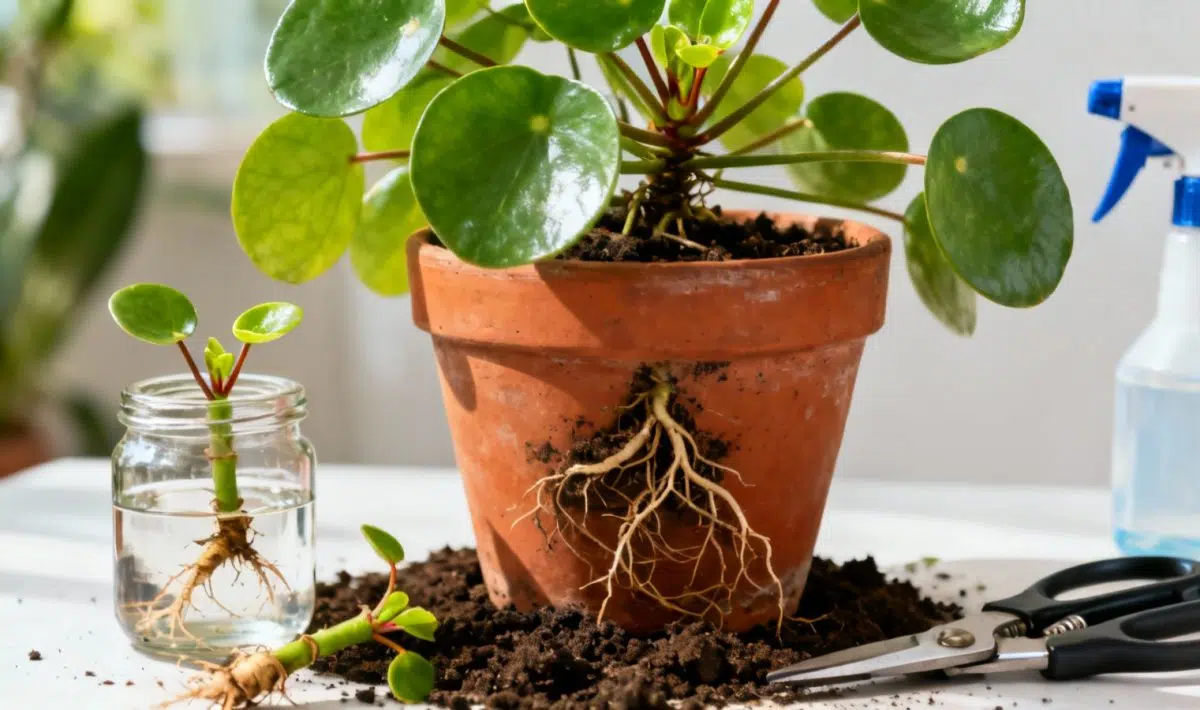
The Chinese money plant has become an absolute favorite among indoor plant enthusiasts, and honestly, it’s easy to see why. With its distinctive round leaves and incredible ability to produce baby plants, Pilea peperomioides offers both beauty and the joy of sharing with friends. This charming houseplant brings a touch of modern elegance to any interior while being surprisingly forgiving for beginners.
Origins and characteristics of the Pilea peperomioides
Native to the Yunnan province of China, this remarkable plant made its way to Europe in the 1940s and has been winning hearts ever since. The Chinese money plant belongs to the Urticaceae family and typically grows 8-12 inches tall indoors, though it can reach up to 16 inches in optimal conditions. Its most striking feature is undoubtedly those perfectly round, coin-shaped leaves that give the plant its common name.
What makes this plant particularly special is its growth habit. The thick, succulent-like stems support glossy green leaves that can reach 2-4 inches in diameter. Each leaf sits atop a long petiole, creating an umbrella-like appearance that’s both architectural and whimsical. The plant’s ability to produce numerous offspring, or “pups,” from its base has earned it the nickname “friendship plant” – you’ll always have babies to share with fellow plant lovers.
Essential care requirements for healthy growth
Lighting needs and placement
Your Chinese money plant thrives in bright, indirect light – think of it as wanting to bask in gentle morning sun rather than harsh afternoon rays. A north or east-facing window typically provides perfect conditions. However, if you only have south or west-facing windows, simply pull the plant back a few feet from the glass to prevent leaf burn.
Direct sunlight can be quite damaging, causing the beautiful round leaves to develop brown spots or fade to an unattractive yellow-green. On the flip side, too little light will result in leggy growth and smaller leaves. If natural light is limited in your space, a grow lamp positioned 12-18 inches away can work wonders for maintaining healthy foliage.
Watering and humidity management
When it comes to watering, the Chinese money plant prefers a “drink deeply, then dry out” approach. Water thoroughly when the top inch of soil feels dry to the touch, usually every 7-10 days depending on your home’s temperature and humidity. The key is ensuring excellent drainage – soggy roots are this plant’s biggest enemy.
Moderate humidity levels between 40-50% keep your plant happiest, though it adapts well to typical indoor conditions. During winter months when heating systems can dry the air considerably, placing a small humidifier nearby or grouping plants together can help maintain adequate moisture levels. Just like when learning how to care for cherry plum trees, consistent moisture without waterlogging is crucial for plant health.
Soil and container requirements
The right growing medium makes all the difference for your Chinese money plant’s root health and overall vigor. Choose a well-draining potting mix – a standard houseplant soil amended with perlite or orchid bark works beautifully. The goal is creating a substrate that holds moisture temporarily but allows excess water to escape quickly.
Your container choice is equally important. Ensure the pot has drainage holes and is only slightly larger than the root ball. Chinese money plants actually prefer being slightly pot-bound, so don’t rush to repot unless you see roots growing through the drainage holes. Terra cotta pots work exceptionally well because they allow the soil to breathe and help prevent overwatering.
Repotting and seasonal care
Most Chinese money plants need repotting every 2-3 years, typically in spring when growth resumes after winter’s slower period. Signs your plant is ready include roots circling the pot’s bottom, water running straight through without being absorbed, or the plant becoming top-heavy and unstable.
During repotting, gently tease apart any circled roots and remove the lower third of the old soil. This is also the perfect time to separate any pups that have developed. Choose fresh potting mix and a container just one size larger than the previous pot. After repotting, wait about a week before resuming regular watering to allow any damaged roots to heal.
Temperature consistency plays a crucial role in your plant’s health throughout the year. Chinese money plants prefer temperatures between 65-75°F and can suffer if exposed to drafts or sudden temperature changes. Keep them away from heating vents, air conditioning units, and frequently opened doors during extreme weather seasons.
Propagation methods and techniques
Working with natural offsets
The easiest propagation method involves separating the natural pups or offsets that develop around the mother plant’s base. These baby plants typically appear when your Chinese money plant is mature and happy – usually after its first year in your care. Wait until the offsets have developed their own small root systems before attempting separation.
To harvest pups, gently remove the mother plant from its pot and carefully separate the babies using clean, sharp scissors or a knife. Each offset should have some roots attached for the best chance of survival. Allow the cut surfaces to dry for a few hours before planting in fresh, slightly moist potting mix.
Stem cutting propagation
If your plant isn’t producing pups naturally, you can propagate through stem cuttings taken from healthy growth. Cut a 4-6 inch section just below a leaf node, remove the lower leaves, and place in water or directly into moist potting mix. Water propagation often shows faster root development, allowing you to watch the exciting process unfold.
Similar to propagation techniques used for other houseplants, maintaining consistent moisture and warmth encourages root development. Once roots reach 1-2 inches long, transplant water-rooted cuttings into small pots with fresh soil. This method requires patience – expect 4-6 weeks for substantial root development, much like when understanding American elder care and its propagation timeline.
Common challenges and solutions
Even with proper care, Chinese money plants can occasionally face issues that require attention. Yellow leaves typically indicate overwatering or poor drainage, while brown, crispy edges suggest underwatering or low humidity. Adjusting your watering schedule and improving air circulation usually resolves these problems quickly.
Pest problems are relatively uncommon but can occur. Spider mites occasionally appear in dry conditions, while fungus gnats may develop in overly moist soil. Regular inspection of leaves and stems helps catch problems early. If pests do appear, gentle treatment with insecticidal soap or neem oil typically resolves issues without harming the plant.
Leggy growth with small leaves usually indicates insufficient light. Gradually move your plant to a brighter location and consider pinching back long stems to encourage bushier growth. The plant’s natural tendency is to reach toward light sources, so rotating it weekly ensures even development on all sides.
Maximizing growth and plant health
Feeding your Chinese money plant during the growing season supports vigorous growth and abundant pup production. Use a balanced, diluted liquid fertilizer monthly from spring through early fall. Reduce feeding during winter when growth naturally slows – overfeeding during dormant periods can actually harm the plant.
Just as with zinnia care and propagation advice, timing your care activities with the plant’s natural cycles yields the best results. Spring marks the beginning of active growth, making it ideal for repotting, fertilizing, and propagation activities.
Regular maintenance keeps your Chinese money plant looking its best. Remove any yellowed or damaged leaves promptly, dust the foliage monthly with a damp cloth, and rotate the pot weekly for even growth. These simple tasks, similar to tips for common blue violet maintenance, ensure your plant remains healthy and attractive.
Creating the perfect indoor environment
Success with Chinese money plants comes down to creating stable, consistent conditions that mimic their natural habitat. These plants appreciate routine – consistent watering schedules, stable temperatures, and predictable light levels. Sudden changes in care or environment can cause leaf drop or stunted growth.
Consider the plant’s placement carefully within your home. Avoid high-traffic areas where the plant might be bumped or knocked over, as the stems can be somewhat brittle. A stable surface near a bright window, away from heating and cooling vents, provides the ideal microenvironment for long-term success.
The Chinese money plant’s reputation as a beginner-friendly houseplant is well-deserved. With attention to basic needs – proper lighting, appropriate watering, and good drainage – this charming plant will reward you with steady growth and plenty of babies to share. Its distinctive appearance and generous nature make it a perfect addition to any indoor plant collection, bringing both beauty and the satisfaction of successful plant parenting to your daily routine.

Allan is a lifelong gardening enthusiast who still gets excited when the first seedlings pop up in spring. With a deep love for nature and a hands-in-the-soil approach, he shares practical tips, plant discoveries, and clever tricks picked up over years of digging, planting, and observing. Whether you’re a new gardener or have a shed full of tools, Allan writes like a neighbor who’s always happy to swap cuttings and stories over the fence.
You can find more about Allan’s work on Malt or connect with him on LinkedIn.


