Common pear – Pyrus communis: characteristics, cultivation methods and propagation techniques
The common pear tree, known scientifically as Pyrus communis, stands as one of Europe’s most cherished fruit trees. This remarkable species has graced our landscapes for centuries, offering both delicious pears and stunning ornamental value. Whether you’re planning to establish a small orchard or simply want to add a productive tree to your garden, understanding the fundamentals of pear cultivation will set you on the path to success.
Understanding the botanical characteristics of Pyrus communis
The common pear belongs to the Rosaceae family and displays distinctive features that make it easily recognizable. These deciduous trees typically reach heights of 10 to 15 meters at maturity, developing a characteristic pyramidal crown that becomes more rounded with age. The bark appears smooth and grey on young branches, gradually developing a more fissured texture as the tree ages.
During spring, usually between April and May, pear trees produce abundant white flowers arranged in clusters called umbels. Each cluster contains 1 to 12 individual flowers measuring 2 to 3 centimeters in diameter. These melliferous blooms attract beneficial insects and serve as an important early nectar source. The leaves emerge bright green and maintain their glossy appearance throughout the growing season before turning yellow-orange in autumn.
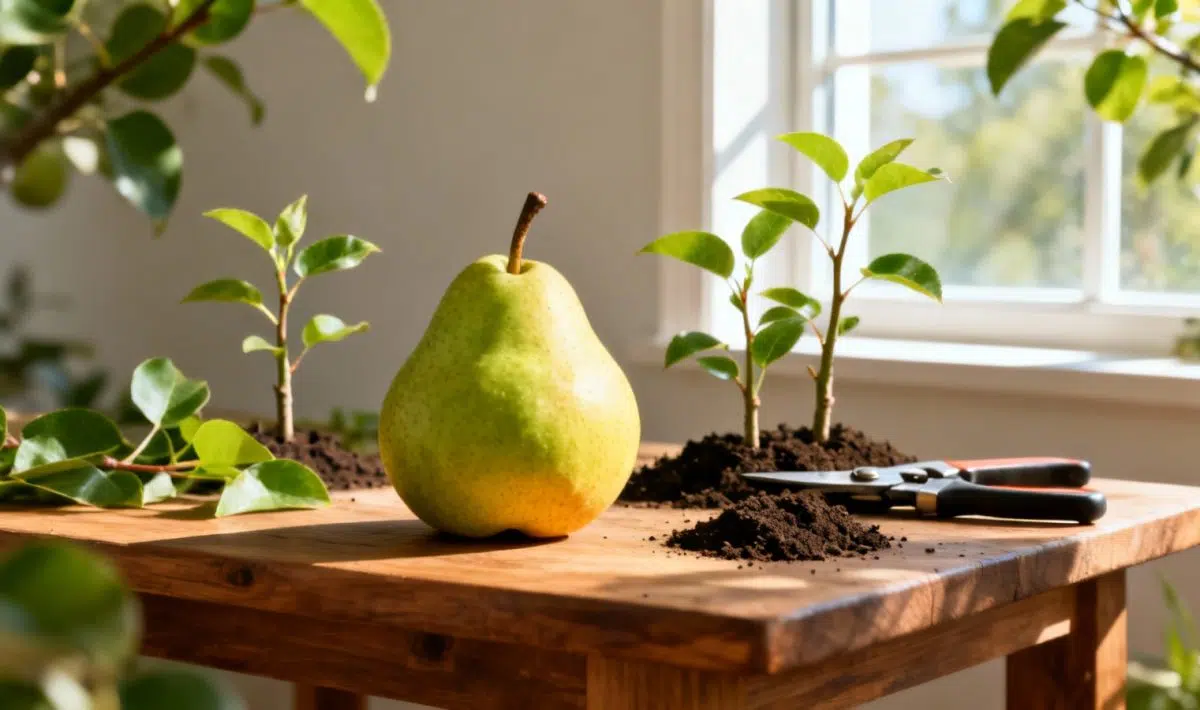
The fruits themselves vary considerably depending on the cultivar chosen. Traditional European poires display the classic pear shape with a narrow neck and bulbous base, while some varieties produce more rounded fruits. The skin color ranges from green to yellow, often with a red blush on the sun-exposed side. For those interested in diversifying their garden with other fruit-bearing plants, you might find helpful care tips for common blackberry which shares similar cultivation principles.
Optimal cultivation conditions for pear trees
Successful pear cultivation begins with selecting the right location and understanding the tree’s environmental needs. Pear trees thrive in temperate climates and demonstrate excellent cold hardiness, tolerating temperatures as low as -20°C. This remarkable resilience makes them suitable for cultivation across most European regions, from France to northern countries.
Soil preparation plays a crucial role in establishing healthy poiriers. These fruit trees prefer well-draining soils with a pH between 6.0 and 7.0. Heavy clay soils should be amended with organic matter to improve drainage, as waterlogged conditions can lead to root rot and other serious problems. The chosen location should receive at least 6 to 8 hours of direct sunlight daily for optimal fruit production.
When planning your orchard layout, consider the mature size of the trees and provide adequate spacing. Standard pear trees require approximately 6 to 8 meters between specimens, while dwarf varieties can be planted closer together. This spacing ensures proper air circulation, reduces disease pressure, and allows each tree to receive sufficient light.
Watering and fertilization practices
Young pear trees require consistent moisture during their establishment period, typically the first two to three years after planting. Water deeply but infrequently, providing approximately 2.5 centimeters of water weekly during dry periods. Mature trees develop extensive root systems and become more drought-tolerant, though they still benefit from supplemental watering during fruit development.
Fertilization should follow a balanced approach, with organic compost applied annually in spring. A general fertilizer with an N-P-K ratio of 10-10-10 works well for most soils, applied at a rate of 500 grams per mature tree. Avoid excessive nitrogen fertilization, which can promote vigorous vegetative growth at the expense of fruit production and increase susceptibility to diseases.
Popular varieties and cultivar selection
The diversity of pear cultivars available today results from centuries of selective breeding and domestication. European varieties dominate commercial production, with each offering unique characteristics in terms of flavor, texture, and storage capabilities. Understanding these differences helps gardeners choose varieties best suited to their climate and preferences.
Williams (also known as Bartlett in North America) remains one of the most popular early-season varieties, producing sweet, juicy fruits with smooth texture. Conference pears offer excellent keeping qualities and distinctive elongated shape, making them ideal for both fresh consumption and cooking. For those seeking winter storage varieties, Beurré Hardy and Comice provide exceptional flavor when properly ripened.
Climate adaptation varies significantly among cultivars, with some performing better in cooler northern regions while others thrive in warmer southern areas. Precocious varieties begin producing fruit earlier in their development, typically within 3 to 4 years of planting, while others may require 5 to 7 years to reach full production. Just as with ornamental plants, proper variety selection proves crucial – much like when growing common boxwood successfully requires choosing appropriate cultivars for your region.
Propagation methods for pear trees
Understanding propagation techniques allows gardeners to expand their orchards economically and preserve desired characteristics. The most common commercial method involves grafting, where desirable pear varieties (scions) are joined to compatible rootstocks. This technique combines the fruit quality of selected cultivars with the vigor and disease resistance of appropriate rootstocks.
Grafting techniques and timing
Spring grafting typically occurs in late February or early March, before bud break begins. The most successful techniques for amateur gardeners include whip-and-tongue grafts for similar-sized wood and cleft grafts when joining smaller scions to larger rootstock branches. Proper knife sharpness and clean cuts prove essential for successful graft unions.
Rootstock selection significantly influences the final tree characteristics. Dwarfing rootstocks like Quince A reduce tree size while maintaining fruit quality, making them ideal for smaller gardens. Standard rootstocks produce larger, longer-lived trees suitable for traditional orchards. The compatibility between scion variety and rootstock must be verified, as some combinations prove unsuccessful.
Alternative propagation methods
While grafting dominates commercial propagation, other methods offer value for specific situations. Seed propagation of Pyrus communis produces variable results, as fruit quality rarely matches the parent plant. However, this method proves useful for developing new rootstocks or preserving wild genetic diversity. For gardeners interested in understanding different propagation approaches across various plant species, learning about information about oleander care can provide additional insights into plant propagation techniques.
Hardwood cuttings occasionally succeed with pear trees, though success rates remain low compared to other fruit species. Air layering presents another option for propagating mature trees, particularly when preserving specific cultivars becomes necessary.
Disease and pest management
Preventive care forms the foundation of successful pear cultivation, as healthy trees better resist diseases and pest attacks. Common fungal diseases include fire blight, pear scab, and powdery mildew, each requiring specific management approaches. Fire blight poses the most serious threat, causing rapid branch dieback and potentially killing entire trees.
Cultural practices significantly influence disease pressure. Proper pruning improves air circulation and reduces humid conditions that favor fungal development. Remove any diseased wood immediately, sterilizing tools between cuts to prevent pathogen spread. Autumn cleanup eliminates overwintering disease spores and reduces infection pressure the following spring.
Pest management focuses on monitoring and early intervention. Codling moth larvae tunnel into developing fruits, while aphids can transmit viral diseases. Beneficial insects provide natural pest control when pesticide use remains minimal. Installing bird nesting boxes encourages insectivorous species that consume large quantities of pest insects throughout the growing season.
Harvesting and storage considerations
Determining optimal harvest timing requires understanding pear ripening characteristics. Unlike many other fruits, pears achieve better quality when harvested before full ripeness and allowed to ripen off the tree. The fruit should yield slightly to pressure near the stem end when ready for harvest, typically occurring between August and October depending on the variety.
Proper storage extends the enjoyment of homegrown pears well into winter months. Early varieties require immediate consumption or processing, while late-season cultivars can store for several months under proper conditions. Temperature control proves critical, with optimal storage occurring at 0 to 2°C with high humidity. For those managing diverse garden plantings requiring different care approaches, understanding storage needs parallels the attention required for tips for caring for Philodendron ‘Birkin’ in maintaining optimal growing conditions.
Long-term orchard management
Establishing a productive pear orchard requires long-term planning and consistent care. These remarkable arbres can live and produce for over 100 years when properly maintained, making them valuable investments for future generations. Regular pruning maintains tree health, controls size, and ensures adequate light penetration for fruit development.
Annual soil testing guides fertilization programs and helps maintain optimal growing conditions. Organic matter additions improve soil structure and provide slow-release nutrients throughout the growing season. Mulching conserves moisture, suppresses weeds, and moderates soil temperature fluctuations that can stress tree roots.
The common pear tree represents both agricultural heritage and future possibility. Through careful attention to cultivation practices, variety selection, and propagation techniques, gardeners can enjoy abundant harvests of delicious, homegrown fruit while contributing to the preservation of these magnificent trees. Whether you’re establishing your first pear tree or managing an established orchard, the principles outlined here will guide you toward success in this rewarding endeavor.
Allan is a lifelong gardening enthusiast who still gets excited when the first seedlings pop up in spring. With a deep love for nature and a hands-in-the-soil approach, he shares practical tips, plant discoveries, and clever tricks picked up over years of digging, planting, and observing. Whether you’re a new gardener or have a shed full of tools, Allan writes like a neighbor who’s always happy to swap cuttings and stories over the fence.
You can find more about Allan’s work on Malt or connect with him on LinkedIn.