
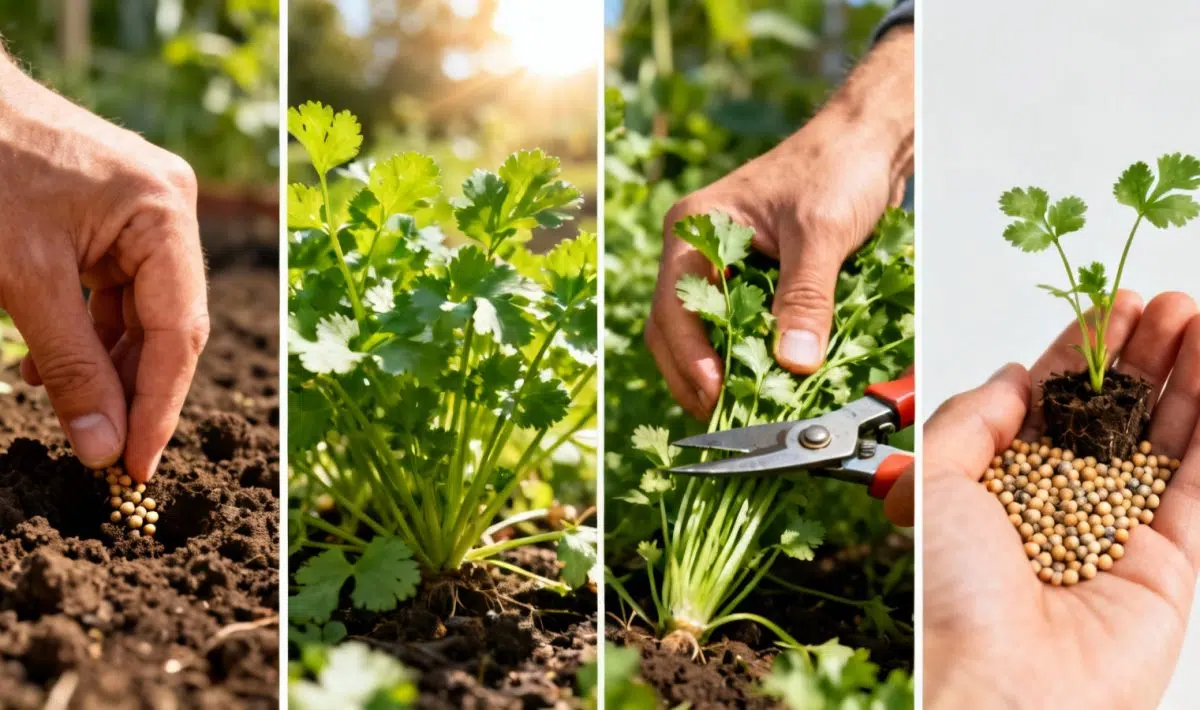
Coriander, scientifically known as Coriandrum sativum, stands as one of the most versatile aromatic herbs you can grow in your garden. This annual plant from the Apiaceae family offers both fresh leaves (cilantro) and flavorful seeds, making it a dual-purpose treasure for any gardener. With proper care and understanding of its characteristics, you’ll enjoy fresh harvests in just 4-6 weeks from sowing.
Understanding coriander characteristics and varieties
Coriander presents a fascinating morphology that changes throughout its growing cycle. The plant typically reaches 20-60 cm in height, featuring delicate, finely divided leaves that emit a distinctive aroma. Young leaves appear broad and flat, while mature foliage develops into feathery, thread-like structures. As the plant matures, it produces small white or pink flowers arranged in umbrella-shaped clusters called umbels.
The seeds, which we commonly call coriander spice, develop after flowering and possess a completely different flavor profile from the fresh leaves. Understanding this transformation helps you time your harvest perfectly for either leaf or seed production. Different varieties offer unique characteristics – some excel in leaf production while others focus on seed development.
Most gardeners appreciate coriander’s rapid growth cycle, though this herb can be sensitive to temperature fluctuations. The plant tends to bolt (flower prematurely) when stressed by heat, drought, or sudden temperature changes. This characteristic makes timing and location crucial for successful cultivation.
Optimal growing conditions for coriander culture
Creating the perfect environment for your coriander plants starts with understanding their soil preferences. These plants thrive in well-draining, loamy soil with a pH between 6.2 and 6.8. Rich, fertile soil amended with compost or aged manure provides the foundation for healthy growth. However, avoid overly rich soils that might promote excessive leaf growth at the expense of essential oil development.
Temperature plays a critical role in coriander success. The ideal growing range falls between 10-29°C (50-85°F), with germination occurring best at 12-22°C (53-71°F). While the plant tolerates light frosts, it struggles in extreme heat, often bolting when temperatures consistently exceed 29°C. For those interested in growing other aromatic herbs with similar care requirements, you might want to learn about garlic mustard care for a diverse herb garden.
Sunlight requirements vary depending on your climate zone. In cooler regions, full sun (4-6 hours daily) promotes robust growth and oil production. However, in hot climates, partial shade during the hottest part of the day prevents premature bolting and extends the harvest period for fresh leaves.
Soil preparation and planting techniques
Preparing your soil properly sets the foundation for healthy coriander plants. Work organic matter into the top 15-20 cm of soil, ensuring good drainage while maintaining moisture retention. If your soil tends to be clay-heavy, consider adding sand or perlite to improve drainage, as waterlogged conditions can lead to root rot.
Direct sowing works best for coriander, as the plant dislikes root disturbance. Sow seeds 1-2 cm deep, spacing them 2-3 cm apart in rows separated by 20-30 cm. The seeds have a hard outer coating, so soaking them in water for 12-24 hours before planting can improve germination rates significantly.
For continuous harvests, practice succession planting by sowing new seeds every 2-3 weeks throughout the growing season. This strategy ensures a constant supply of fresh leaves, especially important given coriander’s tendency to bolt quickly in warm weather.
Planting and propagation methods
Spring represents the ideal time for sowing coriander in most temperate regions, typically 2-3 weeks before the last expected frost. However, in areas with mild winters, fall plantings often produce superior results due to cooler temperatures that extend the leaf harvest period. The key lies in understanding your local climate patterns and timing plantings accordingly.
Container growing offers excellent control over growing conditions, especially for gardeners in challenging climates. Use pots at least 20 cm deep with drainage holes, filling them with quality potting mix amended with compost. Container plants require more frequent watering but offer the advantage of mobility – you can move them to optimal light conditions or protect them from extreme weather.
When starting coriander from seeds, maintain consistent soil moisture during the germination period, which typically takes 7-14 days. Once seedlings emerge, thin them to prevent overcrowding, leaving the strongest plants spaced 10-15 cm apart. Crowded plants compete for nutrients and are more susceptible to fungal diseases.
Essential care and maintenance practices
Watering coriander requires a delicate balance – the plants need consistent moisture but cannot tolerate waterlogged conditions. Water deeply but infrequently, allowing the soil surface to dry slightly between waterings. Morning watering proves best, giving plants time to dry before evening and reducing fungal disease risks.
Fertilization should be moderate and focused on nitrogen during the leaf production phase. A balanced, diluted liquid fertilizer applied every 2-3 weeks supports healthy growth without overwhelming the plants. Over-fertilization can reduce essential oil concentration in the leaves, diminishing their aromatic qualities.
Regular harvesting actually promotes continued leaf production and delays flowering. Begin harvesting outer leaves when plants reach 10-15 cm tall, using clean scissors to cut stems just above a leaf node. This pruning technique encourages bushier growth and extends your harvest period significantly.
Harvesting techniques and timing
The timing of your coriander harvest depends entirely on your intended use. For fresh leaves (cilantro), begin harvesting when plants reach 10-15 cm tall, typically 3-4 weeks after germination. Cut outer stems first, leaving the center growing point intact to encourage continued production. Fresh leaves offer the most intense flavor when harvested in the morning after dew has dried.
Seed production requires patience and different timing. Allow plants to flower and develop seed heads, which typically occurs 12-16 weeks after planting. The seeds are ready when they turn brown and easily separate from the plant. Cut entire seed heads and hang them upside down in paper bags to complete drying and catch falling seeds.
Storage methods vary between leaves and seeds. Fresh leaves maintain quality for 7-10 days when stored in the refrigerator with stems in water, covered with a plastic bag. For longer storage, freeze whole leaves in ice cube trays with water or oil. Dried seeds, when stored in airtight containers, maintain their potency for up to three years.
Common challenges and pest management
Aphids represent the most common pest affecting coriander plants, particularly during warm weather. These small insects cluster on tender new growth, weakening plants and potentially spreading diseases. Regular inspection allows early detection and treatment with insecticidal soap or neem oil before infestations become severe.
Fungal diseases can affect coriander, especially in humid conditions or when plants remain wet for extended periods. Proper spacing, morning watering, and good air circulation help prevent most fungal issues. If problems develop, remove affected plant material immediately and consider applying organic fungicide treatments. Those dealing with similar issues in other plants might find it helpful to explore Japanese pieris care techniques for comprehensive pest management strategies.
Premature bolting remains the most frustrating challenge for coriander growers. This occurs when plants flower before producing sufficient leaf harvests, often triggered by heat stress, drought, or root disturbance. Prevention strategies include choosing bolt-resistant varieties, providing afternoon shade in hot climates, and maintaining consistent soil moisture.
Companion planting can enhance coriander growth while deterring pests naturally. Planting alongside tomatoes, spinach, or lettuce creates beneficial microenvironments, while avoiding fennel, which can cross-pollinate and affect seed quality. For gardeners interested in expanding their knowledge of plant care across different species, resources like understand Dieffenbachia seguine care offer valuable insights into diverse growing techniques.
Maximizing your coriander garden success
Success with coriander culture depends on understanding the plant’s natural tendencies and working with them rather than against them. The herb’s annual nature and rapid growth cycle make it perfect for succession plantings, ensuring continuous harvests throughout the growing season. By starting new plants every few weeks, you’ll maintain a steady supply of fresh aromatic leaves.
Climate adaptation plays a crucial role in coriander cultivation success. In hot regions, focus on cool-season growing periods and provide protection during the hottest parts of the day. Cold-climate gardeners should maximize warm-season growth while planning for potential early bolting. Understanding your local growing conditions helps you time plantings for optimal results.
The versatility of coriander extends beyond simple leaf and seed production. Young plants make excellent microgreens, ready for harvest in just 10-14 days after germination. Flowers attract beneficial insects to your garden, supporting overall ecosystem health. Even when plants bolt prematurely, the flowers and developing seeds still offer culinary value.
Integrating coriander into broader garden planning enhances both productivity and plant health. The herb’s relatively short growing season makes it an excellent companion for longer-season crops, filling space efficiently. Consider incorporating it into rotation schemes with other aromatic plants, and for those seeking to diversify their garden with unique specimens, discover common persimmon care tips for fruit tree cultivation or find out about golden pothos care for indoor growing options.
Remember that successful coriander cultivation comes from consistent attention to basic needs rather than complex techniques. Regular watering, appropriate harvesting, and timing your plantings with seasonal conditions will reward you with abundant harvests of this remarkable aromatic herb throughout the growing season.

Allan is a lifelong gardening enthusiast who still gets excited when the first seedlings pop up in spring. With a deep love for nature and a hands-in-the-soil approach, he shares practical tips, plant discoveries, and clever tricks picked up over years of digging, planting, and observing. Whether you’re a new gardener or have a shed full of tools, Allan writes like a neighbor who’s always happy to swap cuttings and stories over the fence.
You can find more about Allan’s work on Malt or connect with him on LinkedIn.


