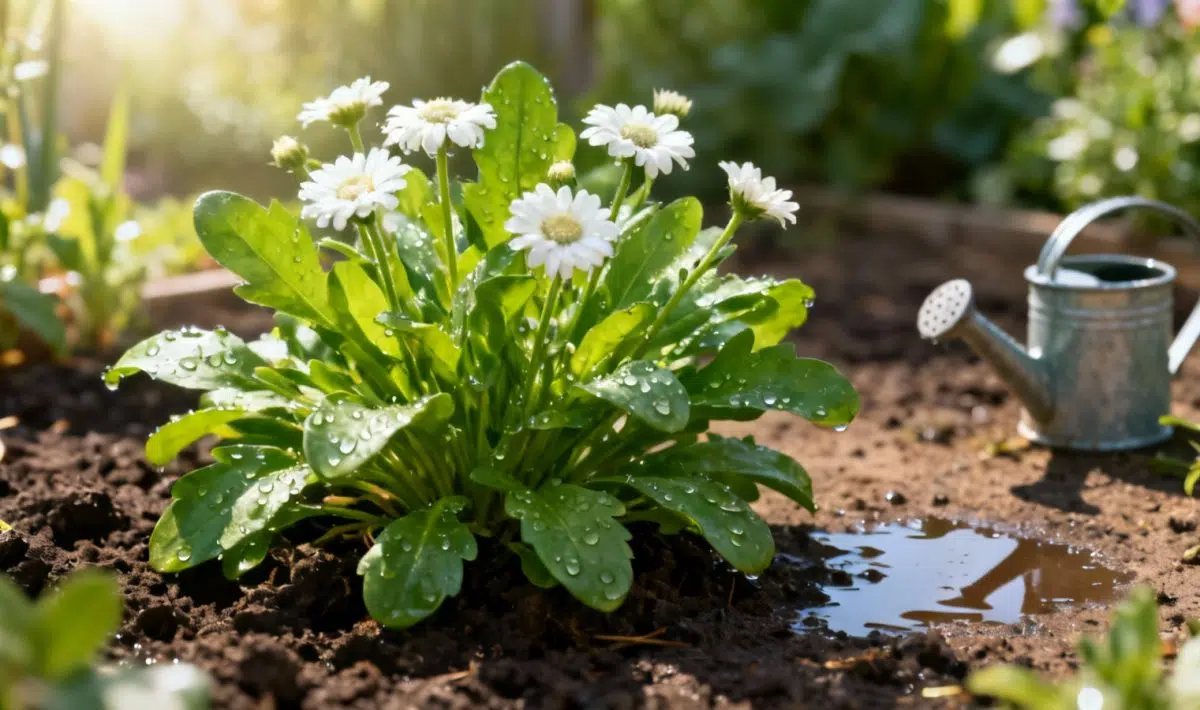
Growing Guernsey fleabane in your garden brings a touch of wild beauty that’s surprisingly easy to maintain. This resilient herb thrives with minimal fuss, but understanding its water needs makes all the difference between a struggling plant and a flourishing wildflower display. Let me share what I’ve learned about keeping these lovely plants happy through every season.
Understanding your Guernsey fleabane’s water requirements
Guernsey fleabane, scientifically known as Erigeron sumatrensis, originally comes from South America but has adapted beautifully to temperate climates worldwide. This hardy annual herb prefers well-draining soil that stays slightly moist but never waterlogged. The key lies in finding that sweet spot between too dry and too wet.
During the active growing season, your fleabane typically needs watering once per week. However, this frequency changes based on several factors including your local climate, soil type, and the plant’s current growth stage. Sandy soils drain faster and may require more frequent watering, while clay soils hold moisture longer.
Watch for telltale signs that your plant needs water. The leaves will start to look slightly wilted, and the soil feels dry when you stick your finger about an inch deep. Don’t wait until the plant looks severely stressed – consistent moisture leads to better growth and flowering.
Seasonal watering schedules for optimal growth
Spring marks the most critical watering period for your Guernsey fleabane. Young plants establishing their root systems need consistent moisture to thrive. During germination and the first few weeks of growth, you might need to water every few days, especially if spring rains are scarce.
As we move into summer, mature plants become more drought-tolerant but still appreciate that weekly watering routine. Hot, dry spells may require more frequent attention. I’ve found that early morning watering works best, giving plants time to absorb moisture before the heat of the day.
Fall brings a natural slowdown in growth, and you can reduce watering frequency accordingly. The plant begins to focus on seed production rather than vegetative growth. If you’re growing other garden favorites alongside your fleabane, you might find that watering tips for wintercreeper plants complement your overall garden care routine perfectly.
Managing water during different growth phases
The germination phase requires the most attention to moisture levels. Keep the soil consistently moist but not soggy until seedlings emerge and establish their first true leaves. This usually takes about 2-3 weeks depending on temperature and conditions.
Once your fleabane reaches maturity, it becomes remarkably resilient. These wild plants have adapted to survive with minimal intervention, much like their woodland cousins. The robust nature of this herb means it can handle brief dry periods without significant stress.
Efficient watering techniques and soil management
Hand watering gives you the best control over moisture levels, especially for smaller garden plots. Use a watering can or gentle hose setting to avoid disturbing the soil around shallow roots. Deep, less frequent watering encourages stronger root development compared to frequent shallow watering.
Mulching around your plants helps retain soil moisture and reduces watering frequency. Organic mulches like shredded leaves or bark chips work wonderfully, breaking down slowly to improve soil structure. Keep mulch a few inches away from the plant stem to prevent moisture-related issues.
Consider the water needs of companion plants when planning your irrigation schedule. If you’re growing a diverse garden with plants like iris or geranium nearby, you might discover that proper care for pomegranate watering offers insights into managing different moisture requirements across your garden space.
Soil preparation for better water retention
Good drainage remains essential for Guernsey fleabane success. Heavy clay soils benefit from amendments like compost or coarse sand to improve water movement. Sandy soils, while draining well, may need organic matter added to help retain some moisture.
Test your soil’s drainage by digging a small hole and filling it with water. If water sits for more than a few hours, you’ll need to improve drainage. Conversely, if water disappears immediately, consider adding organic matter to slow drainage slightly.
Companion planting and water-wise garden design
Creating a diverse garden ecosystem with native and adapted plants makes watering more efficient and supports local wildlife. Guernsey fleabane pairs beautifully with other low-maintenance plants that share similar water needs. Consider grouping plants with comparable requirements to simplify your watering routine.
Native grasses, wildflowers, and herbs often thrive together with minimal intervention. This approach reduces overall garden maintenance while creating habitat for beneficial insects and birds. The natural look of mixed plantings feels more relaxed and sustainable than formal garden beds.
When planning companion plantings, research each plant’s specific needs. Some gardeners find that understanding optimal watering for scarlet-star growth helps them design more cohesive planting schemes that work harmoniously together.
Creating microclimates for water efficiency
Thoughtful placement of plants can create natural microclimates that conserve water. Taller plants provide shade for shorter ones, reducing evaporation and heat stress. Grouping plants with similar water needs makes irrigation more targeted and efficient.
Wind protection also plays a role in water conservation. Strategic placement of shrubs or structures can reduce water loss from both soil and plant surfaces. Even small adjustments in plant positioning can make a noticeable difference in water requirements.
Troubleshooting common watering issues
Overwatering shows up as yellowing leaves, mushy stems, or fungal growth around the base of plants. If you notice these signs, reduce watering frequency and improve soil drainage. Most plants recover quickly once proper moisture levels return.
Underwatering stress appears as wilted, crispy leaves and stunted growth. Gradually increase watering rather than flooding stressed plants with water all at once. Consistent, moderate moisture helps plants recover more effectively than dramatic changes in watering patterns.
Different plants in your garden may show stress differently. Understanding these variations helps you fine-tune care for each species. Resources about best practices for creeping thistle can provide additional perspectives on managing diverse plant water needs.
Seasonal adjustments and climate considerations
Your local climate significantly impacts watering schedules. Humid regions require less frequent watering than dry climates, while areas with intense sun may need more frequent attention. Pay attention to seasonal weather patterns and adjust accordingly.
Rainfall naturally supplements your irrigation efforts, so monitor precipitation levels and reduce watering during wet periods. Many gardeners keep simple rain gauges to track natural water input and adjust their watering schedules accordingly.
Temperature fluctuations also affect water needs. Cool, overcast days require less water than hot, sunny periods. Learning to read these environmental cues helps you become a more intuitive gardener. Whether you’re growing tree species like those covered in healthy growth of silver birch or smaller plants, understanding climate impacts improves overall garden success.
Long-term care and sustainability
Establishing sustainable watering practices benefits both your garden and the environment. Collecting rainwater in barrels provides free irrigation water while reducing runoff. Simple systems work well for most home gardens and connect you more closely to natural water cycles.
Gradual reduction in supplemental watering encourages plants to develop deeper, more drought-tolerant root systems. This approach creates more resilient gardens that require less intervention over time. Many native and adapted plants, including fleabane, naturally move toward greater self-sufficiency with proper establishment.
Observing how different plants respond to varying moisture levels teaches valuable lessons about garden ecology. Some gardeners expand their knowledge by exploring care requirements for succulent species, such as those detailed in watering guidelines for mother of thousands, which offer contrasting but complementary approaches to plant care.
Remember that gardening success comes from understanding each plant’s unique needs while creating systems that work efficiently for your lifestyle. Guernsey fleabane rewards consistent but not excessive attention, making it an excellent choice for both beginning and experienced gardeners who appreciate low-maintenance beauty in their outdoor spaces.

Allan is a lifelong gardening enthusiast who still gets excited when the first seedlings pop up in spring. With a deep love for nature and a hands-in-the-soil approach, he shares practical tips, plant discoveries, and clever tricks picked up over years of digging, planting, and observing. Whether you’re a new gardener or have a shed full of tools, Allan writes like a neighbor who’s always happy to swap cuttings and stories over the fence.
You can find more about Allan’s work on Malt or connect with him on LinkedIn.