How much sunlight does Brazilian jasmine need for optimal growth and flowering
If you’ve fallen in love with the vibrant trumpet-shaped flowers of Brazilian jasmine, you’re not alone. This tropical climbing vine, scientifically known as Mandevilla sanderi, has captured the hearts of gardeners worldwide with its stunning blooms and vigorous growth. However, understanding how much sunlight does Brazilian jasmine need is crucial for achieving those spectacular displays of flowers that make this plant so beloved.
Brazilian jasmine thrives as a sun-loving plant, demanding specific light conditions to reach its full potential. Getting the sunlight requirements right can mean the difference between a plant that merely survives and one that becomes the star of your garden with cascading blooms throughout the growing season.
Brazilian jasmine is what gardeners call a heliophilic plant, meaning it absolutely loves the sun. For optimal growth and abundant flowering, this tropical vine needs at least 6 to 8 hours of direct sunlight daily. This isn’t just a preference – it’s an essential requirement for the plant’s photosynthesis process and flower production.
The intensity of light matters just as much as duration. Brazilian jasmine performs best in full sun conditions where it can soak up those intense morning and afternoon rays. While it can tolerate some light shade, you’ll notice a significant reduction in blooms when the plant receives less than 4 to 5 hours of direct sun.
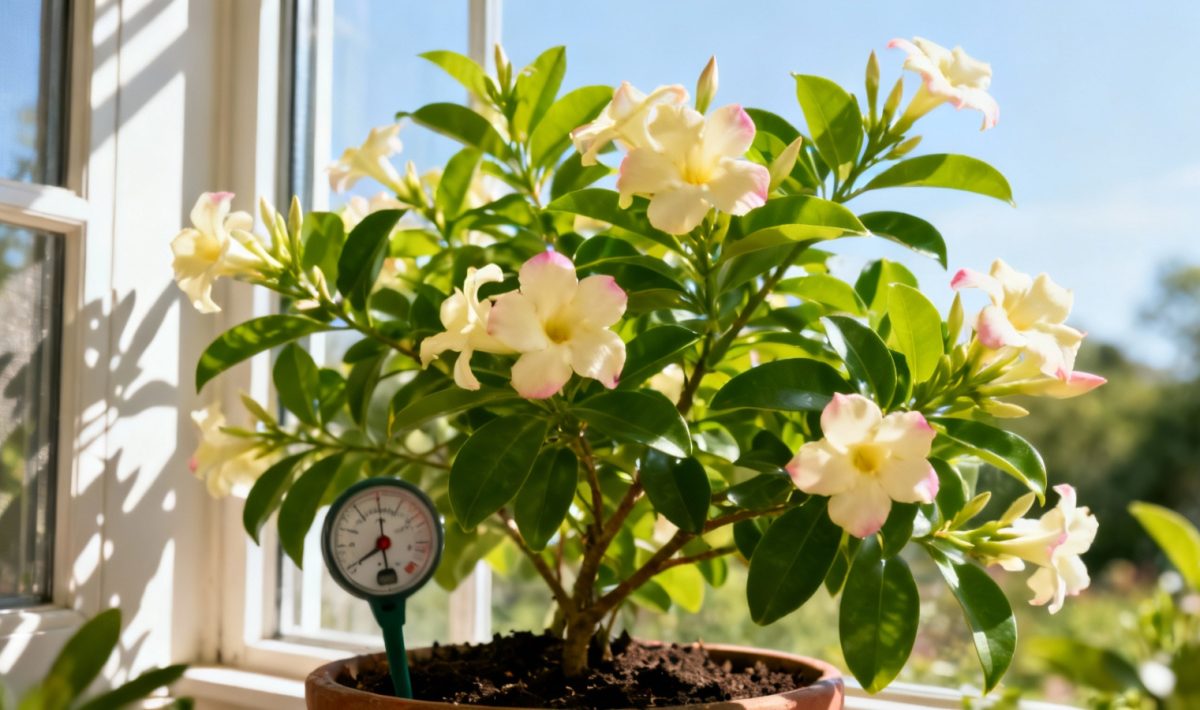
For indoor cultivation or balcony growing, positioning your mandevilla near south or west-facing windows ensures maximum light exposure. Just like how different plants have varying needs – for instance, understanding optimal sunlight for Jimsonweed cultivation helps with other garden varieties – Brazilian jasmine has its own specific requirements that must be met.
Signs your plant needs more light
When Brazilian jasmine doesn’t receive adequate sunlight, it will show you clear warning signs. The most obvious indicator is reduced flowering – instead of those gorgeous trumpet-shaped blooms, you’ll see mostly green foliage with sparse or no flowers at all.
Yellowing leaves, particularly on the lower portions of the vine, often signal insufficient light. The plant may also develop leggy growth as it stretches toward available light sources. Additionally, you might notice the vine becoming more susceptible to fungal diseases, as poor air circulation combined with low light creates ideal conditions for plant ailments.
Optimal placement strategies for maximum sun exposure
Choosing the right location for your Brazilian jasmine determines its success from day one. For outdoor cultivation, select spots that receive morning sun and continue to get bright light throughout most of the day. South-facing locations typically work best, though west-facing areas can also provide excellent results.
When growing Brazilian jasmine in containers, mobility becomes your advantage. You can move pots to follow the sun’s path or adjust placement as seasons change. This flexibility is particularly valuable during summer when you want to maximize those long, sunny days for optimal blooms.
Consider installing treillis or support structures in the sunniest parts of your garden. Brazilian jasmine’s climbing nature means it will reach toward light sources, and providing proper support helps the vine spread horizontally to catch more sun while creating stunning vertical displays.
Indoor growing considerations
Growing Brazilian jasmine indoors presents unique challenges, but it’s certainly achievable with the right approach. Place your plant near the brightest available windows, preferably those facing south or southwest. Even then, you might need to supplement natural light with grow lights during shorter winter days.
Rotate your container weekly to ensure all sides of the plant receive equal light exposure. This prevents the vine from growing lopsided as it reaches toward its primary light source. During summer months, consider moving indoor plants to covered patios or balconies where they can benefit from increased light intensity.
Much like gardeners need to understand sunlight requirements for growing rutabaga for successful vegetable cultivation, indoor mandevilla growers must pay careful attention to light quality and duration for optimal results.
Seasonal light management and care tips
Brazilian jasmine’s sunlight needs vary slightly with the seasons, and understanding these changes helps maintain healthy growth year-round. During spring and summer growing seasons, maximize sun exposure to encourage vigorous blooming and vine development.
As autumn approaches, you can gradually reduce direct sunlight exposure, particularly if you plan to overwinter the plant indoors. This helps the plant begin its natural dormancy process. However, don’t eliminate light entirely – even dormant mandevilla benefits from bright, indirect light during winter months.
For those growing in containers, summer placement should prioritize maximum sun exposure. Consider that different plants have varying seasonal needs – similar to how cultivation tips for oregano sunlight change throughout the year, your Brazilian jasmine requires adjusted care as seasons shift.
Protecting from extreme conditions
While Brazilian jasmine loves sun, extreme heat combined with intense afternoon sun can sometimes stress the plant. In regions where summer temperatures regularly exceed 90°F (32°C), providing some light afternoon shade can prevent leaf scorch while still meeting the plant’s high light requirements.
Monitor your vine during heat waves and adjust watering accordingly. Plants receiving full sun will naturally require more frequent watering, especially during those hot summer days when they’re working hardest to produce those beautiful flowers.
Maximizing flowering through proper sun exposure
The connection between sunlight and flowering in Brazilian jasmine is direct and undeniable. Those gorgeous trumpet-shaped blooms that appear in shades of pink, red, white, or yellow depend entirely on the plant receiving adequate solar energy for photosynthesis and bloom production.
Each hour of direct sunlight translates to more energy for flower development. Plants receiving 6-8 hours of direct sun will produce significantly more blooms than those getting only 3-4 hours. This difference becomes especially apparent during peak flowering season from late spring through early fall.
To encourage continuous blooming, maintain consistent sunlight exposure throughout the growing season. Avoid frequently moving outdoor plants once they’re established, as this can disrupt their adaptation to specific light conditions and temporarily reduce flowering.
Feeding and watering in full sun
Plants growing in full sun conditions have increased nutritional and water needs compared to those in partial shade. Brazilian jasmine receiving optimal sunlight will require regular fertilization during the growing season to support vigorous growth and abundant blooming.
Water requirements also increase with sun exposure. Check soil moisture daily during hot weather, as container-grown plants may need daily watering when positioned in full sun locations. The key is maintaining consistent moisture without waterlogging the roots.
Just as understanding sunlight needs for growing pineapple helps with tropical fruit cultivation, recognizing how sun exposure affects watering and feeding schedules ensures your Brazilian jasmine thrives in bright conditions.
Troubleshooting common sunlight-related issues
Even experienced gardeners sometimes encounter challenges when growing Brazilian jasmine. Poor flowering remains the most common complaint, and inadequate sunlight is usually the culprit. If your established plant suddenly stops blooming well, reassess its light conditions first.
Leaf yellowing can indicate either too little or, occasionally, too much direct sun. Lower leaves turning yellow typically suggests insufficient light, while upper leaves showing scorch marks might indicate excessive exposure during extreme heat periods.
Leggy growth with long spaces between leaves almost always points to insufficient sunlight. The plant stretches toward available light, resulting in weak, spindly growth that won’t support good flowering. Moving to a brighter location usually resolves this issue within a few weeks.
Recovery strategies for light-stressed plants
If you discover your Brazilian jasmine hasn’t been receiving adequate sunlight, don’t despair. These resilient vines respond well to improved conditions. Gradually increase sun exposure over 7-10 days to prevent shock, especially if moving from deep shade to full sun.
Prune any leggy or yellowed growth to encourage fresh, healthy shoots that will adapt better to increased light levels. With proper sunlight, adequate watering, and regular feeding, most mandevilla plants will recover and begin producing those stunning flowers that make the effort worthwhile.
Remember that patience is key when adjusting light conditions. It may take several weeks to see significant improvement, but the reward of abundant, vibrant blooms makes the wait entirely worthwhile for any gardening enthusiast.
Allan is a lifelong gardening enthusiast who still gets excited when the first seedlings pop up in spring. With a deep love for nature and a hands-in-the-soil approach, he shares practical tips, plant discoveries, and clever tricks picked up over years of digging, planting, and observing. Whether you’re a new gardener or have a shed full of tools, Allan writes like a neighbor who’s always happy to swap cuttings and stories over the fence.
You can find more about Allan’s work on Malt or connect with him on LinkedIn.