
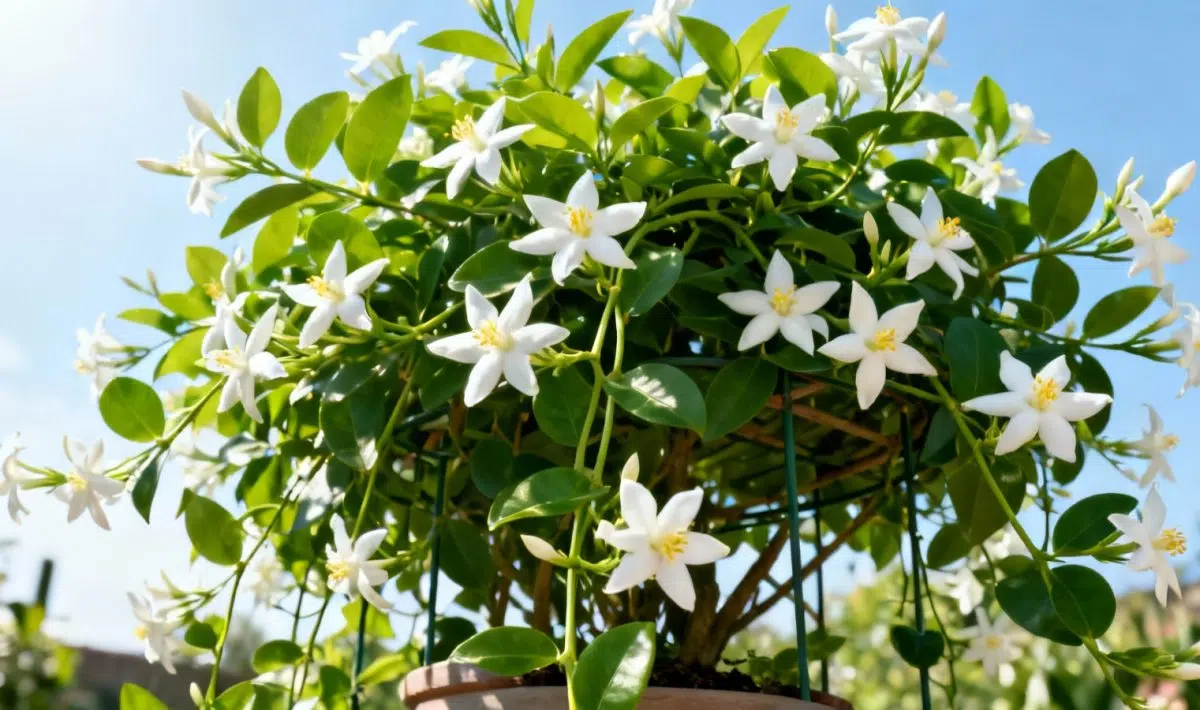
Star jasmine, also known as Trachelospermum jasminoides, is one of the most beloved fragrant climbing plants you can add to your garden. This gorgeous flowering vine produces clusters of white, star-shaped flowers that fill the air with an intoxicating sweet fragrance. However, to achieve those stunning blooms and healthy growth, understanding how much sunlight does star jasmine need is absolutely crucial for success.
Understanding star jasmine’s sunlight requirements
Star jasmine thrives best with 4 to 6 hours of direct sunlight daily. This climbing plant performs exceptionally well in full sun to partial shade conditions, though maximum flowering occurs when it receives ample sunshine. The key is finding that sweet spot where your jasmine gets enough light for robust blooms while avoiding excessive heat stress during summer months.
Most experienced gardeners recommend positioning star jasmine where it receives morning sun and some afternoon protection in extremely hot climates. This approach ensures the plant gets sufficient light for photosynthesis and flower production without suffering from scorching heat damage. Your flowering success directly correlates with proper light exposure.
Optimal light conditions for maximum flowering
Full sun exposure produces the most abundant and fragrant flowers on star jasmine plants. When planted in locations receiving 6 or more hours of direct sunlight, these climbing vines reward you with spectacular spring and summer blooms. The intense fragrance that makes jasmine so desirable becomes more pronounced with increased sun exposure.
However, star jasmine demonstrates remarkable adaptability to various light conditions. Plants growing in partial shade with just 3 to 4 hours of direct sunlight will still flower, though less prolifically than their full-sun counterparts. This flexibility makes jasmine an excellent choice for gardens with mixed light conditions.
Much like other flowering plants that appreciate similar conditions, proper sunlight exposure is fundamental for healthy development. For gardeners interested in comparing requirements across different species, you might find it useful to explore sunlight requirements for Brazilian jasmine, which shares some similarities with star jasmine cultivation needs.
Placement strategies for indoor and outdoor growing
When growing star jasmine in pots, placement becomes even more critical since you have complete control over light exposure. Position containers where they receive morning sun and can be moved if weather conditions become too harsh. Pot-grown jasmine plants often benefit from slightly less intense afternoon sun, especially during hot summer days.
For outdoor planting, select locations that provide protection from strong winds while maintaining good light exposure. Star jasmine appreciates consistent conditions rather than dramatic fluctuations in sunlight throughout the day. Consider using trellises or supports that don’t cast shadows on the climbing vine as it grows.
The versatility of jasmine makes it suitable for various garden situations. Unlike some plants that have very specific requirements, star jasmine adapts well to different growing conditions. This adaptability extends to other garden plants too – for instance, sunlight needs of selloum plants demonstrate how different species have evolved unique light preferences.
Insufficient sunlight typically manifests as poor flowering, leggy growth, and increased susceptibility to diseases. Star jasmine plants struggling with inadequate light often produce more foliage than flowers, resulting in a green but less fragrant display. If your jasmine isn’t blooming as expected, insufficient sunlight is often the culprit.
Conversely, excessive sunlight in extremely hot climates can cause leaf scorch and stress. Signs include yellowing or browning leaf edges and wilted appearance during peak sun hours. In such cases, providing some afternoon shade or increasing watering frequency helps maintain plant health.
Gardening success often comes from understanding these balance points across different plant types. Just as some plants like optimal sunlight for oregano cultivation requires specific attention to light requirements, star jasmine benefits from tailored care based on your local growing conditions.
Seasonal considerations and light management
Spring and fall typically provide ideal sunlight conditions for star jasmine, with moderate temperatures and sufficient light intensity. During these seasons, full sun exposure rarely causes problems, and plants often produce their most impressive growth spurts and flowering displays.
Summer management requires more attention, particularly in hot climates. While jasmine still needs substantial sunlight for flowering, some afternoon protection prevents heat stress. Consider using temporary shade cloth during extreme heat waves or positioning the plant where natural shade occurs during the hottest part of the day.
Winter light management depends on your climate zone. In mild winter areas, jasmine continues growing slowly and benefits from available sunlight. In colder regions where jasmine grows as an annual or container plant, ensuring adequate light becomes crucial for maintaining plant health until spring returns.
Maximizing light exposure in challenging spaces
Limited space doesn’t mean you can’t grow beautiful star jasmine. Use reflective surfaces like light-colored walls or mirrors to increase available light for plants in partially shaded areas. This technique works particularly well for pot-grown jasmine on patios or balconies with restricted sun exposure.
Pruning surrounding vegetation helps ensure your jasmine receives maximum available sunlight. Remove competing branches or overgrown shrubs that cast unnecessary shadows on your climbing vine. Regular maintenance of the growing area significantly improves light penetration and overall plant performance.
Understanding light requirements becomes even more interesting when you consider how different plants have evolved various strategies. Some species, like those detailed in Jimsonweed sunlight requirements, have adapted to very specific light conditions, while others show remarkable flexibility like our beloved star jasmine.
Choosing the right jasmine variety for your conditions
Several star jasmine cultivars offer slightly different light tolerances, making it worth selecting varieties suited to your specific garden conditions. Some cultivars perform better in partial shade, while others require full sun for optimal performance. Research available varieties from reputable nurseries or garden centers.
Consider your long-term garden planning when selecting jasmine plants or seeds. Fast-growing varieties might quickly outgrow spaces with limited light, while slower-growing types may be more suitable for containers or smaller areas with restricted sun exposure.
The growing medium also influences how well jasmine utilizes available sunlight. Well-draining soil in pots or garden beds ensures roots remain healthy and can effectively support the energy production that occurs in sun-exposed leaves. This principle applies across many garden plants, from ornamental vines to edible crops like those discussed in sunlight for successful rutabaga growth.
Practical tips for jasmine care success
Monitor your star jasmine throughout the growing season to assess whether it’s receiving adequate sunlight. Healthy plants with proper light exposure display vigorous growth, abundant flowering, and strong fragrance. Adjust placement or provide additional care as needed based on plant performance.
Keep detailed records of your jasmine’s performance in different locations and seasons. This information helps you make better decisions about future plantings and care adjustments. Note flowering times, growth rates, and any problems that arise under specific light conditions.
Remember that successful gardening often involves learning from diverse plant experiences. Whether you’re growing ornamental jasmine or exploring vegetables like optimal sunlight for growing radishes, understanding fundamental light principles improves your overall gardening success.
With proper attention to sunlight requirements, your star jasmine will reward you with years of beautiful, fragrant blooms that transform any garden space into a aromatic paradise. The investment in understanding and providing optimal light conditions pays dividends in plant health, flowering abundance, and pure garden enjoyment.

Allan is a lifelong gardening enthusiast who still gets excited when the first seedlings pop up in spring. With a deep love for nature and a hands-in-the-soil approach, he shares practical tips, plant discoveries, and clever tricks picked up over years of digging, planting, and observing. Whether you’re a new gardener or have a shed full of tools, Allan writes like a neighbor who’s always happy to swap cuttings and stories over the fence.
You can find more about Allan’s work on Malt or connect with him on LinkedIn.


