
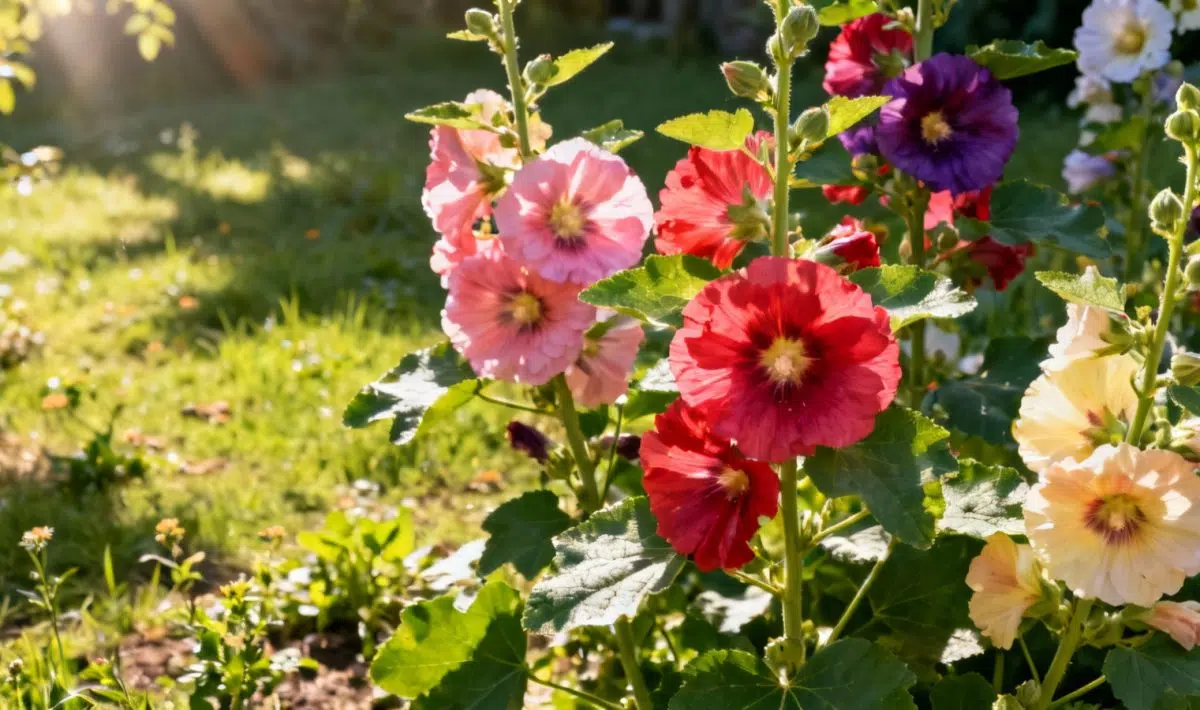
Understanding common hollyhock sunlight requirements
When it comes to growing magnificent common hollyhock flowers, understanding their light needs is absolutely crucial for success. These towering beauties require at least 6 to 8 hours of direct sunlight daily to truly flourish and produce those stunning flower spikes we all love. Without proper light exposure, your plant may struggle with poor growth and disappointing blooms.
The quality of sunlight your hollyhock receives directly impacts everything from stem strength to flower production. Full sun exposure helps these perennial favorites develop robust root systems and those characteristic tall stems that can reach impressive heights. Good lighting conditions also encourage the development of multiple flower buds along each spike.
Optimal light conditions for healthy growth
Common hollyhocks perform best in locations that receive morning sun and continued exposure throughout most of the day. This consistent light helps them photosynthesize efficiently and build the energy reserves they need for continuous blooming. The plant naturally seeks out sunny spots in the garden, much like how sunlight requirements for common lilac are essential for beautiful flowers.
When selecting seeds for your garden, you’ll want to verify that your chosen location can provide adequate sun exposure. Many happy customers who have purchased quality seeds report that proper placement in sunny areas leads to much better results than shaded locations. The value of choosing the right spot cannot be overstated.
Morning versus afternoon sun exposure
Morning sunlight is particularly beneficial for hollyhocks as it helps dry dew from leaves, reducing disease risks. However, these hardy plants can handle intense afternoon sun quite well in most climates. In extremely hot regions, some afternoon shade can actually help protect the flowers and extend their blooming period.
The communication between light and plant health becomes very apparent when you observe how hollyhocks respond to different conditions. They tend to lean toward light sources, so consistent exposure helps maintain straight, sturdy stems.
Comparing hollyhock needs with other garden plants
Hollyhocks share similar light requirements with many other sun-loving perennials and trees. For instance, optimal sunlight for silver maple demonstrates how different plant types still benefit from substantial daily light exposure for optimal growth.
Unlike shade-tolerant plants, hollyhocks simply cannot thrive in low-light conditions. They need significantly more light than sunlight needs for Kentucky bluegrass requires for optimal growth, making proper site selection critical for success.
Light requirements versus other flowering plants
When compared to other popular garden flowers, hollyhocks fall into the high-light category. They need more consistent sun exposure than many annuals but are quite adaptable once established. Their robust nature allows them to handle varying light conditions better than more delicate flowering plants.
Some gardeners who shop for various flower seeds find that hollyhocks offer excellent value because they’re relatively low-maintenance once their basic light needs are met. Customer feedback consistently shows high satisfaction with these resilient bloomers.
Choosing the perfect garden location
Selecting the ideal spot for your hollyhock seeds involves more than just checking sunlight hours. You’ll want to consider how surrounding structures, trees, or other plants might affect light availability throughout the growing season. The best locations receive consistent morning light and avoid deep shade during peak growing hours.
Many successful gardeners recommend observing potential planting sites at different times of day before making final decisions. This simple step helps ensure your investment in quality seeds will pay off with spectacular results. Similar considerations apply when planning for sunlight conditions for Mediterranean cypress or other sun-loving plants.
Garden planning for maximum sun exposure
Strategic garden planning can help maximize available sunlight for your hollyhocks. Position taller plants or structures on the north side of your garden to avoid casting shadows on your flower beds. This thoughtful approach helps ensure each plant receives the light it needs to thrive.
Consider how seasonal changes might affect light patterns in your garden. Trees that provide light shade in spring may create much denser shade by midsummer, potentially impacting your hollyhocks’ performance later in the growing season.
Best practices for successful hollyhock cultivation
Beyond providing adequate sunlight, successful hollyhock growing involves several key practices. Start with high-quality seeds from reputable sellers who provide detailed growing information and good customer service. Well-packaged seeds that arrive in excellent condition give you the best foundation for success.
Proper soil preparation complements adequate lighting to create optimal growing conditions. Hollyhocks appreciate well-draining soil that doesn’t stay waterlogged, even in sunny locations. The combination of good drainage and full sun helps prevent many common plant problems.
Supporting healthy growth through proper care
Regular monitoring helps ensure your hollyhocks continue receiving adequate light as they grow. Pruning nearby plants or adjusting garden layouts may become necessary as plants mature and potentially block sunlight. Similar attention to detail benefits other sun-loving plants like thriving blooms of treasure flower varieties.
Watering practices should complement your sunny growing conditions. Deep, infrequent watering works better than frequent shallow watering, especially in full sun locations where soil tends to dry out more quickly.
Maximizing bloom production with optimal light
Proper sunlight exposure directly correlates with flower production in hollyhocks. Plants receiving adequate daily light typically produce more flower spikes with denser blooms than those grown in suboptimal conditions. This relationship between light and flowering makes site selection crucial for gardeners seeking maximum visual impact.
Many customers who purchase hollyhock seeds report that plants grown in ideal sunny conditions often exceed expectations for both height and flower quantity. These positive experiences highlight the importance of meeting basic light requirements for best results.
Understanding how much sunlight does common hollyhock need helps gardeners make informed decisions about plant placement and care. With proper attention to light requirements, along with quality seeds and appropriate care, these magnificent flowers can become stunning focal points in any sunny garden space.

Allan is a lifelong gardening enthusiast who still gets excited when the first seedlings pop up in spring. With a deep love for nature and a hands-in-the-soil approach, he shares practical tips, plant discoveries, and clever tricks picked up over years of digging, planting, and observing. Whether you’re a new gardener or have a shed full of tools, Allan writes like a neighbor who’s always happy to swap cuttings and stories over the fence.
You can find more about Allan’s work on Malt or connect with him on LinkedIn.


