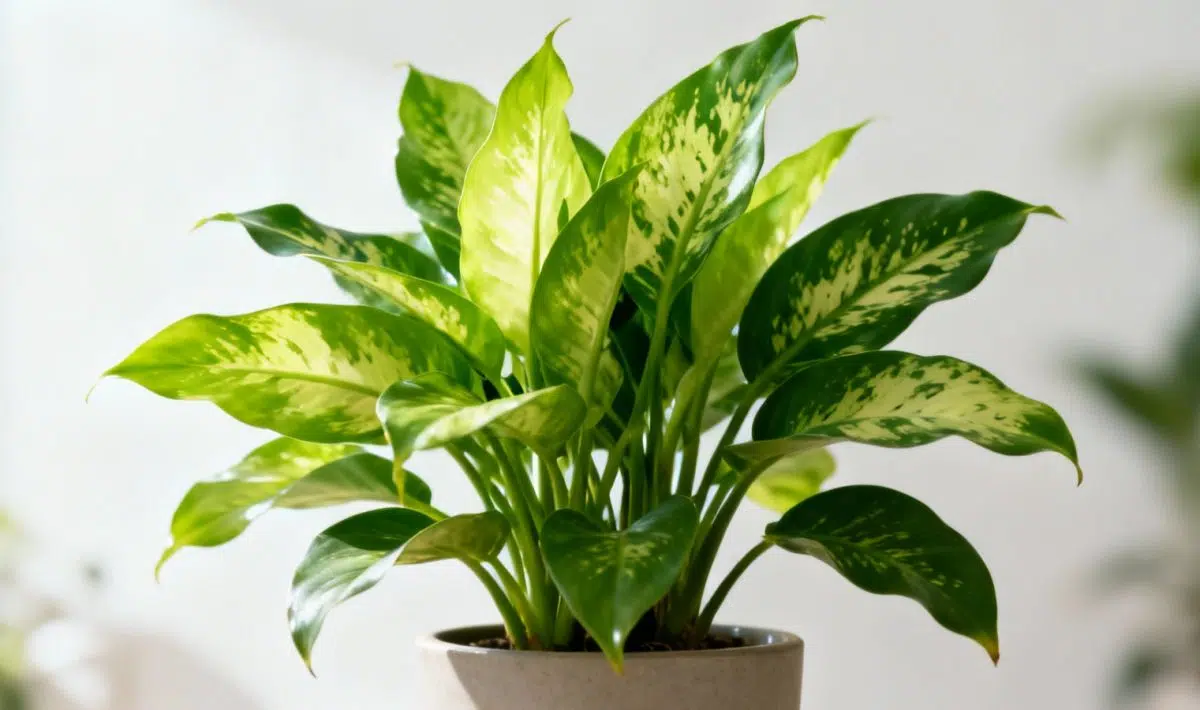
Understanding your dieffenbachia’s light requirements
Let me share something that took me years to figure out – your dieffenbachia doesn’t want to sunbathe like you do! This beautiful houseplant thrives in bright, indirect light conditions that mimic its natural rainforest habitat. While it might seem counterintuitive, too much direct sun can actually harm your plant more than help it grow.
The key is finding that sweet spot where your dieffenbachia gets enough light to photosynthesize properly without getting scorched. Most plant parents struggle with this balance, but once you understand what your dieffenbachia actually needs, you’ll see dramatic improvements in its health and growth.
What type of light works best for dieffenbachia
Your dieffenbachia absolutely loves bright, indirect light – think of it as filtered sunshine rather than harsh, direct rays. Position your plant about 1-2 meters from an east-facing window, or behind a sheer curtain if you have south or west-facing windows. This setup gives your plant the brightness it craves without the intensity that can burn its delicate leaves.
Here’s what I’ve learned from years of growing these beauties: they can tolerate some gentle morning sun or late afternoon light, but anything stronger will leave you with brown, crispy leaf edges. The morning light from an east window is particularly gentle and won’t damage your plant’s foliage.
Signs your plant isn’t getting the right amount of light
Your dieffenbachia will tell you exactly what it needs if you know how to read the signs. When your plant gets too much direct sunlight, you’ll notice brown spots or burnt patches on the leaves, especially along the edges. The beautiful variegated patterns might also fade as the plant tries to protect itself from intense light.
On the flip side, insufficient light creates its own set of problems. Your plant will become leggy, with longer spaces between leaves as it stretches toward any available light source. The gorgeous cream and green patterns will fade to mostly green, and new growth will be smaller and less vibrant than usual.
Interestingly, other tropical plants face similar challenges. For example, understanding sunlight requirements for avocados can help you better appreciate how different plants adapt to various light conditions in your home.
Finding the perfect spot in your home
I always tell fellow plant enthusiasts that placement is everything when it comes to dieffenbachia care. Your best bet is near a window that gets bright light for most of the day, but not direct sunbeams. East-facing windows are absolutely perfect because they provide gentle morning light without the harsh afternoon intensity.
North-facing windows work wonderfully too, especially if you live in a sunny climate where even indirect light is quite bright. However, if you’re in a darker region or during winter months, you might need to supplement with artificial grow lights to keep your plant happy and healthy.
What to avoid when choosing a location
Never place your dieffenbachia directly in a south or west-facing window without some protection. These locations get incredibly intense light during peak hours, which will quickly damage your plant’s beautiful foliage. Similarly, avoid spots that are more than 3 meters from any window – your plant will survive but won’t thrive in such low light conditions.
Dark corners might look aesthetically pleasing, but they’re not doing your plant any favors. While dieffenbachia can tolerate lower light than many houseplants, it still needs adequate brightness to maintain its stunning variegated leaves and healthy growth pattern.
Seasonal adjustments for optimal care
Here’s something many plant parents don’t consider – your dieffenbachia’s light needs change with the seasons. During winter months when daylight is limited, you might need to move your plant closer to a window or add supplemental lighting to maintain healthy growth.
Summer brings its own challenges, as the sun becomes much more intense. You’ll want to move your plant slightly further from windows or add sheer curtains to filter the stronger rays. Just like mulberry growth and sunlight needs vary throughout the year, your dieffenbachia requires seasonal care adjustments.
How light affects watering and overall plant health
Something fascinating happens when you get the lighting right – everything else becomes easier! Your dieffenbachia in proper bright, indirect light will have a more predictable watering schedule because it can process water more efficiently through healthy photosynthesis.
Plants in too-bright conditions often need more frequent watering because they’re working overtime to cool themselves and process intense light. Conversely, plants in low light use water much more slowly, which can lead to overwatering issues if you’re not careful with your schedule.
Creating the ideal growing environment
Beyond just light placement, consider the humidity around your plant. Dieffenbachia naturally grows in humid rainforest conditions, so maintaining 40-50% humidity will complement the proper lighting beautifully. You can achieve this with a humidity tray, regular misting (avoiding the leaves), or a small humidifier nearby.
Temperature consistency also works hand-in-hand with proper lighting. Keep your plant away from heating vents, air conditioning units, or drafty windows that might create temperature fluctuations. A stable environment allows your dieffenbachia to focus its energy on healthy growth rather than stress adaptation.
Many tropical plants share similar environmental needs. Understanding eggplant sunlight requirements explained can give you insights into how various plants respond to different light intensities and help you better care for your indoor garden.
Troubleshooting common light-related problems
If your dieffenbachia’s leaves are turning yellow, don’t panic – this is often a lighting issue that’s easily fixable. Yellow leaves usually indicate either too much direct sun (causing stress) or insufficient light (causing the plant to shed older leaves to conserve energy). Assess your plant’s location and adjust accordingly.
Brown, crispy leaf edges almost always mean too much direct sunlight. Move your plant to a location with bright but filtered light, and trim away any damaged foliage with clean scissors. Your plant will recover and produce new, healthy growth once it’s in the right conditions.
When to consider grow lights
If you’re dealing with particularly dark spaces or long winter periods, LED grow lights can be a game-changer for your dieffenbachia. Look for full-spectrum lights that you can position about 12-18 inches above your plant, running them for 10-12 hours daily to supplement natural light.
The beauty of modern grow lights is that they don’t generate excessive heat like older models, so you won’t risk burning your plant while providing the brightness it needs. Just like angel’s wings sunlight preferences can be met with artificial lighting when needed, your dieffenbachia can thrive under supplemental illumination.
Long-term care for healthy growth
Once you’ve mastered the lighting requirements, your dieffenbachia will reward you with steady growth and beautiful, vibrant foliage. Regular rotation (quarter turn weekly) ensures all sides of your plant receive equal light exposure, preventing lopsided growth and maintaining that full, bushy appearance we all love.
Remember that patience is key with houseplants. It might take several weeks for your dieffenbachia to adjust to a new lighting situation, so don’t move it around too frequently. Give it time to settle into its new spot and show you how it responds before making additional changes.
With proper bright, indirect light, consistent watering, and a bit of patience, your dieffenbachia will become a stunning centerpiece in your home. The key is understanding that this tropical beauty wants to feel like it’s living under a forest canopy – bright enough to grow vigorously, but protected from harsh direct sunlight that could damage its gorgeous leaves.
Allan is a lifelong gardening enthusiast who still gets excited when the first seedlings pop up in spring. With a deep love for nature and a hands-in-the-soil approach, he shares practical tips, plant discoveries, and clever tricks picked up over years of digging, planting, and observing. Whether you’re a new gardener or have a shed full of tools, Allan writes like a neighbor who’s always happy to swap cuttings and stories over the fence.
You can find more about Allan’s work on Malt or connect with him on LinkedIn.