
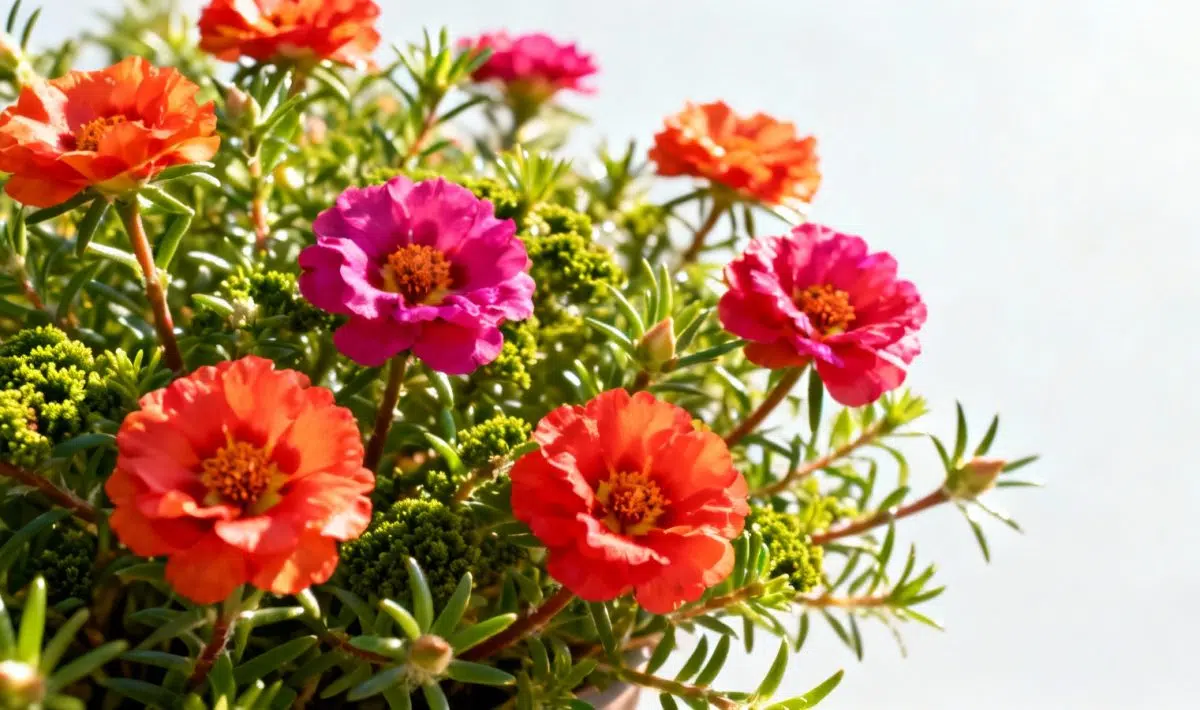
When it comes to growing moss rose (Portulaca grandiflora), understanding how much sunlight does moss rose need is absolutely crucial for success. These vibrant succulent flowers are sun-worshippers that demand plenty of bright light to produce their stunning blooms. With the right exposure, your moss rose seeds will develop into a spectacular ground cover that transforms any garden space with brilliant colors.
Essential sunlight requirements for moss rose success
Moss rose thrives in full sun conditions, requiring a minimum of 6 to 8 hours of direct sunlight daily. This plant originally comes from South America, where it evolved in arid, sun-drenched environments. For optimal flowering, position your moss rose in the sunniest spot available in your garden. Unlike many delicate flowers, moss rose can handle intense heat and bright conditions without any stress.
The quality of sunlight matters tremendously for germination and growth. Morning sun is particularly beneficial as it helps dry any moisture on the leaves, preventing potential fungal issues. However, moss rose performs exceptionally well with all-day exposure, making it perfect for south-facing gardens or areas that receive consistent light throughout the growing season.
Why proper light exposure matters for moss rose
Understanding the relationship between sunlight and moss rose growth reveals why this plant is so dependent on bright conditions. Photosynthesis in portulaca occurs most efficiently under intense light, which directly translates to more vibrant flower colors and robust plant development. When moss rose receives adequate sunlight, it produces an abundance of blooms in stunning shades that make any rocaille garden truly spectacular.
Insufficient light leads to several problems that can compromise your plant’s health. Moss rose grown in partial shade typically exhibits weak, spindly growth with significantly reduced flowering. The stems become elongated and pale, while the characteristic succulent leaves lose their plump appearance. For gardeners seeking that vibrant ground cover effect, proper sun exposure is absolutely non-negotiable.
Signs your moss rose needs more sunlight
Several clear indicators suggest your moss rose isn’t receiving enough light. Watch for these warning signs:
- Reduced flower production or complete absence of blooms
- Pale, stretched stems reaching toward light sources
- Smaller, less colorful flowers than expected
- Weak overall plant structure that can’t support its own weight
Planting moss rose seeds for optimal sun exposure
When planting moss rose seeds, choosing the right location sets the foundation for success. Select areas that receive unobstructed sunlight from morning through afternoon. Avoid spots near tall buildings, trees, or structures that cast shadows during peak daylight hours. The soil should be well-draining, as moss rose combines its love for sun with a preference for dry conditions.
Prepare your planting area by ensuring good drainage, as moss rose seeds germinate best in soil that doesn’t retain excess moisture. These remarkable seeds are incredibly small but highly resilient when given proper growing conditions. Just as sunlight requirements for rose geraniums vary among different plant types, moss rose has its own specific needs that must be respected for optimal results.
Best sowing techniques for maximum sun benefits
Start your moss rose seeds indoors about 6-8 weeks before the last frost, placing them near the brightest window available. Once seedlings develop their first true leaves, gradually introduce them to outdoor conditions. This process, called hardening off, helps young plants adapt to intense sunlight without shock.
When transplanting outdoors, choose a warm, sunny day and ensure soil temperatures have warmed adequately. Moss rose is sensitive to cold, so wait until nighttime temperatures consistently stay above 50°F. Space plants appropriately to prevent overcrowding, allowing each plant to receive maximum light exposure for healthy growth.
Maximizing flowering with proper light management
Creating the ideal environment for moss rose involves more than just finding a sunny spot. Consider companion planting with other sun-loving species that share similar water and light requirements. Plants like desert rose sunlight needs explained demonstrate how different succulents can thrive together when their environmental needs align properly.
Regular deadheading encourages continued blooming throughout the season, but only if plants receive adequate sunlight. Without sufficient light, even well-maintained moss rose will struggle to produce new flower buds. The vibrant colors that make this plant so desirable develop most intensely under bright, direct sun conditions.
Seasonal sunlight considerations
During peak summer months, moss rose handles intense heat remarkably well, unlike more sensitive garden plants. While vegetables like those discussed in optimal sunlight for growing cucumbers may need some afternoon protection, moss rose actually benefits from all-day exposure to strong sunlight.
As autumn approaches and daylight hours decrease, moss rose naturally begins its decline as an annual plant. However, during its prime growing season, consistent sunlight exposure ensures maximum flower production and the most impressive color display possible.
Common mistakes to avoid with moss rose lighting
Many gardeners underestimate just how much sun moss rose truly needs. Unlike shade-tolerant plants or those that prefer filtered light, moss rose performs poorly in anything less than full sun. Even locations that seem bright to human eyes may not provide the intensity this plant requires for optimal performance.
Another frequent error involves assuming that moss rose can adapt to partial shade over time. While some plants gradually acclimate to different light conditions, moss rose maintains its high sun requirements throughout its lifecycle. Attempting to grow this plant in inadequate light results in disappointing performance and wasted gardening effort.
Understanding proper spacing also relates to light exposure. Overcrowded plantings create shade between individual plants, reducing the light each specimen receives. Much like how trees such as those covered in sunlight needs of sycamore trees require adequate spacing for healthy development, moss rose benefits from proper plant spacing that maximizes light penetration.
Creating the perfect moss rose garden
Designing a successful moss rose display requires careful attention to sun patterns throughout your garden space. Observe how sunlight moves across potential planting areas during different times of day and seasons. The ideal moss rose garden receives consistent, direct sunlight from early morning through late afternoon.
Consider using moss rose as an edging plant along sunny walkways or as a colorful ground cover in rock gardens. These applications take advantage of the plant’s sun-loving nature while creating stunning visual impact. The low-growing habit combined with brilliant flower colors makes moss rose perfect for areas where you want maximum color with minimal maintenance.
Remember that proper sunlight exposure not only ensures beautiful blooms but also helps prevent common problems like fungal diseases that can affect plants grown in overly moist or shaded conditions. When moss rose receives adequate light, it naturally stays healthier and more resistant to environmental stresses.
With proper understanding of sunlight requirements and careful attention to placement, moss rose will reward you with months of spectacular blooms that brighten any garden space. The key lies in providing the intense, direct sunlight this remarkable plant needs to reach its full potential and create the vibrant display that makes it such a beloved choice for sunny gardens.

Allan is a lifelong gardening enthusiast who still gets excited when the first seedlings pop up in spring. With a deep love for nature and a hands-in-the-soil approach, he shares practical tips, plant discoveries, and clever tricks picked up over years of digging, planting, and observing. Whether you’re a new gardener or have a shed full of tools, Allan writes like a neighbor who’s always happy to swap cuttings and stories over the fence.
You can find more about Allan’s work on Malt or connect with him on LinkedIn.


