Understanding thyme and its water needs
Garden thyme is a Mediterranean herb that has captured the hearts of gardeners worldwide. This hardy plant thrives in conditions that many other herbs would find challenging. Understanding how often you should water your garden thyme starts with recognizing its drought-tolerant nature and preference for well-draining soil.
Thyme naturally grows in rocky, dry regions where rainfall is sporadic. This background means your garden thyme actually prefers less water than most people think. The key is finding the perfect balance between providing enough moisture for healthy growth while avoiding the waterlogged conditions that can kill this resilient plant.
What makes thyme unique among herbs
Unlike many garden plants that demand regular watering, thyme has evolved to store water efficiently in its small, thick leaves. These leaves are designed to minimize water loss, which is why they often have a silvery or gray-green appearance. The plant’s root system is also perfectly adapted to search for moisture deep in the soil rather than relying on frequent surface watering.
How often should you water your garden thyme
The simple answer is: less often than you think. Established thyme plants in garden beds typically need watering only during extended dry periods. In most climates, natural rainfall provides sufficient moisture for healthy thyme growth. However, newly planted thyme requires more attention during its first few weeks as it establishes its root system.
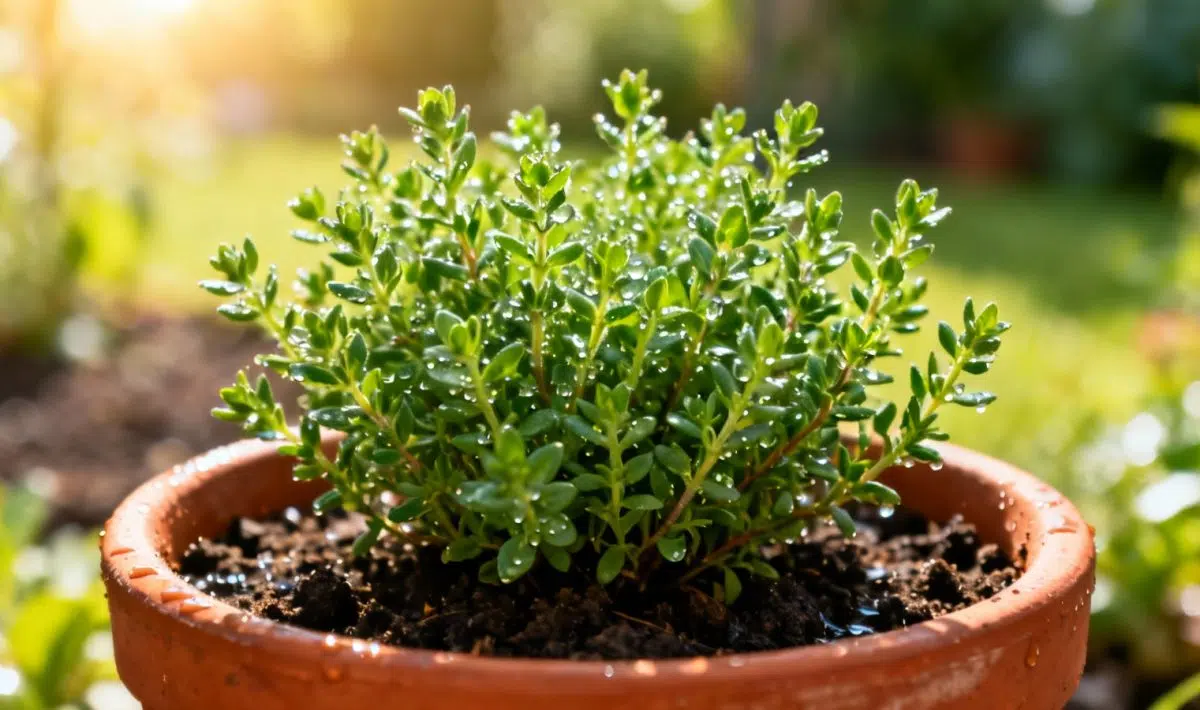
For container-grown thyme, check the soil moisture weekly by inserting your finger about an inch into the soil. If it feels dry, it’s time to water. During hot summer months, potted thyme may need water every 5-7 days, while ground-planted thyme can often go weeks without supplemental watering.
Seasonal watering adjustments
Spring brings the most active growth period for thyme, and you should water more frequently during this time if natural rainfall is insufficient. Summer watering should focus on deep, infrequent sessions that encourage roots to grow deeper. Fall typically requires minimal watering as the plant prepares for dormancy, and winter watering should be almost non-existent in most regions.
Like other Mediterranean herbs such as those discussed in our watering rosemary for optimal growth guide, thyme benefits from a consistent but minimal watering approach that mimics its natural habitat.
Signs your thyme needs water
Recognizing when your thyme actually needs water is crucial for successful cultivation. Healthy thyme leaves should feel firm and have a vibrant color. When the plant becomes stressed from lack of water, the leaves will start to look dull and may begin curling at the edges.
Wilting is another clear sign, but be careful not to confuse temporary wilting during hot afternoons with actual water stress. True water stress wilting persists into the evening hours and doesn’t recover overnight with cooler temperatures.
Visual and tactile indicators
The soil around your thyme should never be soggy or waterlogged. Good drainage is essential, and the top inch of soil should dry out between waterings. If you notice the soil staying wet for more than a day or two after watering, you may have drainage issues that need addressing.
Brown or yellow leaves at the base of the plant often indicate overwatering rather than underwatering. This is a common mistake that gardeners make when they assume all plants need frequent water. Thyme’s low water requirements make it similar to other drought-tolerant plants, and understanding these needs helps create better garden irrigation strategies like those used for proper irrigation for arborvitae.
Best watering practices for garden thyme
When you do water your thyme, make it count. Deep, thorough watering encourages the roots to grow deeper into the soil, making the plant more drought-resistant. Apply water slowly at the base of the plant, avoiding wetting the foliage which can lead to fungal problems.
Early morning is the ideal time for watering thyme. This timing allows the plant to absorb moisture before the heat of the day and ensures any water on the leaves evaporates quickly. Evening watering should be avoided as it can promote disease development in the humid nighttime conditions.
Watering techniques that work
Use a soaker hose or drip irrigation system if you’re growing thyme in larger garden areas. These methods deliver water directly to the root zone without wasting moisture through evaporation. For container plants, water slowly until you see drainage from the bottom holes.
Mulching around thyme plants helps retain soil moisture while maintaining the good drainage the plant requires. Use gravel, coarse sand, or small stones rather than organic mulches that can retain too much moisture. This approach works well for many herbs and is also effective for plants with different water needs, as seen in our watering tips for garden nasturtiums.
Soil and drainage considerations
The foundation of successful thyme cultivation lies in proper soil preparation. Thyme absolutely requires well-draining soil that doesn’t hold water around the roots. Heavy clay soils often spell disaster for thyme unless amended with sand, gravel, or raised bed construction.
The ideal soil pH for thyme ranges from 6.0 to 8.0, with slightly alkaline conditions being preferred. This pH range affects how well the plant can absorb nutrients and influences its overall water needs. Sandy or rocky soils that drain quickly are perfect for thyme cultivation.
Improving drainage for better results
If your garden has heavy soil, create raised beds or mounded planting areas to improve drainage. Mix in coarse sand, perlite, or small gravel to increase drainage capacity. Never use fine sand, which can actually worsen drainage by creating a concrete-like mixture when combined with clay.
For those dealing with different drainage challenges, understanding plant-specific needs becomes crucial. Just as thyme requires excellent drainage, other plants like those covered in our cabbage tree watering guidelines have their own specific requirements that must be understood for gardening success.
Common watering mistakes to avoid
The biggest mistake gardeners make with thyme is overwatering. This Mediterranean herb simply doesn’t need the frequent watering that many other garden plants require. Overwatering leads to root rot, fungal diseases, and ultimately plant death.
Another common error is watering thyme on the same schedule as other garden plants. Thyme’s water needs are unique, and it should be treated as the drought-tolerant herb it is. Creating separate irrigation zones for different plant types helps avoid these issues.
Recognizing and correcting overwatering
Signs of overwatering include yellowing leaves, mushy stems, and a general decline in plant vigor. If you notice these symptoms, reduce watering immediately and improve drainage around the plant. In severe cases, you may need to transplant the thyme to a better-draining location.
Remember that thyme grows best when slightly stressed by drought conditions. This stress actually concentrates the essential oils in the leaves, making your harvest more flavorful and aromatic. Regular heavy watering dilutes these oils and reduces the herb’s culinary value.
Seasonal care and maintenance
Throughout the growing season, your watering approach should adapt to changing conditions. Spring establishment requires more attention, summer demands deep but infrequent watering, and fall preparation involves reducing water to help the plant harden off for winter.
During winter months in cold climates, avoid watering altogether unless you’re growing thyme in containers that you bring indoors. Outdoor thyme plants are dormant and excess moisture during freezing weather can damage or kill the plant.
Understanding how often you should water your garden thyme becomes easier with experience. Start conservatively with minimal watering and adjust based on your plant’s response and your local climate conditions. With proper care, your thyme will provide years of aromatic harvests while requiring minimal maintenance and water input.

Allan is a lifelong gardening enthusiast who still gets excited when the first seedlings pop up in spring. With a deep love for nature and a hands-in-the-soil approach, he shares practical tips, plant discoveries, and clever tricks picked up over years of digging, planting, and observing. Whether you’re a new gardener or have a shed full of tools, Allan writes like a neighbor who’s always happy to swap cuttings and stories over the fence.
You can find more about Allan’s work on Malt or connect with him on LinkedIn.