
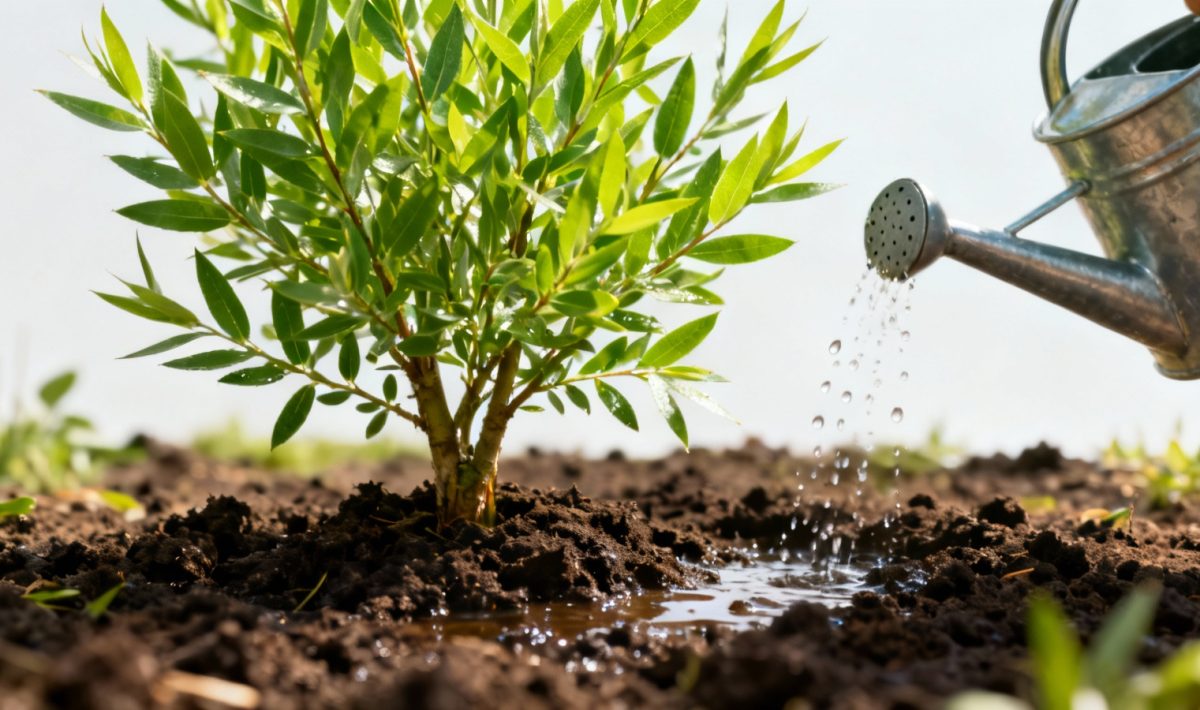
Understanding your goat willow’s water needs
The goat willow, known scientifically as Salix caprea, is a remarkably adaptable tree that thrives in various environments. However, understanding how often should you water your goat willow depends on several key factors including the plant’s age, soil conditions, and seasonal changes. This hardy species naturally grows in mountainous regions and forest habitats where moisture levels fluctuate throughout the year.
Unlike many other trees, the goat willow has specific characteristics that influence its watering requirements. The male specimens produce distinctive catkins in early spring, while the female plants develop different flowering patterns. Both varieties share similar water needs, though their root development can vary slightly based on local soil conditions.
Watering frequency for young goat willow plants
Young goat willow plants require more frequent attention than their mature counterparts. During the first three years of growth, these saplings benefit from consistent moisture to establish strong root systems. Generally, you should provide water 1-2 times per week, delivering approximately 10 liters per session for optimal development.
The key is maintaining steady soil moisture without creating waterlogged conditions. Young plants are particularly vulnerable during hot summer months when their shallow root systems cannot yet access deeper groundwater. For those interested in comprehensive plant care, exploring watering guidelines for Norfolk Island pine can provide additional insights into moisture management for different species.
Signs your young goat willow needs water
- Soil feels dry when you insert your finger 2-3 inches deep
- Leaves appear slightly wilted during midday heat
- Growth rate slows noticeably during growing season
- Soil surface shows visible cracking or hardening
Mature goat willow watering schedule
Once established after 2-3 years, mature goat willow trees become more drought-tolerant and require less frequent watering. These plants typically need 2.5 to 5 centimeters of water per week, which can come from natural rainfall or supplemental irrigation. Their extensive root systems can tap into deeper soil moisture, making them more self-sufficient.
However, during extended dry periods, even mature specimens benefit from deep, infrequent watering sessions. This approach encourages roots to grow deeper rather than spreading horizontally near the surface. Similar principles apply to other plants, as demonstrated in watering tips for thriving spearmint, where deep watering promotes healthier growth patterns.
Testing soil moisture effectively
Proper soil assessment is crucial for determining when your goat willow needs water. The finger test remains one of the most reliable methods – simply insert your finger into the soil near the tree’s base. If the top 3-4 inches feel dry, it’s time to water.
Professional gardeners often use moisture meters for more precise readings, especially when managing multiple trees. These tools provide numerical values that help you maintain consistent care routines. Additionally, observing your tree’s natural behavior patterns helps you recognize its specific needs throughout different seasons.
Seasonal watering adjustments
Spring represents the most active growth period for goat willow trees, when they require consistent moisture to support new leaf development and flowering. During this season, maintain regular watering schedules while monitoring for late frost conditions that might affect water uptake.
Summer brings the greatest watering challenges, particularly during heat waves when evaporation rates increase dramatically. You may need to water more frequently during these periods, sometimes increasing to 3 times per week for younger plants. Just as with optimal watering for healthy loquat growth, consistency during hot weather proves essential for tree health.
Winter and autumn considerations
Autumn watering should gradually decrease as temperatures drop and the tree enters dormancy. However, don’t completely stop watering until the ground freezes, as roots continue functioning even when top growth slows. Winter typically requires minimal intervention, though occasional deep watering during warm spells can benefit the tree.
Spring preparation begins in late winter when you should resume regular monitoring. This timing helps ensure your goat willow has adequate moisture reserves for the upcoming growing season. Many gardeners find that understanding diverse watering needs, such as those discussed in caring for rosemary with proper watering, improves their overall garden management skills.
Climate impact on watering needs
Regional climate plays a significant role in determining watering frequency for your goat willow. Trees growing in naturally humid environments require less supplemental watering than those in arid regions. Mountain habitats, where these trees naturally thrive, typically provide consistent moisture from morning dew and occasional rainfall.
During prolonged drought conditions, even well-established trees may show stress signs including leaf yellowing or premature drop. In these situations, increase watering frequency while ensuring good drainage to prevent root rot. The goal is maintaining consistent soil moisture rather than alternating between bone-dry and saturated conditions.
Finding the perfect watering balance
Successfully watering your goat willow requires understanding the delicate balance between too much and too little moisture. These resilient trees prefer consistently moist but well-draining soil that mimics their natural forest habitats. Regular observation and adjustments based on seasonal changes, plant age, and local climate conditions ensure optimal growth.
Remember that overwatering can be just as harmful as drought stress, potentially leading to root rot and other fungal issues. By following these guidelines and paying attention to your tree’s specific responses, you’ll develop an intuitive understanding of its needs. This knowledge will serve you well as your goat willow matures into a beautiful, thriving specimen in your landscape.

Allan is a lifelong gardening enthusiast who still gets excited when the first seedlings pop up in spring. With a deep love for nature and a hands-in-the-soil approach, he shares practical tips, plant discoveries, and clever tricks picked up over years of digging, planting, and observing. Whether you’re a new gardener or have a shed full of tools, Allan writes like a neighbor who’s always happy to swap cuttings and stories over the fence.
You can find more about Allan’s work on Malt or connect with him on LinkedIn.


