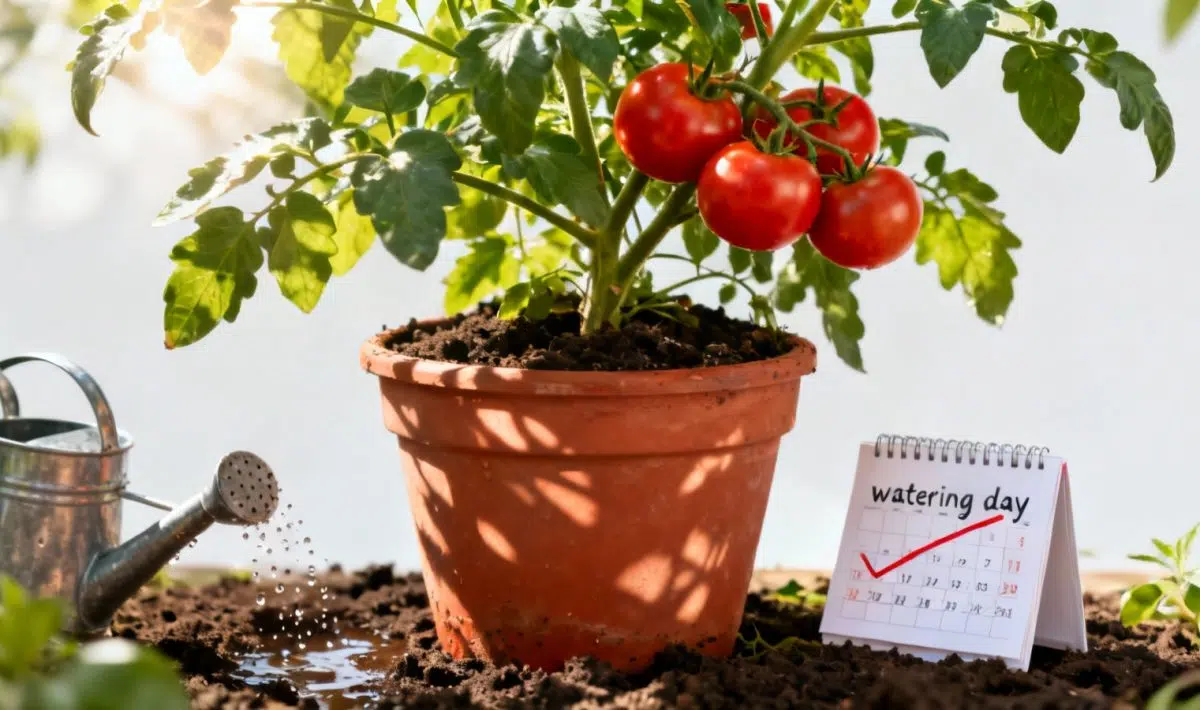
When you grow tomatoes, understanding their water requirements is crucial for producing healthy plants and abundant harvests. Tomato plants are particularly sensitive to both overwatering and underwatering, which makes getting the frequency right essential for success. The key lies in providing deep, infrequent watering rather than frequent shallow drinks.
Generally, you should water your tomato plants 2-3 times per week during normal summer conditions. This approach encourages deep root development, which helps plants access water and nutrients more effectively. However, this frequency can vary significantly based on several important factors that we’ll explore throughout this article.
Factors that influence how often you water tomatoes
Several environmental and plant-specific factors determine when your tomatoes need water. Soil type plays a major role – clay soils retain moisture longer and require watering every 4-5 days, while sandy soils drain quickly and may need water every 2-3 days. The depth of watering should reach 20-25 cm in clay soil and 15-20 cm in sandy soil for optimal results.
Weather conditions dramatically affect watering frequency. During hot spells above 30°C, you may need to double your watering schedule, especially for container plants which dry out faster. Conversely, during cooler or humid periods, reduce watering frequency to prevent waterlogged roots. Just as different plants have varying needs, similar to how you might follow a watering schedule for Norfolk Island pine, tomatoes require their own specific approach.
Growth stage considerations
Young tomato plants and seedlings require more frequent but lighter watering to establish their root systems. Water them every 1-2 days with smaller amounts, keeping the soil consistently moist but not soggy. As plants mature, transition to deeper, less frequent watering sessions.
During flowering and fruit development, maintain consistent moisture levels to prevent problems like blossom end rot. This condition occurs when calcium uptake is disrupted by irregular watering patterns. Stick to your regular 2-3 times per week schedule, but monitor soil moisture more closely during these critical growth phases.
Signs your tomatoes need water
Learning to read your plants’ signals helps you determine when they need water. The most reliable method is checking soil moisture by inserting your finger 2-3 inches into the soil near the base of the plant. If the soil feels dry at this depth, it’s time to water.
Visual cues from the plants themselves can also guide your watering decisions. Leaves may appear slightly wilted during the hottest part of the day, but this is normal. However, if leaves remain droopy in the evening or early morning, your plants likely need more water. Conversely, yellowing lower leaves often indicate overwatering.
Container-grown tomatoes dry out much faster than garden plants and may need daily attention during peak summer. Check containers by lifting them slightly – lighter pots indicate dry soil. Much like maintaining proper moisture for other plants, understanding these signs helps you develop effective watering tips for healthy gladiolus blooms or any garden plant.
Effective watering techniques for tomatoes
The method you use to water your tomatoes is just as important as the frequency. Water at the base of plants rather than overhead to reduce disease risk and ensure water reaches the root zone effectively. Use a soaker hose, drip irrigation, or water slowly with a watering can to allow deep penetration.
Apply approximately 20-30 liters of water per square meter per week, which translates to about 2-3 liters per plant for standard spacing. Water early in the morning when possible, as this gives plants time to absorb moisture before the heat of the day and reduces evaporation losses.
Mulching around your tomato plants helps retain soil moisture and reduces watering frequency. Apply a 2-3 inch layer of organic mulch like straw or wood chips, keeping it a few inches away from the plant stem to prevent pest issues.
Container growing advantages for limited spaces
Growing vegetables in containers offers excellent opportunities for gardeners with limited space. Tomatoes grow exceptionally well in large containers (minimum 20-gallon capacity), and you can easily control soil quality and drainage. This method also allows you to move plants to optimal locations for sun exposure and weather protection.
Container gardening lets you grow a variety of vegetables beyond tomatoes. Lettuce, spinach, radish, and beans all thrive in pots with proper care. The controlled environment makes it easier to manage watering schedules and provides better protection from soil-borne diseases. For gardeners interested in expanding their container garden, learning about optimal watering for Tutsan growth can help diversify your plant selection.
When growing tomatoes in containers, choose varieties that are well-suited to pot culture. Determinate varieties or compact indeterminate types produce good yields without requiring excessive space. Ensure containers have adequate drainage holes and use high-quality potting mix rather than garden soil.
Common watering mistakes to avoid
One of the most frequent errors is watering little and often, which encourages shallow root development. Instead, water deeply but less frequently to promote strong, deep root systems that can access moisture during dry periods. This approach makes plants more resilient and reduces your overall watering workload.
Overhead watering late in the day creates ideal conditions for fungal diseases. Water hits the leaves and doesn’t have time to dry before cooler evening temperatures set in. If you must water overhead, do it early morning so foliage dries quickly as temperatures rise.
Another common mistake is inconsistent watering schedules. Tomatoes prefer steady moisture levels, and dramatic fluctuations between very wet and very dry conditions stress plants and can cause fruit cracking or blossom end rot. Just as consistency matters for herbs like those requiring specific how to water your spearmint plants care, tomatoes benefit from regular attention.
Seasonal watering adjustments
Spring watering focuses on establishing young plants without overwhelming their developing root systems. Start with lighter, more frequent watering and gradually transition to deeper sessions as plants mature. Watch for late frost threats which may require covering plants and adjusting watering accordingly.
Summer demands the most attention to watering schedules. High temperatures and longer days increase water consumption significantly. Monitor soil moisture daily and be prepared to water more frequently during heat waves. Container plants may need twice-daily watering during extreme heat.
As autumn approaches, gradually reduce watering frequency as temperatures cool and plant growth slows. This helps plants prepare for dormancy and prevents problems with excess moisture during cooler weather. Continue harvesting ripe tomatoes while gradually scaling back care as the growing season ends.
Allan is a lifelong gardening enthusiast who still gets excited when the first seedlings pop up in spring. With a deep love for nature and a hands-in-the-soil approach, he shares practical tips, plant discoveries, and clever tricks picked up over years of digging, planting, and observing. Whether you’re a new gardener or have a shed full of tools, Allan writes like a neighbor who’s always happy to swap cuttings and stories over the fence.
You can find more about Allan’s work on Malt or connect with him on LinkedIn.