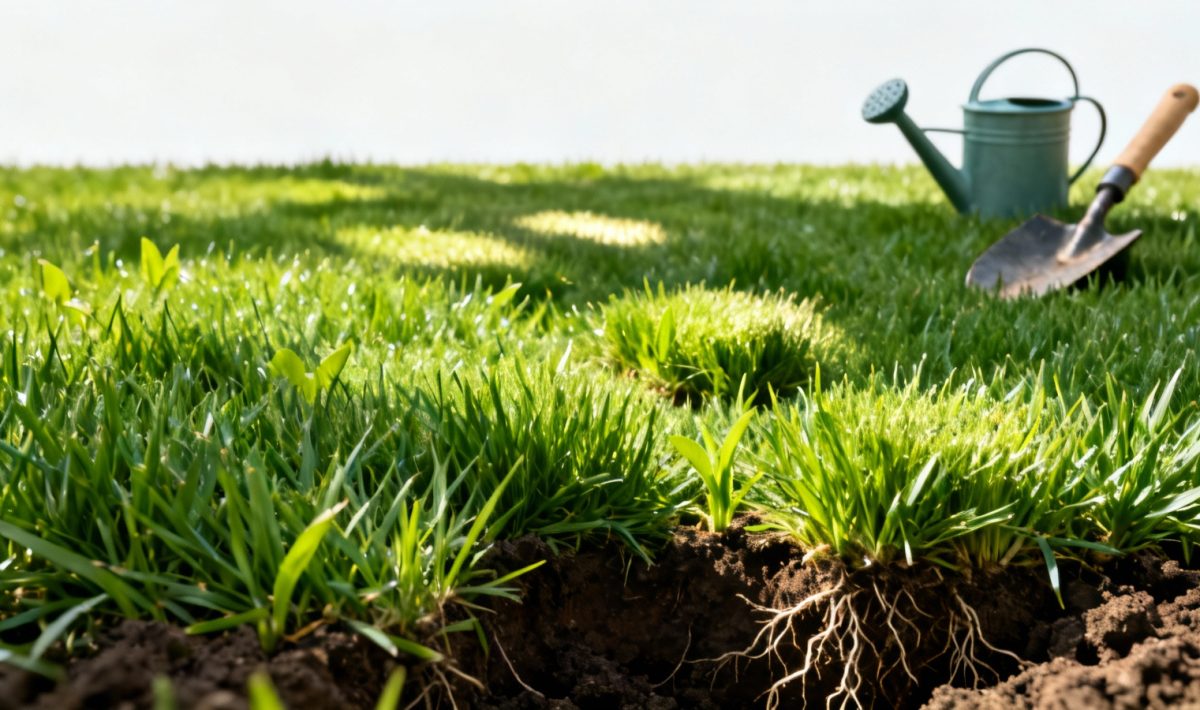
Kentucky bluegrass, scientifically known as Poa pratensis, stands out as one of the most popular cool-season grasses across North America. This perennial species creates dense, dark green lawns through its impressive rhizome system and exceptional recovery abilities after foot traffic. Despite its name suggesting American origins, this versatile grass species actually originated in Europe and has become naturalized throughout northern regions of the continent.
The remarkable adaptability of Kentucky bluegrass makes it suitable for zones 3 through 9, thriving in areas with cold winters and moderate summers. Its deep blue-green color and fine texture have made it the gold standard for premium lawn installations. However, success with this species requires understanding its specific growth patterns and environmental preferences.
Key characteristics of Poa pratensis
The identification of Kentucky bluegrass begins with examining its distinctive leaf structure and growth habit. Individual blades feature a characteristic boat-shaped tip and prominent parallel veins running lengthwise. The leaves typically measure 2-4mm in width and display that signature blue-green hue that gives the species its common name.
Underground, the rhizome system creates the foundation for this grass’s success. These horizontal stems spread laterally, producing new shoots and creating the dense sod that Kentucky bluegrass is famous for. This growth pattern allows damaged areas to recover naturally as surrounding healthy grass fills in bare spots through rhizome expansion.
The species demonstrates remarkable tolerance to foot traffic, making it ideal for high-use areas like sports fields and family lawns. During peak growing seasons in spring and fall, established Kentucky bluegrass can withstand considerable wear while maintaining its attractive appearance. Just as gardeners appreciate the resilience found when they care for Pontic rhododendron plants, lawn enthusiasts value this grass’s ability to bounce back from stress.
Soil requirements and adaptability
Kentucky bluegrass performs best in well-drained soils with a pH between 6.0 and 7.0. The species tolerates various soil types but struggles in consistently wet or poorly drained areas. Heavy clay soils benefit from organic amendments to improve drainage, while sandy soils may require additional organic matter to retain moisture and nutrients.
Proper soil preparation involves testing pH levels and adjusting as needed with lime or sulfur applications. The grass also requires adequate fertility, responding well to balanced fertilizer programs that support steady growth without promoting excessive leaf production at the expense of root development.
Cultivation techniques for optimal growth
Successful Kentucky bluegrass cultivation starts with timing seeding operations correctly. Fall seeding typically produces the best results, as cool temperatures and increased moisture create ideal germination conditions. Spring seeding can work but requires more intensive irrigation management during the critical establishment period.
Seed preparation involves choosing high-quality varieties suited to local climate conditions. Modern cultivars offer improved disease resistance and drought tolerance compared to older varieties. Seeding rates generally range from 2-3 pounds per 1,000 square feet for new lawns, with higher rates used for overseeding existing turf.
The establishment period requires consistent moisture without waterlogging. Light, frequent irrigation keeps the soil surface moist until germination occurs, typically within 14-21 days under favorable conditions. Once seedlings emerge, gradually reduce watering frequency while increasing application depth to encourage deep root development.
Maintenance practices for healthy turf
Regular mowing maintains Kentucky bluegrass at its optimal height, typically between 2.5-3.5 inches during the growing season. Taller cutting heights promote deeper root systems and improved drought tolerance. Sharp mower blades ensure clean cuts that heal quickly and resist disease infection.
Fertilization programs should reflect the grass’s seasonal growth patterns. Spring applications support emergence from dormancy, while fall feeding strengthens the plant for winter survival. Avoid heavy nitrogen applications during summer stress periods, as this can weaken the grass and increase susceptibility to disease problems. Similar to techniques used when growing apricot fruit trees, timing nutrient applications correctly maximizes plant health and performance.
Propagation methods and establishment
Kentucky bluegrass propagation occurs through both seed production and vegetative spread via rhizomes. For large-scale establishment, seeding remains the most economical option. However, understanding the natural spreading ability helps in managing existing stands and planning renovation projects.
Vegetative propagation through rhizomes allows established grass to fill in thin areas naturally. This process works best when surrounding turf is healthy and growing conditions are favorable. Mechanical practices like overseeding and slice-seeding can supplement natural spreading in areas requiring faster coverage.
Sod installation provides instant coverage but requires proper soil preparation and establishment care. The rhizome system must develop connections with the underlying soil for long-term success. Adequate moisture and proper soil contact ensure successful sod establishment, typically achieved within 2-3 weeks under good conditions.
Common challenges and solutions
Summer stress represents one of the primary challenges with Kentucky bluegrass management. The species naturally slows growth and may enter dormancy during prolonged hot, dry periods. Deep, infrequent watering helps maintain root activity during stress periods without promoting shallow root systems.
Disease pressure increases during humid conditions, particularly in late spring and early summer. Proper air circulation, appropriate mowing heights, and avoiding excessive nitrogen can reduce disease incidence. Brown patch and summer patch represent the most common fungal issues affecting Kentucky bluegrass in many regions.
Weed competition poses ongoing challenges, especially during establishment periods when grass coverage remains incomplete. Pre-emergent herbicide applications in early spring prevent annual weed germination, while post-emergent treatments address existing weed problems. Much like maintaining pristine conditions when cultivating cucumbers in your garden, consistent monitoring and timely interventions prevent small problems from becoming major issues.
Seasonal management strategies
Spring management focuses on promoting recovery from winter dormancy and supporting active growth. Early spring fertilization with a balanced fertilizer encourages green-up and root development. Pre-emergent herbicide applications prevent summer annual weeds from establishing in the warming soil.
Summer care emphasizes stress management and maintaining plant health during challenging conditions. Raising mowing heights and reducing traffic helps the grass cope with heat stress. Irrigation management becomes critical, with deep, infrequent watering preferred over frequent shallow applications that promote shallow rooting.
Fall represents the most important season for Kentucky bluegrass management. Active growth resumes as temperatures moderate, making this the ideal time for overseeding, fertilization, and renovation projects. The grass stores carbohydrates during fall growth that support winter survival and spring recovery. Professional landscapers often schedule major maintenance activities during this window, just as they time operations for growing oxeye daisies effectively to maximize success rates.
Long-term sustainability considerations
Sustainable Kentucky bluegrass management balances aesthetic goals with environmental responsibility. Reduced input approaches focus on building soil health and selecting adapted varieties that require fewer resources. Native grass alternatives may be appropriate in areas where Kentucky bluegrass struggles due to climate limitations.
Water conservation strategies become increasingly important in regions facing drought restrictions. Drought-tolerant cultivars and improved irrigation efficiency help maintain acceptable turf quality while reducing water consumption. Understanding the natural growth cycles allows managers to work with the grass’s biology rather than against it.
Integrated pest management approaches minimize chemical inputs while maintaining turf health. Cultural practices like proper fertilization and mowing create conditions that favor grass health over pest problems. When treatments become necessary, targeted applications prove more effective and environmentally responsible than broad-spectrum approaches. This philosophy extends to other landscape plants as well, including specialized care techniques for taking care of Oriental arborvitae and other garden specimens that benefit from thoughtful, sustainable management practices.
Allan is a lifelong gardening enthusiast who still gets excited when the first seedlings pop up in spring. With a deep love for nature and a hands-in-the-soil approach, he shares practical tips, plant discoveries, and clever tricks picked up over years of digging, planting, and observing. Whether you’re a new gardener or have a shed full of tools, Allan writes like a neighbor who’s always happy to swap cuttings and stories over the fence.
You can find more about Allan’s work on Malt or connect with him on LinkedIn.