
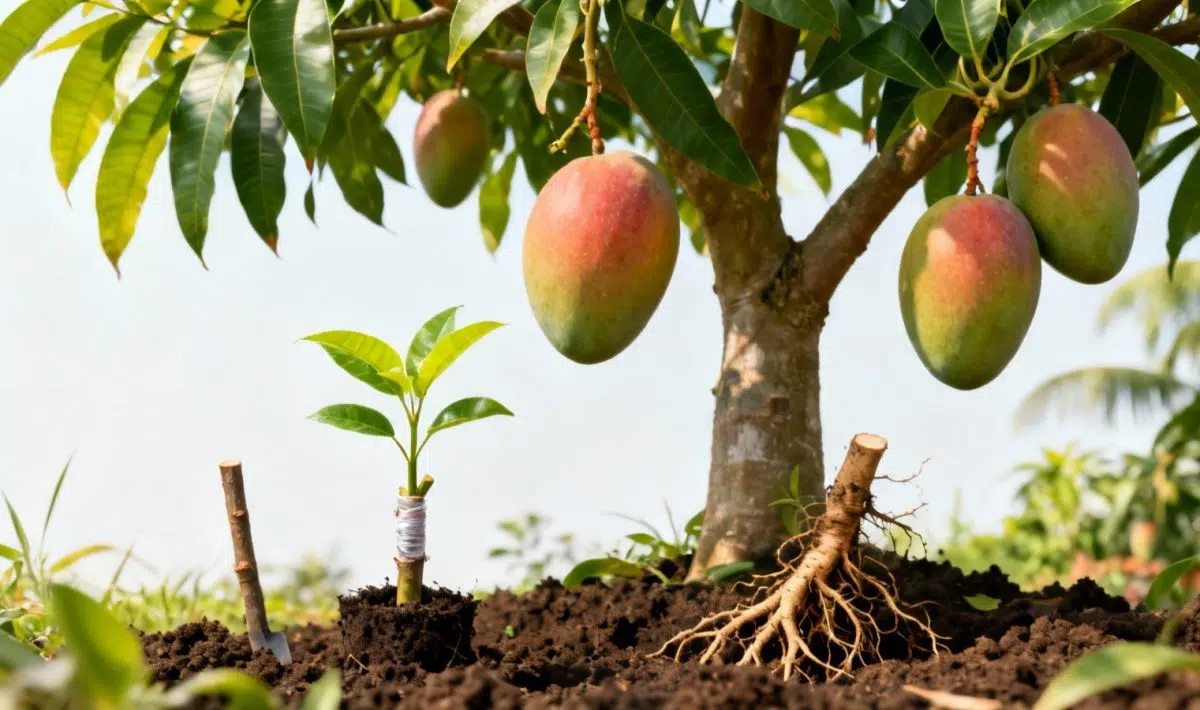
Understanding the magnificent mango tree
The mango tree (Mangifera indica) stands as one of the most beloved tropical fruit trees worldwide, captivating gardeners with its lush foliage and delicious fruits. These majestic trees can reach impressive heights of 30 to 40 meters in their natural habitat, developing dense, spreading crowns that provide excellent shade. The mango tree belongs to the Anacardiaceae family and represents the most economically important species among the 69 varieties in the Mangifera genus.
What makes mango trees particularly fascinating are their dual root systems. They develop deep anchor roots that access underground water sources while maintaining shallow surface roots for nutrient absorption. This remarkable adaptation allows them to thrive in various soil conditions and explains their incredible longevity of up to 300 years.
Key characteristics of mango varieties
Mango trees display persistent foliage with alternating leaves that create beautiful dense canopies. Their flowering season typically occurs from April to June, producing yellow blooms arranged in panicles containing hundreds of small hermaphrodite or male flowers. The fragrant blossoms attract numerous pollinators, though gardeners should note that some people may experience respiratory allergies from the flower pollen.
The fruit characteristics vary significantly among the over 70 cultivars available through grafting selection. While traditional seed-grown mangoes often produce fibrous fruits, modern varieties have been carefully selected for their smooth, less fibrous texture. Fruits typically mature from September to November, developing into oval-shaped drupes with vibrant colors ranging from green and yellow to deep red and purple.
Different mango varieties offer unique shapes, sizes, and flavors. Some produce large fruits weighing over a pound, while others yield smaller, perfectly sized mangoes for individual consumption. The weight and size variations make it possible to choose varieties that suit specific growing conditions and personal preferences.
Popular mango cultivars for home gardens
Many gardeners prefer grafted varieties because they produce superior fruits compared to seed-grown trees. These selected cultivars often feature reduced fiber content, enhanced sweetness, and more predictable fruit characteristics. When choosing varieties for propagation, consider factors like local climate conditions, available space, and desired fruit qualities.
Essential care requirements for healthy growth
Proper mango tree care begins with understanding their tropical nature and temperature sensitivity. These trees cannot tolerate any frost or freezing temperatures, suffering damage at 0°C and requiring minimum temperatures of 16°C for active growth. The optimal temperature range for vigorous development falls between 20-27°C, making them perfect for warm, humid climates.
Watering young mango trees requires careful attention to avoid both drought stress and waterlogged conditions. During the first few years, maintain consistent moisture levels without allowing water to pool around the roots. Mature trees develop excellent drought tolerance but produce better fruit yields with regular irrigation during dry periods.
Fertilization strategies for optimal fruit production
Feeding mango trees involves providing balanced nutrition throughout their growing seasons. Apply organic compost annually around the tree base, extending to the drip line where feeder roots concentrate. During active growth periods, supplement with balanced fertilizers containing nitrogen, phosphorus, and potassium in appropriate ratios.
Young trees benefit from more frequent fertilization to support rapid growth and establishment. As they mature, reduce feeding frequency but increase quantities to support fruit production. Avoid excessive nitrogen during flowering and fruiting periods, as this can reduce yield quality.
Pruning techniques for shape and health
Regular pruning maintains tree health, improves air circulation, and facilitates easier harvesting. Remove dead, diseased, or crossing branches during dormant periods to prevent pest problems and encourage strong structural development. Shape young trees by selecting main scaffold branches and removing competing leaders.
For mature trees, focus on removing water sprouts, maintaining canopy height for harvesting convenience, and opening the center for better light penetration. Proper pruning techniques help prevent overcrowding and reduce disease pressure while promoting consistent fruit production.
Successful propagation methods
Mango propagation can be accomplished through several methods, each with distinct advantages and considerations. Seed propagation represents the most natural approach, though results can vary significantly in fruit quality and tree characteristics. Fresh seeds from ripe mangoes germinate readily when planted immediately after extraction.
For seed propagation, select plump, healthy seeds from high-quality fruits. Plant them in well-draining soil mix, maintaining consistent moisture and warm temperatures around 25-30°C. Germination typically occurs within 2-3 weeks under optimal conditions, though some varieties may take longer to sprout.
Just as you might discover cucumber propagation methods for vegetable gardens, understanding mango propagation opens doors to expanding your tropical fruit collection. The key lies in providing consistent warmth and moisture during the critical early growth phases.
Advanced grafting techniques
Grafting provides superior results for commercial and serious home cultivation, ensuring consistent fruit quality and earlier production. This method involves joining selected cultivar scions to established rootstock, combining desirable fruit characteristics with robust root systems. Successful grafting requires proper timing, clean cuts, and appropriate aftercare.
Young grafted trees typically begin producing fruit within 3-5 years, compared to 5-8 years for seed-grown specimens. This acceleration makes grafting particularly attractive for gardeners wanting quicker results from their cultivation efforts.
Creating optimal growing conditions
Successful mango cultivation depends heavily on providing appropriate environmental conditions that mimic their tropical origins. These trees thrive in full sun exposure with protection from strong winds that can damage branches and reduce flowering. Choose planting locations with excellent drainage to prevent root rot issues.
Soil requirements include well-draining compositions with pH levels between 6.0-7.0 for optimal nutrient uptake. Sandy loam soils work excellently, though trees adapt to various soil types when drainage remains adequate. Improve heavy clay soils by incorporating organic matter and creating raised planting areas.
When planning mango orchards or multiple tree plantings, allow adequate spacing between trees to prevent competition and promote healthy development. Standard-sized varieties require 25-30 feet between trees, while dwarf cultivars can be planted closer together at 15-20 foot intervals.
Managing common cultivation challenges
Mango trees face several potential problems that require preventive management strategies. Fungal diseases like anthracnose and powdery mildew can affect leaves and fruits, particularly during humid conditions. Maintain good air circulation through proper pruning and avoid overhead watering during vulnerable periods.
Pest management involves monitoring for common insects like mango seed weevils, scale insects, and fruit flies. Regular inspection allows early detection and treatment before problems become severe. Integrated pest management approaches combining cultural practices with targeted treatments provide sustainable control methods.
Similar to how you might explore apricot cultivation tips for temperate fruit growing, understanding mango tree needs helps create thriving tropical gardens. The principles of proper spacing, soil preparation, and pest management apply across many fruit species.
Harvesting and enjoying your mango fruits
Determining mango ripeness requires understanding variety-specific indicators beyond simple color changes. Many varieties develop aromatic fragrances when approaching maturity, while others show subtle skin color shifts or yield slightly to gentle pressure. Harvest timing affects both flavor development and storage potential.
Proper harvesting involves cutting fruits with short stem portions rather than pulling them from branches. This prevents damage to both fruits and trees while maintaining better post-harvest quality. Handle harvested mangoes carefully to avoid bruising that can lead to rapid deterioration.
Fresh mangoes can be enjoyed immediately or stored for gradual ripening at room temperature. The satisfaction of growing your own tropical fruits makes the patient cultivation process incredibly rewarding, whether you’re tending to a single tree or developing a diverse collection that might include plants similar to those you’d learn about Canna indica care for ornamental tropical gardening.
Maximizing fruit production potential
Encouraging consistent annual fruit production involves managing tree stress and providing optimal growing conditions throughout the year. Avoid excessive pruning during flowering periods and ensure adequate water availability during fruit development stages. Some varieties produce better yields when multiple cultivars grow nearby for cross-pollination benefits.
Understanding your specific variety’s characteristics helps optimize management practices for maximum productivity. Whether you’re growing compact varieties suitable for containers or full-sized trees for substantial harvests, proper care attention rewards gardeners with abundant, flavorful fruits that capture the essence of tropical paradise right in your own backyard.

Allan is a lifelong gardening enthusiast who still gets excited when the first seedlings pop up in spring. With a deep love for nature and a hands-in-the-soil approach, he shares practical tips, plant discoveries, and clever tricks picked up over years of digging, planting, and observing. Whether you’re a new gardener or have a shed full of tools, Allan writes like a neighbor who’s always happy to swap cuttings and stories over the fence.
You can find more about Allan’s work on Malt or connect with him on LinkedIn.


