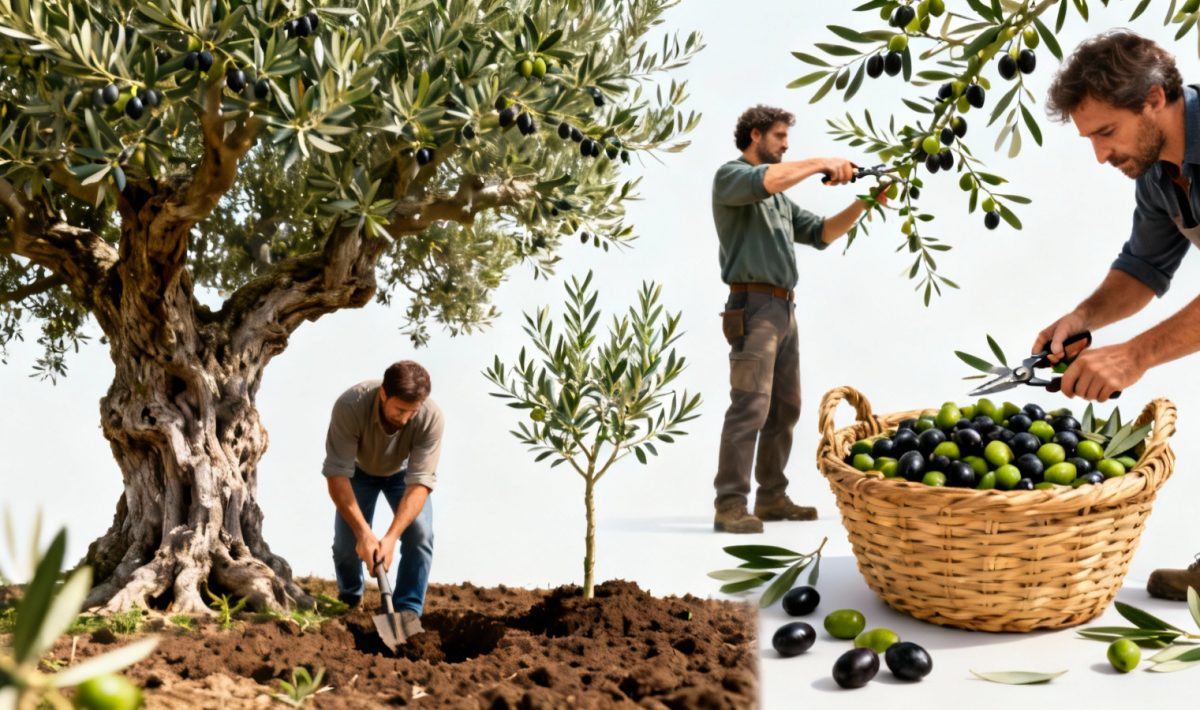
Olive tree care: planting, cultivation and harvesting techniques for Olea europaea
The olive tree, scientifically known as Olea europaea, stands as one of humanity’s oldest cultivated treasures. This magnificent Mediterranean native has been gracing our landscapes for over 6,000 years, producing the golden liquid we know as olive oil. Today, I’m thrilled to share everything you need to know about growing these remarkable trees in your own garden.
Whether you’re dreaming of harvesting your own olives or simply want to add this iconic tree to your landscape, understanding proper care techniques will ensure your success. These ancient beauties can live for thousands of years, making them a truly lasting investment in your garden’s future.
Olive trees are evergreen marvels that typically reach 15-20 meters in their natural habitat. However, most gardeners maintain them at a more manageable 3-7 meters through regular pruning. The silvery-green foliage creates a stunning contrast against the gnarled, weathered trunk that develops character with age.
The flowers appear in spring, usually between April and May, producing small white-cream clusters. What’s fascinating is that these trees are wind-pollinated, and only about 5-10% of flowers actually develop into fruit under optimal conditions. The olives themselves start green and gradually turn purple-black as they ripen from September through December.
Popular varieties include ‘Picholine’, which is self-fertile and produces excellent table olives, and ‘Frantoio’, known for its cold tolerance and superior oil production. Each variety brings its own unique characteristics to both fruit quality and tree resilience.
Ideal planting conditions for olive cultivation
Choosing the right location is absolutely crucial for your olive tree’s success. These Mediterranean natives crave full sun exposure and well-draining soil. They’re remarkably drought-tolerant once established, thanks to their deep root system that can access water at impressive depths.
The best planting time is during spring, after the last frost has passed. This gives your tree the entire growing season to establish itself before facing winter challenges. When selecting your spot, ensure there’s adequate space for mature growth and good air circulation to prevent fungal issues.
Soil preparation involves creating excellent drainage, as olive trees absolutely cannot tolerate waterlogged conditions. If you’re dealing with heavy clay, consider raised planting or soil amendments to improve structure. Just as care for apricot trees effectively requires attention to soil conditions, olives need that same thoughtful preparation.
Essential watering and irrigation techniques
Understanding olive tree water needs changes everything about their care. Young trees require regular watering during their first two years, but mature specimens are incredibly drought-resistant. The key is deep, infrequent watering rather than frequent shallow irrigation.
During the growing season, provide water when the top few inches of soil feel dry. A mature olive tree typically needs about 1 inch of water weekly, including rainfall. However, during fruit development, consistent moisture becomes more important for preventing fruit drop and ensuring good oil content.
Drip irrigation systems work wonderfully for olive groves, delivering water directly to the root zone while keeping foliage dry. This method reduces disease pressure and conserves water efficiently. Winter watering should be minimal, as these trees naturally slow their growth during cooler months.
Pruning and maintenance essentials
Proper pruning transforms your olive tree from a wild shrub into a productive, beautiful specimen. The best time for major pruning is late winter or early spring, just before new growth begins. This timing allows you to see the tree’s structure clearly while avoiding frost damage to fresh cuts.
Start by removing dead, diseased, or crossing branches. Then focus on opening the center of the tree to improve air circulation and light penetration. Olive trees fruit on previous year’s wood, so avoid excessive pruning that removes too many fruiting branches.
Annual maintenance includes light pruning to maintain shape and size. Remove water sprouts and suckers that grow from the base, as these drain energy from fruit production. Much like growing cucumbers in your garden requires regular maintenance, olive trees thrive with consistent care.
Managing common diseases and pests
Olive trees face several common challenges that every grower should understand. The olive fruit fly is perhaps the most serious pest, laying eggs directly in developing fruit. Prevention involves proper sanitation, removing fallen fruit, and timing harvests appropriately.
Peacock spot disease appears as circular lesions on leaves and can cause significant defoliation. Good air circulation, avoiding overhead watering, and copper-based fungicides help manage this issue. Regular inspection of your trees allows early detection and treatment.
Scale insects occasionally attack olive trees, appearing as small bumps on branches and leaves. Horticultural oil applications during dormant season effectively control these pests. Remember that healthy, well-maintained trees resist problems better than stressed specimens.
Harvesting your olive crop
The timing of olive harvest dramatically affects both quantity and quality of your crop. Green olives are harvested earlier in the season, typically September through October, while black olives are left to fully ripen until November or December.
For table olives, harvest when fruits have reached full size but before complete ripening. Oil production benefits from fully ripe fruit, though oil quality peaks just as olives begin changing from green to purple. Weather conditions during harvest week can significantly impact final oil quality.
Traditional hand-picking remains the gentlest method, preserving both fruit and tree. Many home growers spread tarps beneath trees and use long poles to gently shake branches. This technique works well for small-scale production and maintains fruit integrity.
Propagation methods for expanding your grove
Creating new olive trees offers several exciting possibilities for expanding your collection. Grafting represents the most reliable method for maintaining specific varietal characteristics. This technique involves joining desired variety wood onto established rootstock.
Cuttings taken from semi-hardwood growth during summer can root successfully with proper care. Select healthy shoots about pencil thickness, remove lower leaves, and treat with rooting hormone. Maintain consistent moisture and warmth during the rooting process.
Growing from seed is possible but unpredictable, as seedlings rarely match parent plant characteristics. However, this method can be fun for experimental growers. Similar to how to care for Madagascar dragon trees, patience and proper conditions ensure success with olive propagation.
Care for young olive plants
Newly propagated olive trees require special attention during their establishment phase. Protect young plants from extreme temperatures, strong winds, and excessive moisture. Gradual acclimatization to outdoor conditions prevents shock and promotes healthy growth.
Container growing works excellently for young olives, allowing you to control soil conditions and provide winter protection in colder climates. Use well-draining potting mix and ensure containers have adequate drainage holes. Regular feeding with balanced fertilizer supports steady growth.
Young trees benefit from staking for the first year or two, providing stability while root systems develop. However, avoid over-supporting, as some movement actually strengthens trunk development. Just as understanding common sowthistle characteristics helps with garden management, recognizing young olive tree needs ensures proper development.
Seasonal care throughout the year
Spring marks the beginning of active growth for olive trees. This is when you’ll see new shoots emerging and flower buds developing. Apply balanced fertilizer and begin regular watering schedules. Monitor for pest activity as temperatures warm.
Summer care focuses on consistent irrigation and pest management. The hot, dry conditions that olives love can stress young trees, so maintain adequate soil moisture. This is also when you’ll be watching fruit development and planning harvest timing.
Fall brings harvest season and preparation for winter. After harvesting, apply compost around the base and ensure trees enter dormancy in good health. Reduce watering frequency as growth naturally slows. Winter protection may be necessary in marginal climates.
Understanding these seasonal rhythms helps you provide exactly what your olive trees need when they need it. This attention to timing, combined with proper cultural practices, ensures healthy, productive trees that will reward you for generations to come. Much like growing red raspberries successfully requires seasonal awareness, olive cultivation benefits from this comprehensive approach to care.
Allan is a lifelong gardening enthusiast who still gets excited when the first seedlings pop up in spring. With a deep love for nature and a hands-in-the-soil approach, he shares practical tips, plant discoveries, and clever tricks picked up over years of digging, planting, and observing. Whether you’re a new gardener or have a shed full of tools, Allan writes like a neighbor who’s always happy to swap cuttings and stories over the fence.
You can find more about Allan’s work on Malt or connect with him on LinkedIn.