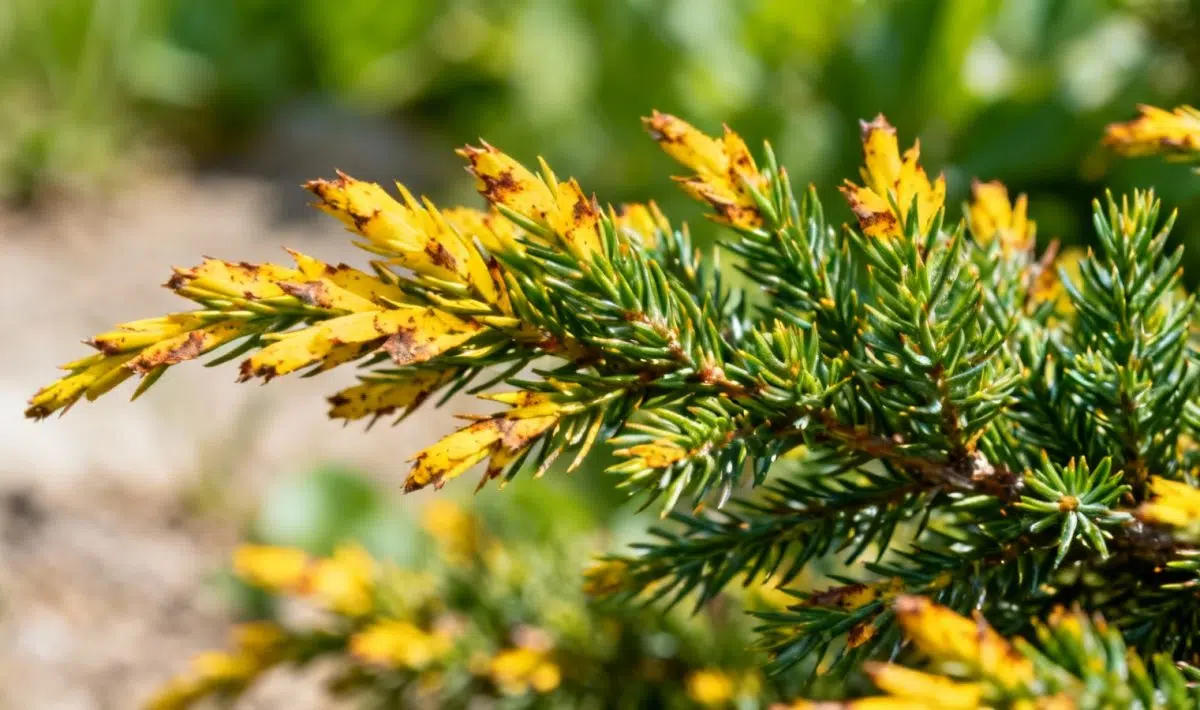
Why are my common juniper leaves turning yellow – causes and solutions
Seeing your beloved common juniper with yellow leaves can be quite alarming, especially when you’ve been caring for this beautiful tree with dedication. Yellow foliage on juniper trees is actually more common than you might think, and the good news is that most causes are treatable with proper attention and care.
Understanding why leaves turn yellow is crucial for maintaining healthy juniper varieties in your garden or bonsaï collection. These evergreen trees are generally hardy, but they can show stress through yellowing needles when growing conditions aren’t quite right. Let’s explore the main factors that affect your juniper’s health and discover how to restore its vibrant green appearance.
Environmental stress is often the primary culprit when juniper leaves start turning yellow. These trees are naturally adapted to well-drained soils and full sunlight, so any deviation from their preferred conditions can trigger a stress response that manifests as yellowing foliage.
Temperature fluctuations play a significant role in juniper health. During autumn and spring transitions, sudden temperature changes can shock the plant, causing older needles to yellow and drop. This is particularly common with bonsaï specimens that are more sensitive to environmental changes due to their confined root systems in small containers.
Humidity levels also impact your juniper’s well-being. Too much moisture in the air, combined with poor air circulation, creates perfect conditions for fungal issues that can cause yellowing. Conversely, very dry conditions can stress the tree, leading to similar symptoms as it tries to conserve water.
✅ Quick Checklist
Is the soil too wet or too dry?
Is the plant getting 6+ hours of sunlight daily?
Have you fertilized in the last 2 months?
Are there visible pests under the leaves?
Does the pot have adequate drainage?
🔥 FREE
📱
Diagnose your plant in one click!
AI instant diagnosis • Personalized solutions • 50,000+ species
Improper watering is the most frequent reason why juniper leaves turn yellow. Both overwatering and underwatering can stress these trees, but overwatering tends to be more damaging and harder to correct. When soil stays consistently wet, the roots can’t breathe properly, leading to root rot that manifests as yellowing needles from the bottom of the tree upward.
Juniper trees prefer soil that drains well but retains some moisture. The key is finding that sweet spot where the soil feels slightly moist but never soggy. You can test this by inserting your finger about two inches into the soil around the trunk. If it feels waterlogged or completely dry, you’ll need to adjust your watering schedule.
For container-grown junipers and bonsaï specimens, drainage is even more critical. Make sure your pot has adequate drainage holes and that water can flow freely from the bottom. Using a well-draining potting mix designed for evergreens can make a significant difference in preventing water-related yellowing.
Nutrient deficiencies and soil quality
Poor soil quality and nutrient deficiencies can gradually weaken your juniper, making it more susceptible to yellowing. These trees aren’t particularly demanding when it comes to nutrients, but they do need basic elements to maintain healthy foliage throughout the year.
Nitrogen deficiency often shows up as yellowing of older needles first, progressing to newer growth if left untreated. This is particularly common in container plants that have been in the same soil for several years without fresh amendments. Iron deficiency can also cause yellowing, especially in alkaline soils that prevent iron absorption.
Testing your soil pH can reveal important information about nutrient availability. Junipers prefer slightly acidic to neutral soil with a pH between 6.0 and 7.0. If your soil is too alkaline, nutrients may be present but unavailable to the plant, leading to deficiency symptoms despite adequate fertilization.
Common diseases and pest issues
Several diseases can cause juniper leaves to turn yellow, with fungal infections being the most common culprits. Tip blight is a frequent problem that starts with yellowing at branch tips and can spread if not addressed quickly. This disease thrives in humid conditions and can be particularly problematic in dense plantings with poor air circulation.
Spider mites are tiny pests that can cause significant damage to juniper foliage. These microscopic creatures feed on needle sap, causing yellowing and eventual browning. They’re especially active during hot, dry weather and can quickly infest an entire tree if left unchecked. You might notice fine webbing on branches, which is a telltale sign of spider mite activity.
Scale insects are another common pest that can affect juniper health. These small, armored insects attach themselves to branches and needles, sucking plant juices and weakening the tree. Heavy infestations can cause widespread yellowing and branch dieback over time.
Just like reasons for yellow passionfruit leaves, environmental stress often makes trees more susceptible to pest and disease problems. Maintaining proper growing conditions is your first line of defense against these issues.
Proper care techniques for healthy junipers
Preventing yellow leaves starts with understanding your juniper’s specific needs and providing consistent, appropriate care. These trees are generally low-maintenance once established, but they do benefit from regular attention to key growing factors.
Proper fertilization can prevent many yellowing issues. Use a balanced, slow-release fertilizer formulated for evergreens in early spring, just as new growth begins. Avoid high-nitrogen fertilizers, which can promote excessive soft growth that’s more susceptible to disease and winter damage.
Pruning plays an important role in maintaining juniper health. Remove any dead, diseased, or damaged branches promptly to prevent problems from spreading. Thinning dense growth improves air circulation, which helps prevent fungal diseases that can cause yellowing.
For bonsaï enthusiasts, regular repotting every 2-3 years helps maintain soil quality and prevents root binding. Use a well-draining bonsaï soil mix and trim about one-third of the root mass to encourage new growth. This practice keeps the tree healthy and reduces stress that can lead to yellowing.
✅ Quick Checklist
Is the soil too wet or too dry?
Is the plant getting 6+ hours of sunlight daily?
Have you fertilized in the last 2 months?
Are there visible pests under the leaves?
Does the pot have adequate drainage?
🔥 FREE
📱
Diagnose your plant in one click!
AI instant diagnosis • Personalized solutions • 50,000+ species
Once you’ve identified the cause of yellowing in your juniper, recovery usually takes several weeks to months, depending on the severity of the problem. Patience is essential, as these trees don’t respond overnight to care changes. Continue providing proper conditions while monitoring for improvement in new growth.
Prevention is always better than treatment when it comes to plant health. Establish a regular care routine that includes monitoring soil moisture, checking for pest activity, and observing overall tree vigor. Early detection of problems allows for quicker intervention and better outcomes.
Similar to causes of yellowing plantain leaves, understanding the specific needs of your plant species is crucial for preventing recurring issues. Keep detailed records of your care practices and note any changes in appearance or growth patterns.
Creating optimal growing conditions from the start gives your juniper the best chance of thriving. Choose a location with full sun exposure, ensure good drainage, and provide adequate space for air circulation around the tree. These fundamental requirements form the foundation of successful juniper cultivation, whether you’re growing a landscape specimen or maintaining a prized bonsaï collection.
Remember that some seasonal yellowing is normal for junipers, particularly older interior needles that naturally shed as the tree matures. The key is distinguishing between normal needle drop and yellowing that indicates a health problem requiring intervention.
Allan is a lifelong gardening enthusiast who still gets excited when the first seedlings pop up in spring. With a deep love for nature and a hands-in-the-soil approach, he shares practical tips, plant discoveries, and clever tricks picked up over years of digging, planting, and observing. Whether you’re a new gardener or have a shed full of tools, Allan writes like a neighbor who’s always happy to swap cuttings and stories over the fence.
You can find more about Allan’s work on Malt or connect with him on LinkedIn.