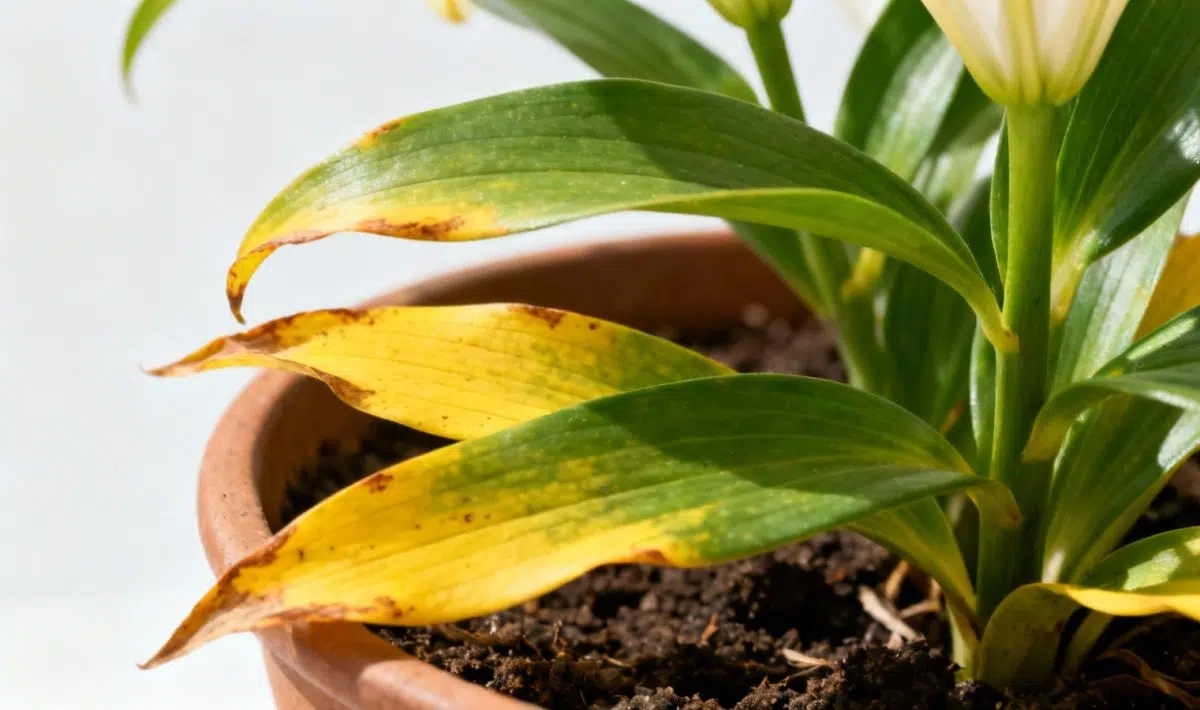
Why are my easter lily leaves turning yellow – causes and solutions
You’ve nurtured your beautiful Easter lily with care, but now you’re noticing something troubling – those once-vibrant green leaves are turning yellow. This common issue can be frustrating, but the good news is that most causes are easily fixable once you understand what’s happening. Let’s explore why are my easter lily leaves turning yellow and how you can restore your plant’s health.
Several factors can cause your Easter lily’s leaves to turn yellow, and identifying the root cause is crucial for effective treatment. The most common culprits include overwatering, nutrient deficiencies, lighting issues, and natural aging processes.
Overwatering issues
Too much water is one of the primary reasons for yellowing leaves in Easter lilies. When the soil stays consistently wet, the roots can’t access oxygen properly, leading to root rot and yellowing foliage. You’ll notice the yellowing typically starts from the bottom leaves and works its way up.
✅ Quick Checklist
Is the soil too wet or too dry?
Is the plant getting 6+ hours of sunlight daily?
Have you fertilized in the last 2 months?
Are there visible pests under the leaves?
Does the pot have adequate drainage?
🔥 FREE
📱
Diagnose your plant in one click!
AI instant diagnosis • Personalized solutions • 50,000+ species
To fix overwatering problems, check your pot’s drainage system first. The soil should feel moist but not soggy. Allow the top inch of soil to dry out between waterings, and ensure your pot has drainage holes to prevent water from sitting at the bottom.
Nutrient deficiencies
Easter lilies are hungry plants that need regular feeding during their growing season. When they lack essential nutrients, particularly nitrogen, phosphorus, or potassium, the leaves will start yellowing as the plant redirects nutrients from older leaves to support new growth.
Nitrogen deficiency shows up as yellowing that starts with the lower, older leaves first. If your lily hasn’t been fertilized in the past two months, this could very well be the issue. Use a balanced, water-soluble fertilizer every two weeks during the growing season.
Light-related problems
Easter lilies need bright, indirect light to thrive. Too little light causes the plant to weaken and develop yellow leaves, while too much direct sunlight can scorch the foliage. Find a spot where your lily gets about six hours of bright but filtered light each day.
If you’re growing your lily indoors, place it near a south or east-facing window with a sheer curtain to filter harsh rays. Outdoors, morning sun with afternoon shade works perfectly for these beautiful plants.
Disease and pest issues affecting easter lilies
Sometimes yellowing leaves indicate more serious problems like fungal diseases or pest infestations. These issues require prompt attention to prevent them from spreading throughout your plant.
Common fungal diseases
Fungal infections often develop in humid conditions with poor air circulation. You might notice brown spots on the yellow leaves, or a fuzzy growth on the undersides. Botrytis blight is particularly common in Easter lilies and can cause rapid yellowing and leaf drop.
To treat fungal issues, improve air circulation around your plant and avoid getting water on the leaves when watering. Remove affected foliage immediately and consider using a fungicide if the problem persists. Just like with causes of yellowing Peruvian lily leaves, proper diagnosis is essential for effective treatment.
Pest problems
Aphids, spider mites, and thrips can all cause leaf yellowing in Easter lilies. These tiny pests suck plant juices, weakening the lily and causing stress that manifests as yellow leaves. Check the undersides of leaves regularly for signs of these unwanted visitors.
If you spot pests, treat them immediately with insecticidal soap or neem oil. For minor infestations, you can often remove pests with a strong spray of water or by wiping leaves with a damp cloth.
Proper care techniques for healthy easter lilies
Prevention is always better than cure when it comes to plant health. Here’s how you can keep your Easter lily thriving and avoid yellowing leaves in the future.
Optimal watering practices
Water your Easter lily when the top inch of soil feels dry to the touch. During the growing season, this might be every 3-4 days, but frequency depends on your home’s humidity, temperature, and the pot size. Always water deeply until you see water draining from the bottom holes.
Use room temperature water and try to water in the morning so any excess moisture on leaves can dry before evening. This helps prevent fungal problems that thrive in constantly moist conditions.
Fertilization schedule
Feed your Easter lily every two weeks during spring and summer with a balanced liquid fertilizer diluted to half strength. Once blooming ends, you can reduce feeding to once monthly until the plant goes dormant in fall.
Avoid over-fertilizing, which can cause salt buildup in the soil and actually stress your plant. If you notice white crusty deposits on the soil surface, flush the pot with plain water to remove excess salts.
✅ Quick Checklist
Is the soil too wet or too dry?
Is the plant getting 6+ hours of sunlight daily?
Have you fertilized in the last 2 months?
Are there visible pests under the leaves?
Does the pot have adequate drainage?
🔥 FREE
📱
Diagnose your plant in one click!
AI instant diagnosis • Personalized solutions • 50,000+ species
Not all yellowing leaves are cause for alarm. As Easter lilies age naturally, their lower leaves will turn yellow and drop off – this is completely normal. However, if you’re seeing rapid yellowing across multiple leaves or yellowing accompanied by other symptoms, it’s time to investigate.
Concerning signs include yellowing leaves with brown spots, mushy stems, foul odors from the soil, or yellowing that spreads quickly throughout the plant. Similar patterns can be seen in other houseplants, much like the reasons for yellowing snake plant leaves, where environmental stress often plays a major role.
Recovery and prevention strategies
If you’ve identified the cause of yellowing and taken corrective action, be patient with your Easter lily’s recovery. Remove any completely yellow leaves by cutting them at the base with clean scissors – these won’t recover and may harbor disease.
Focus on providing consistent care moving forward. This means regular but not excessive watering, appropriate fertilization, good light conditions, and monitoring for pests or diseases. With proper care, your Easter lily should begin producing healthy green growth within a few weeks.
Remember that consistency is key – sudden changes in care routines can stress plants just as much as neglect. Establish a routine that works for both you and your lily, and stick with it for the best results.
Allan is a lifelong gardening enthusiast who still gets excited when the first seedlings pop up in spring. With a deep love for nature and a hands-in-the-soil approach, he shares practical tips, plant discoveries, and clever tricks picked up over years of digging, planting, and observing. Whether you’re a new gardener or have a shed full of tools, Allan writes like a neighbor who’s always happy to swap cuttings and stories over the fence.
You can find more about Allan’s work on Malt or connect with him on LinkedIn.